Sources: CEPII – BACI: International Trade Database, U.S. Census Bureau – USA Trade Online, and author’s calculation
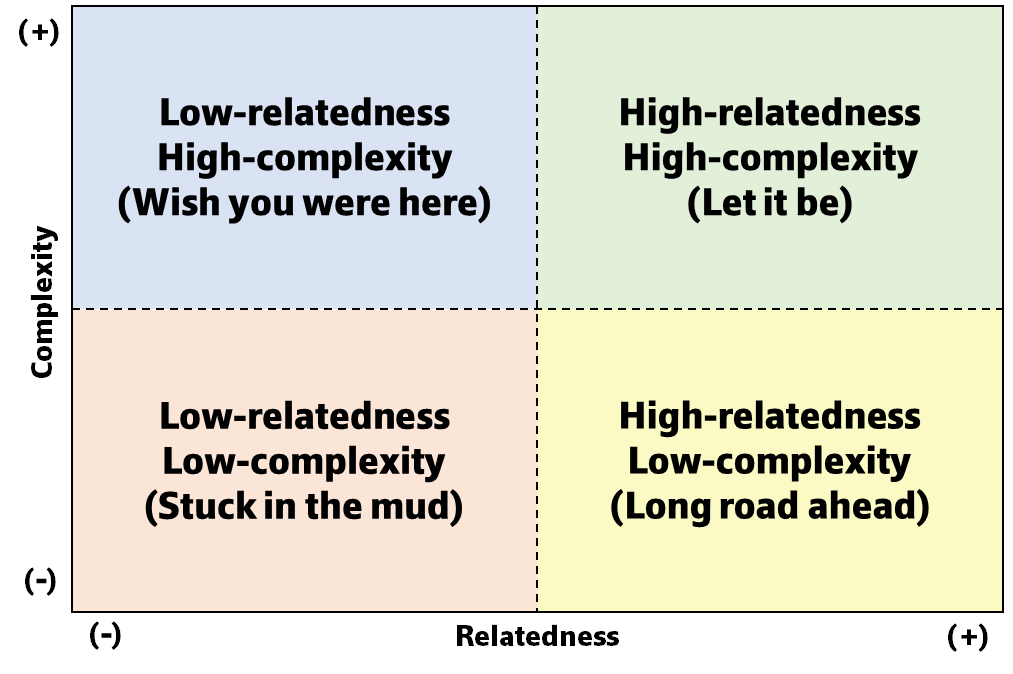
Puerto Rico’s Diversification Frontier reveals a notable concentration of products in the high complexity region. Within the high-complexity/high-relatedness quadrant, Puerto Rico shows strengths in pharmaceutical and chemical products including packaged medicaments, vaccines, blood products, antisera, toxins, and cultures, and hormones. These high-value products form the core of Puerto Rico’s export profile, with chemical products making up roughly 83% of exports, and just the three product categories mentioned above accounting for over 75% of total exports in 2023.
Looking at the high-complexity/low-relatedness, we find sophisticated products that would typically be challenging to develop given Puerto Rico’s current export basket. In most economies at similar development levels, this quadrant would be sparsely populated. Puerto Rico’s larger-than-typical presence here suggests unique capabilities that enable potential “strategic jumps” into complex new sectors despite lower relatedness. While these products represent greater development challenges than those in the high-complexity/high-relatedness quadrant, they offer valuable opportunities that could reduce Puerto Rico’s concentration in pharmaceuticals and chemicals. Identifying and supporting firms in these sectors is critical to achieving a more sustainable development.
By looking at trends in global trade, we also find several products that show significant growth potential, with other protein & polypeptide hormones growing 70.8% in 2023, electric motor vehicles 57%, and polypeptide hormones 38%. This indicates both expanding global demand and potential for Puerto Rico to position itself in sophisticated and expanding markets by producing those goods or intermediate goods that are components of these.
However, capitalizing on these opportunities requires the kind of sustained, coordinated effort that has been lacking. Even successful clusters like the aerospace hub in Aguadilla, which houses major companies like Pratt & Whitney, Honeywell, and Lockheed Martin, have struggled to reach their full potential due to inconsistent policy support and fragmented private sector coordination.
What This Means for Business Leaders:
- Your specialized knowledge may be more valuable than you think
- Opportunities exist beyond pharma in related high-tech sectors
- Collaboration between local firms and the government could unlock new markets
With regards to its strengths, Puerto Rico demonstrates global leadership in specific pharmaceutical niches, commanding dominant market shares in products like insulin (20.7%), and adrenal cortical hormones (14.9%). The island’s positioning in the high complexity/high relatedness quadrant reflects deep, established capabilities in sophisticated pharmaceuticals and chemicals manufacturing. Even more promising, Puerto Rico’s unusual abundance of products in the high complexity/low relatedness quadrant suggests hidden capabilities that could enable some quick wins.
However, these strengths coexist with structural vulnerabilities. Puerto Rico’s export concentration in pharmaceuticals is extremely high. This creates acute sector-specific risk where pharmaceutical industry shocks could significantly impact the broader economy. Hurricane Maria demonstrated this when it disrupted Baxter International’s IV fluid production facilities in Puerto Rico, forcing the FDA to authorize emergency imports from multiple countries to address critical shortages of IV fluids that affected the U.S. healthcare system. The concentration extends beyond products to knowledge; a loss of pharmaceutical expertise would leave few viable alternatives for the island’s economy. Scale limitations in diversified production compound this challenge; while Puerto Rico produces sophisticated non-pharmaceutical goods, most generate minimal export revenues, limiting their potential as economic alternatives. Only ten products demonstrate significant comparative advantage (RCA > 1) with substantial export volumes, suggesting limited breadth in competitive capabilities. Furthermore, some key specializations show declining performance, with insulin exports falling 58.1% and adrenal cortical hormones declining 5.1%, potentially signaling eroding competitiveness in these core areas.
Puerto Rico’s complexity profile thus presents both significant opportunity and pressing urgency for economic planning. It underscores the need for evidence-based decision-making and cross-sector coordination that Economic Complexity analysis can help build. The island possesses sophisticated capabilities that are hard to find elsewhere, yet these are concentrated in ways that could create systemic risk. The challenge lies in leveraging existing capacities and unusual potential for high-value unrelated diversification to build resilience against over-dependence on a narrow set of sectors. Our analysis suggests Puerto Rico is uniquely positioned for growth, but it will require deliberate and sustained policy intervention. Economic Complexity analysis can provide the objective, data-driven framework needed to guide this collective effort.
Policy Recommendations
The following recommendations focus on establishing Economic Complexity Analysis as a formal component of Puerto Rico’s economic policymaking framework. Rather than proposing specific sectoral investments or long-term development strategies, these recommendations aim to introduce economic complexity tools and metrics into existing government institutions, creating the analytical foundation for more informed future policy decisions. This approach recognizes that sustainable economic transformation requires first building institutional capacity to measure, monitor, and understand the island’s productive capabilities. By integrating these tools, policymakers will acquire more sophisticated tools to track economic progress, identify strategic opportunities, and make development decisions grounded in empirical analysis rather than influence, expediency or outdated development orthodoxies.
Create, Monitor, and Publish Complexity Metrics for PR
The Puerto Rico Planning Board (JP) and Department of Economic Development and Commerce (DDEC) must collaborate to establish annual or quarterly reporting of Economic Complexity metrics. Systematic tracking would provide objective benchmarks for evaluating whether Puerto Rico’s economy is successfully achieving its development goals and acquiring new and more sophisticated capacities. These statistics and analyses should also be formally integrated in the annual economic reports to the governor and legislative assembly. Collecting and preparing the necessary data, performing all the analyses and effectively presenting them will require a modest initial investment, but these costs pale in comparison to the economic losses from continued policy incoherence and missed diversification opportunities that have characterized Puerto Rico’s development approach for decades.
Train Development Agencies on Economic Complexity Analysis
Key staff at Puerto Rico’s economic development agencies need technical training to collect, prepare, and analyze the data required for complexity measurements. This capacity building should focus on 1) technical skills to deliver reporting, and 2) analytical skills to interpret and integrate this information into economic policy. Publishing complexity metrics for Puerto Rico alone is insufficient for transforming the way economic policy is made on the island. Staff at development agencies like JP and DDEC or promotion agencies like InvestPR must be able to understand these concepts and use them to craft policy. With personnel at multiple levels trained in these concepts, these agencies can maintain consistent analytical capabilities regardless of political changes, ensuring that institutional knowledge about Puerto Rico’s productive capabilities and strategic opportunities is preserved and enhanced over time.
Private Sector Engagement
Successful implementation also requires buy-in from Puerto Rico’s business community. The government should organize regular forums where complexity analysis findings are shared with industry leaders, gathering their feedback on identified opportunities and constraints. These sessions would serve dual purposes: validating the analysis against private sector experience and building confidence in complexity metrics as objective tools rather than political instruments. Clear communication about how these tools work, emphasizing their basis in global trade patterns rather than subjective assessments, will be crucial for overcoming skepticism and encouraging private investment aligned with complexity-informed goals.
Align Incentives with Complexity Related Outcomes
Future tax incentives, subsidies and development initiatives should incorporate complexity criteria into their targeting, eligibility requirements and benefit structures. Rather than offering blanket incentives to any export activity, new programs could provide enhanced benefits for activities that increase economic complexity, either by adding new high-complexity products to Puerto Rico’s export basket or strengthening capabilities in strategic sectors identified through complexity analysis. This approach would channel public resources toward diversification efforts most likely to generate sustainable economic growth.
Limitations and Future Work
While economic complexity measures can provide more tools for policymakers and researchers to understand our economy, Puerto Rico’s economic statistics are known to be distorted by income shifting, transfer pricing and other distortions primarily stemming from tax accounting strategies which see multinational firms overrepresenting incomes originating from the island. In the past CNE has shown how these distortions impact national accounts and output figures.[9] These same distortions are present, and in cases like pharmaceutical products amplified, in Puerto Rico’s export data.
We are working on applying previously used methods to adjust exports to address these distortions and further refine our estimates of economic complexity in Puerto Rico. Additionally, we would like to expand our work in this area by studying the development impact potential of industries and applying more intricate analyses that are based on economic complexity measures.
Conclusion
Economic Complexity Analysis offers a powerful lens through which to understand Puerto Rico’s economy and a practical framework to transform how Puerto Rico approaches economic development. As the island moves forward into a post-PROMESA future, the question becomes how to channel our capacities into sustained prosperity. By measuring the knowledge embedded in production, tracking the relatedness between different economic activities, and identifying feasible pathways for diversification, these tools can replace the ad-hoc, influence-driven development strategies that have repeatedly failed to generate sustainable growth.
Puerto Rico’s economic complexity reveals both immediate opportunities and long-term potential. The unusual abundance of high-complexity products suggests that opportunities for diversification beyond pharmaceuticals are abundant. Products like printed circuit boards, industrial printers, and specialized chemicals represent more than export opportunities; they signal the presence of sophisticated knowledge that could be the cornerstones of new industrial clusters. This requires Puerto Rico to build the modern industrial policy needed to plant the seeds for tomorrow’s economic growth.
By establishing complexity metrics as a standard component of economic reporting, training government personnel in these methods, and engaging the private sector in discussions, Puerto Rico can build the institutional capacity for evidence-based policymaking. These steps require no massive fiscal outlays or radical policy shifts, only the time to learn these tools and a commitment to ground economic decisions in objective analysis.
The urgency of this transformation cannot be overstated. Each year of continued policy incoherence creates more missed opportunities and deepening vulnerability. But the complexity framework offers hope: Puerto Rico possesses more sophisticated productive capabilities than most economies at similar levels of development. The challenge lies not in building these capabilities from scratch but in deploying them strategically to create a more resilient, diversified, and sustainable economy.
The tools exist, the capabilities are present, and the opportunities are identifiable. What remains is the institutional will to transform Puerto Rico’s approach to economic development from one driven primarily by clientelism, political partisanship, federal transfers, and influence peddling to one guided by empirical evidence and strategic vision. This transformation is the first step in moving Puerto Rico from survival to prosperity, from managing decline to unlocking growth.
References
Aktug, M., Podat, S., & Basoglu, A. (2025, February). Fiscal Policy as a Driver of Economic Complexity: Evidence from Selected OECD Countries. Journal of the Knowledge Economy. doi:10.1007/s13132-024-02551-2
Alshamsi, A., Pinheiro, F., & Hidalgo, C. (2018, April 6). Optimal diversification strategies in the networks of related products and of related research areas. Nature Communications, 9. doi:10.1038/s41467-018-03740-9
Balland, P.-A., Broekel, T., Diodato, D., Giuliani, E., Hausmann, R., & David Rigby, N. O. (2022, April). The new paradigm of economic complexity. Research Policy, 51, 104450. doi:10.1016/j.respol.2021.104450
Blackler, F. (1995). Knowledge, Knowledge Work, and Organizations: An Overview and Interpretation. In The Strategic Management of Intellectual Capital and Organizational Knowledge (Vol. 16, pp. 47-64). Oxford University Press, New York, NY. doi:10.1093/oso/9780195138665.003.0003
CEPII. BACI: International Trade Database at the Product Level, version 202601, years 2023 and 2024.
Hausmann, R., & Hidalgo, C. A. (2009, June 30). The building blocks of economic complexity. Proceedings of the National Academy of Sciences, 106, 10570-10575. doi:10.1073/pnas.0900943106
Hausmann, R., Yildirim, M. A., Chacua, C., Hartog, M., & Matha, S. G. (2024). Innovation Policies Under Economic Complexity. SSRN Electronic Journal. doi:10.2139/ssrn.4814938
Hidalgo, C. A. (2021, January). Economic complexity theory and applications. Nature Reviews Physics, 3, 92–113. doi:10.1038/s42254-020-00275-1
Hidalgo, C. A. (2023, November). The policy implications of economic complexity. Research Policy, 52, 104863. doi:10.1016/j.respol.2023.104863
Mealy, P., Farmer, J. D., & Teytelboym, A. (2019). Interpreting Economic Complexity. Science Advances, 5. doi:10.1126/sciadv.aau1705
Observatory of Economic Complexity (2024). HS6 Product Data. HS6 Product Data. Observatory of Economic Complexity. Data retrieved through OEC API. Retrieved Mar 15, 2025, from https://api.oec.world/
Observatory of Economic Complexity (2024). Puerto Rico Exports Data. Puerto Rico Exports Data. Observatory of Economic Complexity. Data retrieved through OEC API. Retrieved Mar 15, 2025, from https://api.oec.world/
Observatory of Economic Complexity (2024). Puerto Rico Product Map Visualization. Puerto Rico Product Map Visualization. Observatory of Economic Complexity.
Observatory of Economic Complexity (2024). U.S. National and State Data. US National and State Data. Observatory of Economic Complexity. Data retrieved through OEC API. Retrieved Mar 15, 2025, from https://api.oec.world/
Observatory of Economic Complexity (2024). World Trade Data. World Trade Data. Observatory of Economic Complexity. Data retrieved through OEC API. Retrieved Mar 15, 2025, from https://api.oec.world/
Pinheiro, F. L., Alshamsi, A., Hartmann, D., Boschma, R., & Hidalgo, C. A. (2018). Shooting High or Low: Do Countries Benefit from Entering Unrelated Activities? Retrieved from http://econ.geo.uu.nl/peeg/peeg1807.pdf
Rutar, T. (2023, September). What is neoliberalism really? A global analysis of its real-world consequences for development, inequality, and democracy. Social Science Information, 62, 295–322. doi:10.1177/05390184231202950
Simoes, A. J., & Hidalgo, C. A. (2011). The Economic Complexity Observatory: An Analytical Tool for Understanding the Dynamics of Economic Development.
Stiglitz, J., & Greenwald, B. (2014, June 24). Creating a Learning Society. Columbia University Press. doi:10.7312/columbia/9780231152143.003.0013
Teixeira, D. M., Lara, H., & Filho, F. (2023). Public Policy Insights for a New Developmental Strategy From the Relations Between Sustainability and Economic Complexity. Development Macroeconomics Bulletin, 3, 39-46.
U.S. Census Bureau. USA Trade Online: State Exports by HS Commodities, years 2023 and 2024.
U.S. Food and Drug Administration. (2017, November 14). FDA works to help relieve the IV fluid shortages in wake of Hurricane Maria. FDA Drug Safety and Availability.
U.S. Food and Drug Administration. (2017, October 24). Examining HHS Public Health Preparedness and Response: 2017 Hurricane Season. Congressional Testimony.
Endnotes
[1] Economic Complexity Explorer | Data México. https://www.economia.gob.mx/datamexico/en/profile/economic_complexity/1
[2] Handbook of Economic Complexity for Policy | European Commission. https://publications.jrc.ec.europa.eu/repository/handle/JRC138666
[3] Thinking about Development Differently: Complexity and Network-based Approaches for Policy | World Bank. https://www.worldbank.org/en/events/2025/05/05/thinking-about-development-differently-complexity-and-network-based-approaches-for-policy
[4] New Approaches to Economic Challenges | OECD. https://www.oecd.org/naec/newapproachestoeconomicchallenges-complexityoftheeconomy.htm
[5] HS4 22.08 – Spirits, liqueurs and other spirituous beverages. PCI = -0.41
[6] HS4 40.15 – Apparel and clothing accessories made of rubber. PCI = -0.41
[7] HS4 22.04 – Wine of fresh grapes, including fortified wines. PCI = -0.82
[8] Ranking of U.S. states and territories by 2022 ECI calculated at the HS4 product level using HS Rev 22.
[9] See chapter 2 of Collins, Bosworth & Soto-Class (2006) for more details.




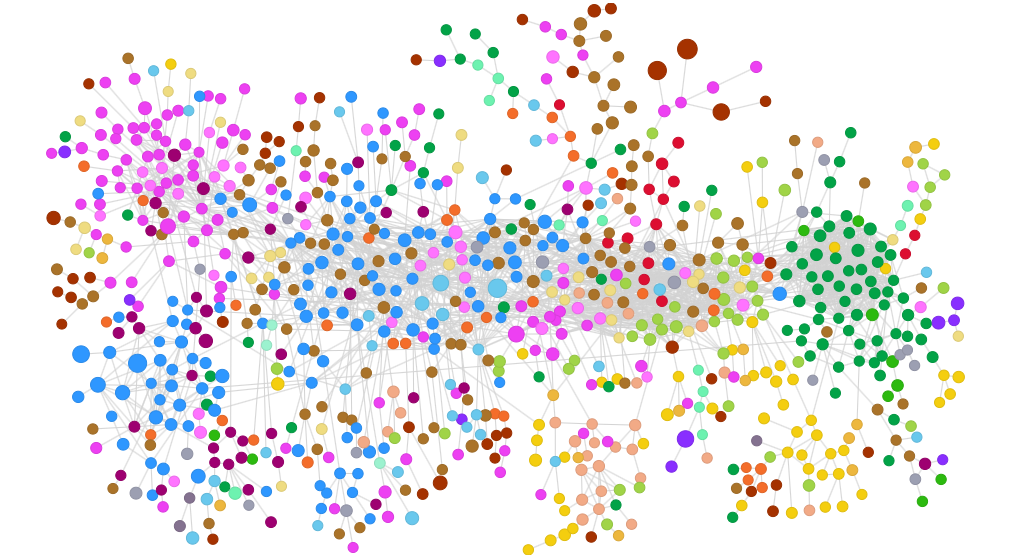 Source: OEC Product Space Image, 2025
 in the lower right corner.
