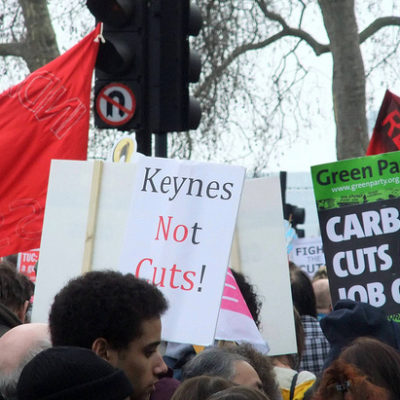
Puerto Rico’s Keynesian Recovery

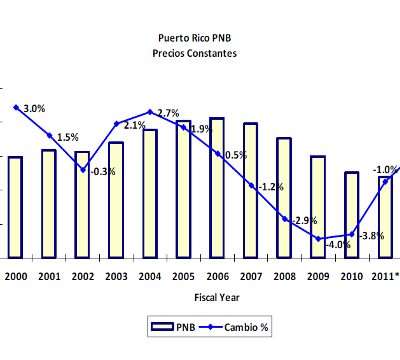
The Puerto Rican economy is beginning to show signs of life after a six-year contraction. According to official government statistics Puerto Rico should finish fiscal year 2012 (which ends on June 30) with positive growth of 0.9%. Nothing to brag about really, but after six-years of economic bloodletting this anemic growth rate can be truthfully described as good news.
Modelos económicos

A menudo escuchamos en nuestro debate público que Puerto Rico necesita un “nuevo modelo económico”. Sin embargo, nadie explica que quiere decir cuando habla de un “modelo económico”. En las ciencias sociales un modelo es una representación abstracta de la realidad que nos permite entender y explicar esa realidad; es como un mapa que nos ayuda a llegar de un lugar a otro.

La secuela de las crisis financieras

Los economistas Carmen M. Reinhart y Kenneth S. Rogoff, en su libro This Time is Different: Eight Centuries of Financial Folly (Princeton University Press, 2009), analizan la dinámica de diversas crisis financieras desde el siglo 13. Uno de sus hallazgos más importantes es que la recuperación económica después de una recesión que va acompañada de una crisis financiera es mucho más lenta y prolongada en comparación con la recuperación económica que ocurre después de una recesión que no coincide con una crisis financiera.

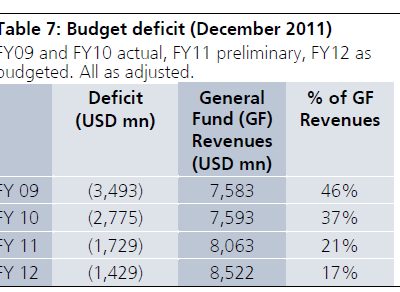
Puerto Rico’s Budget Deficit: an Independent Assessment

Recently there has been a public debate regarding the amount of Puerto Rico’s fiscal deficit for Fiscal Year 2012. Before moving on to provide our analysis of the Commonwealth’s deficit, we believe it is appropriate to differentiate among and between three different definitions of the term “deficit”, which, unfortunately, oftentimes are erroneously used interchangeably in the public debate. In order to clarify our analysis we pause briefly to explain each one of the following definitions.

The Greece of the Caribbean

Recently, Cate Long, a reporter at Reuters stirred-up a hornet’s nest by writing that Puerto Rico is America’s Greece. Although any comparison between a sovereign country and a crumbling colonial backwater like Puerto Rico needs to be taken with a grain of salt, in general, Ms. Long’s post is on point. There are, of course, some differences between Puerto Rico and Greece, but the similarities are simply overwhelming.

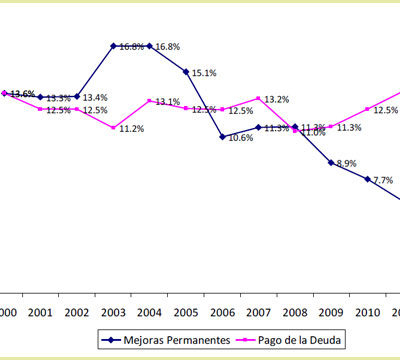
Deuda pública y mejoras permanentes

Proveer una infraestructura adecuada, que fomente y facilite el desarrollo económico, es una de las funciones básicas de cualquier gobierno moderno. La inversión pública en activos con una vida útil relativamente larga, tales como carreteras, puertos, aeropuertos, ferrocarriles, hospitales, escuelas, plantas generadoras de electricidad, represas, plantas de tratamiento de aguas, y líneas de transmisión y distribución de electricidad, entre otros, es beneficiosa para el desarrollo económico por múltiples razones.

Rethinking the Governance of State-Owned Enterprises in Puerto Rico

The executive branch of the government of Puerto Rico carries out its operations through two distinct sets of administrative structures. On the one hand, there are the agencies and departments, such as the Justice and the Treasury departments, which constitute the “central government” of the Commonwealth. On the other hand, there are the state- owned enterprises, commonly known as “public corporations” in Puerto Rico, which constitute what we may call the “other” central government of Puerto Rico.

Fiscal Situation Update: An Analysis of the Governor’s Proposed Budget for Fiscal Year 2012

This Fiscal Update Report prepared by the Center for a New Economy (CNE) presents an independent analysis of the proposals contained in the Governor’s budget request for fiscal year 2012. The analysis is based on CNE’s evaluation and interpretation of the budget data, rather than the Administration’s, and may incorporate estimates made by CNE’s staff or by other private sector analysts.