CNE Review – September 2023

Published on September 12, 2023 / Leer en español

See all editions of the
CNE Review
SHARE

In This Issue

Decades of corruption, mismanagement, politically influenced business decisions, and postponing critical maintenance and required capital expenditures resulted in the bankruptcy of the Puerto Rico Electric Power Authority (“PREPA”) in the summer of 2017. The hurricanes of September 2017 and the earthquakes of 2020 further weakened PREPA’s already fragile infrastructure.

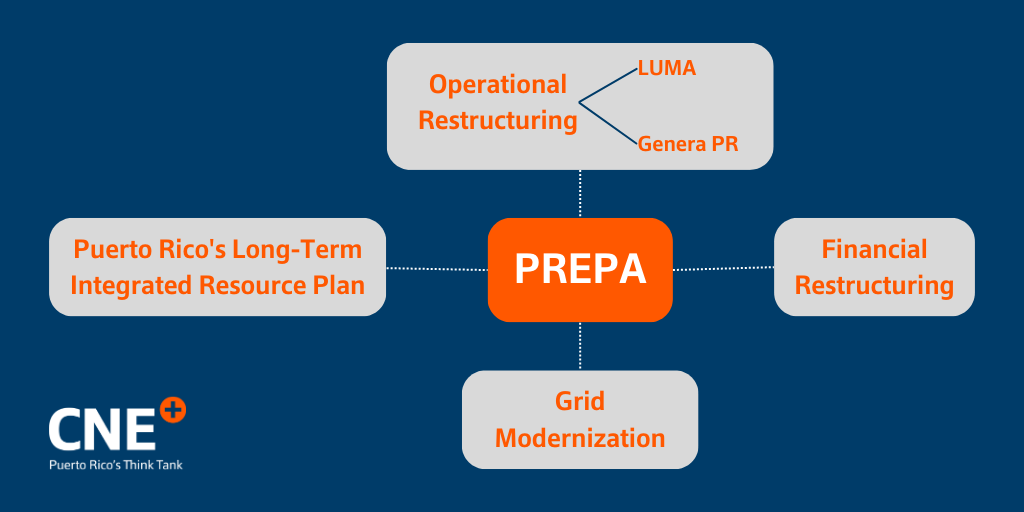
Now in 2023, the reconstruction and transformation of Puerto Rico’s electric power system is entering a critical stage, as several important processes—PREPA’s operational and financial restructuring; the commencement of large-scale projects to rebuild the grid; and the elaboration of a new Integrated Resource Plan—converge at a key point in time.

However, existing policy disagreements regarding the extent of the use of natural gas during the transition to 100% renewable generation and the ongoing debate about the advantages and limitations of installing distributed generation capacity (mostly rooftop solar systems with batteries) instead of utility-scale projects have generated delays in the rollout of new renewable generation capacity and pose a serious risk to Puerto Rico’s ability to meet its renewable energy objectives.

–Sergio M. Marxuach, Editor-in-Chief

Insights + Analysis from CNE
Puerto Rico Electric Power Authority Update

By Sergio M. Marxuach, Policy Director

Privatization: Operational Restructuring

The restructuring of PREPA’s operations is at a fairly advanced stage after the execution of two agreements to outsource the operation and management of PREPA’s (1) transmission and distribution (“T&D”) grid and (2) legacy generation assets (“LGA”).

LUMA, a Canadian/American consortium, has been in charge of energy dispatch operations and maintaining the stability of the T&D system since July 2021. The transfer to LUMA of the T&D assets was bumpy and the company faced severe problems during its first year of operations. Recently, however, the T&D system has appeared to gain some stability although rolling blackouts and unplanned outage rates are still significantly above average compared to similar utilities in the mainland.

Early this year the government of Puerto Rico selected Genera PR, a subsidiary of New Fortress Energy (a natural gas company), to manage and operate PREPA’s aging fleet of LGAs. As part of the agreement, Genera is required to make some short-term capital expenditures (funded by FEMA) to stabilize the system, generate savings from renegotiating fuel contracts, and eventually commence decommissioning the LGAs.

Click here to read more about how these two agreements are being put into practice.

Plan of Adjustment: Financial Restructuring

PREPA has been in negotiations with its creditors since July 2017. However, six years of tough on-and-off negotiations have not yet yielded a comprehensive plan of adjustment of PREPA’s liabilities. PREPA currently owes about $9 billion in outstanding bonds, has an unfunded pension liability of $3.8 billion, owes an additional $700 million to fuel line lenders, and several million more to other unsecured creditors.

Without PREPA restructuring its debt and other liabilities, the average residential customer who consumes 425 kWh per month would see its bill increase by approximately 26%. Clearly, that is an unsustainable scenario given Puerto Rico’s stagnant economy and high poverty rates.

On August 25, 2023, the Financial Oversight and Management Board for Puerto Rico (“FOMB”) announced that it had “filed the third amended Plan of Adjustment to reduce more than $10 billion of total asserted claims by various creditors against the Puerto Rico Electric Power Authority (PREPA) by almost 80%, to the equivalent of $2.5 billion, excluding pension liabilities.” (FOMB Press Release, August 25, 2023)

Click here for details on the FOMB’s latest filing.

Puerto Rico’s Long-Term Energy Plan: New Integrated Resource Plan

In April 2022, the Puerto Rico Energy Bureau (the “PREB”) extended the deadline for the next Integrated Resource Plan (“IRP”) filing, resolving that LUMA shall file the next IRP by no later than March 1, 2024.

The IRP is a key document since, pursuant to Puerto Rico law, it sets forth the timetable and sequence for achieving the objective of 100% renewable generation by 2050. Unfortunately, the intermediate objectives set in the IRP currently in effect (approved in 2020) have not been met.

Click here to read more on the status of the IRP’s objectives.

Grid Modernization: Reconstruction of the T&D System

In terms of funding for the rebuilding of the grid, only 19% of FEMA funding has been “approved” to be spent. In terms of the number of permanent work projects to rebuild the grid, 134 grid improvement projects had been “approved” by FEMA; and 60 grid improvements had “broken ground”. Regardless of the metric we use, the conclusion appears to be that the grid reconstruction process has proceeded at a relatively slow pace.

Click here to read more on the possible causes of this delay.

On Our Radar…

The U.S. Federal Budget – Back in May of this year, Congress and the White House agreed to a two-year spending plan as part of a deal to raise the U.S. debt limit and avoid a default by the United States. The Republicans who control the House agreed with the Biden administration to set limits on annual defense and nondefense discretionary expenditures for fiscal years 2023 and 2024. In order to avoid a government shutdown each chamber, the House and the Senate, has to enact 12 appropriation measures and submit them to the President on or before September 30. However, a recent analysis from the Center for American Progress, states that “the 12 bills that House Republican appropriators have written and reported violate the negotiated terms in three key ways”: (1) the bills provide $58 billion less for nondefense discretionary programs than the level agreed to in the debt limit deal; (2) the bills rescind $115 billion of funding outside the jurisdiction of the House Appropriations Committee, significantly beyond the cuts agreed to in the debt limit deal; and (3) the bills include several controversial policy riders regarding funding for the border wall, eliminating environmental programs, and hindering the ability of the IRS to operate, among dozens of other controversial items. Thus, it appears that Washington is headed for a shutdown come September 30, unless the parties can agree to a short-term continuing resolution to gain time to resolve these vexing issues.

Farm Bill – According to the Congressional Research Service, “the farm bill is an omnibus, multiyear law that governs an array of agricultural and food programs. It provides an opportunity for policymakers to comprehensively and periodically address agricultural and food issues.” The Farm Bill usually comes up for review and reapproval every five years. The version currently in effect elapses on September 30. Given the current situation regarding the budget for FY24 (see above), it is highly unlikely Congress will enact a new Farm Bill prior to the deadline. The most probable scenario is for Congress to enact a short-term extension, probably until December 31, to gain time to address several open issues regarding nutritional assistance, conservation programs, and support for major commodity crops, among others. This year’s Farm Bill is particularly important for Puerto Rico because there is a good chance that it will include language authorizing the phase-out of the current Nutritional Assistance Program that helps thousands of low-income households on the archipelago and provides for Puerto Rico’s inclusion in the Supplemental Nutrition Assistance Program (“SNAP”). The transition to SNAP would increase the number of households that qualify for the program, increase the average benefits available for nutritional assistance, and end decades of unfair discriminatory treatment against the residents of Puerto Rico who otherwise qualify for this program. The government of Puerto Rico and many NGOs, both in Puerto Rico and the mainland, are currently advocating for including language allowing this transition in the new Farm Bill. As of this writing, it is difficult to assess the probabilities of success, but this is the best opportunity we have had in years to achieve this major policy change.

The Inflation Reduction Act and Green Energy –  Scholars at the Brookings Institution take a look at the economic implications of the green energy provisions of the Inflation Reduction Act (“IRA”), which provides approximately $392 billion in green energy incentives over ten years. According to Brookings, “most models suggest the law puts the United States on track to achieve reductions in greenhouse gas emissions from 2005 levels in the range of 32-42% by 2030, which is 6-11 percentage points lower than without the IRA. The IRA lowers the costs of adopting clean technologies and accelerates the deployment of clean electricity generation, electric vehicles, and several emerging technologies, including carbon capture and hydrogen. That would narrow the gap between current emissions and the goal set for the United States under the Paris Climate Agreement.” Puerto Rico can benefit from these incentives but it has to move fast as most of the funding will be allocated on a first-come, first-served basis.

Puerto Rico Electric Power Authority Update

Puerto Rico Electric Power Authority Update

Published on September 11, 2023 / Leer en español

Sergio portrait
Policy Director
SHARE

Introduction

Decades of corruption, mismanagement, politically influenced business decisions, and postponing critical maintenance and required capital expenditures resulted in the bankruptcy of the Puerto Rico Electric Power Authority (“PREPA”) in the summer of 2017. The hurricanes of September 2017 and the earthquakes of 2020 further weakened PREPA’s already fragile infrastructure.

Now in 2023, the reconstruction and transformation of Puerto Rico’s electric power system is entering a critical stage, as several important processes—PREPA’s operational and financial restructuring; the commencement of large-scale projects to rebuild the grid; and the elaboration of a new Integrated Resource Plan—converge at a key point in time.

However, existing policy disagreements regarding the extent of the use of natural gas during the transition to 100% renewable generation and the ongoing debate about the advantages and limitations of installing distributed generation capacity (mostly rooftop solar systems with batteries) instead of utility-scale projects have generated delays in the rollout of new renewable generation capacity and pose a serious risk to Puerto Rico’s ability to meet its renewable energy objectives.

Operational Restructuring

The restructuring of PREPA’s operations is at a fairly advanced stage after the execution of two agreements to outsource the operation and management of PREPA’s (1) transmission and distribution (“T&D”) grid and (2) legacy generation assets (“LGA”).

LUMA, a Canadian/American consortium, has been in charge of energy dispatch operations and maintaining the stability of the T&D system since July 2021. The transfer to LUMA of the T&D assets was bumpy and the company faced severe problems during its first year of operations. Recently, however, the T&D system has appeared to gain some stability although rolling blackouts and unplanned outage rates are still significantly above average when compared with similar utilities in the mainland.

Equally important is that LUMA is the main entity in charge of working with FEMA on the redesign and rebuilding of the T&D system. This process has taken longer than expected in part due to special procedures imposed by FEMA (Section 428 of the Stafford Act), in part due to LUMA’s learning curve with respect to Puerto Rico’s energy system, and partly also due to the multiplicity of plans/proposals to rebuild the grid. According to PREPA’s most recent Fiscal Plan, “since the start of Fiscal Year 2023, LUMA has submitted a total of 341 SOWs [scopes of work] to FEMA for T&D projects representing an estimated $7.1 billion in reconstruction activities.” (PREPA Fiscal Plan, p. 98) It is not clear from the Fiscal Plan how many of these SOWs have been approved or in what stage of the work process they are (planning, design, in progress, or finalized).

Early this year the government of Puerto Rico selected Genera PR, a subsidiary of New Fortress Energy (a natural gas company), to manage and operate PREPA’s aging fleet of LGAs. As part of the agreement, Genera is required to make some short-term capital expenditures (funded by FEMA) to stabilize the system, generate savings from renegotiating fuel contracts, and eventually commence decommissioning the LGAs.

Although the government has high hopes for generating savings from increasing system efficiencies and the renegotiation of fuel contracts, the real savings will come from decommissioning PREPA’s aging fleet of fossil fuel generation. It is unlikely, though, that those savings will be realized in the short-term because (1) fossil fuel generation can be decommissioned only when there is enough new renewable capacity to replace it and that process has taken longer than expected; and (2) Genera, as a subsidiary of a natural gas company, may have an incentive to prolong the life of the existing generation fleet (under the pretense that there is insufficient renewable generation available) and purchase the required natural gas from its parent company.

Financial Restructuring

PREPA has been in negotiations with its creditors since July 2017. However, six years of tough on-and-off negotiations have not yet yielded a court-certified plan of adjustment of PREPA’s liabilities. PREPA currently owes about $9 billion in outstanding bonds, has an unfunded pension liability of $3.8 billion, owes an additional $700 million to fuel line lenders, and several million more to other unsecured creditors.

According to the PREPA Fiscal Plan, “without restructuring its debt and other liabilities, PREPA would need to repay approximately $2.62 billion of scheduled legacy debt obligations over four years from FY2024 to FY2027 in addition to the roughly $4.83 billion of unpaid past and currently due amounts through the end of FY2023. Bringing PREPA’s unrestructured debt obligations to funded status in the near term would require rate increases of approximately 6 to 7 ±/kWh in real dollars in the FY24- 27 period. In the longer term, without any restructuring, PREPA’s estimated annual debt service obligation is approximately $1 billion per year based on amortization of all long-term financial liabilities at a 5.25% interest rate over 20 years.” (PREPA Fiscal Plan, p. 140) Under that scenario, the average residential customer who consumes 425 kWh per month would see its bill increase by approximately 26%. Clearly, that is an unsustainable scenario given Puerto Rico’s stagnant economy and high poverty rates.

The legal process continues pursuant to the procedures established by Title III of the Puerto Rico Oversight, Management, and Economic Stability Act (“PROMESA”). In June 2023, the judge presiding over the proceedings determined that bondholders had only a partial lien on PREPA’s revenues and that there were significant risks associated with other remedies they may seek (for example, the appointment of a receiver). Therefore, she estimated the value of their claim at $2.38 billion.

On August 25, 2023, the Financial Oversight and Management Board for Puerto Rico (“FOMB”) announced that it had “filed the third amended Plan of Adjustment to reduce more than $10 billion of total asserted claims by various creditors against the Puerto Rico Electric Power Authority (PREPA) by almost 80%, to the equivalent of $2.5 billion, excluding pension liabilities.” (FOMB Press Release, August 25, 2023) According to the FOMB, the face value of bondholder debt would be reduced from $8.4 billion to approximately $2.4 billion. Bondholders who support the plan would recover (in the form of new bonds) 12.5% of their original asserted claim, while bondholders who do not agree to the proposed plan would recover 3.5% of their asserted claim. General unsecured creditors would recover, presumably in cash, approximately 13.5% of their initial claims. Negotiations continue with representatives of PREPA’s pensioners and other retirement plan beneficiaries.

The FOMB estimates the settlement with bondholders and other creditors (excluding the pensioners) would result in a 5% increase in monthly electricity bills, on average. That estimate will certainly increase, depending on the pension settlement. As of this writing a relatively large group of bondholders has announced their opposition to the proposed plan and we can expect them to eventually file an appeal with the U.S. Court of Appeals for the First Circuit. In the meantime, the Title III judge has announced March 2024 as the deadline for certifying PREPA’s plan of adjustment.

New Integrated Resource Plan

Act 57 of 2014 requires PREPA, now LUMA as its agent, to prepare an Integrated Resource Plan (“IRP”) for a 20-year planning period and to update it every three years. The law defines an IRP as “a resource plan that shall consider all reasonable resources, including both energy supply (e.g. utility-scale generation) and energy demand (e.g. energy efficiency, demand response, and distributed generation), to satisfy the current and projected future needs of Puerto Rico’s energy system and its customers at the lowest reasonable cost.” (PREPA Fiscal Plan, p. 26) In April 2022, the Puerto Rico Energy Bureau (the “PREB”) extended the deadline for the next IRP filing, resolving that LUMA shall file the next IRP by no later than March 1, 2024.

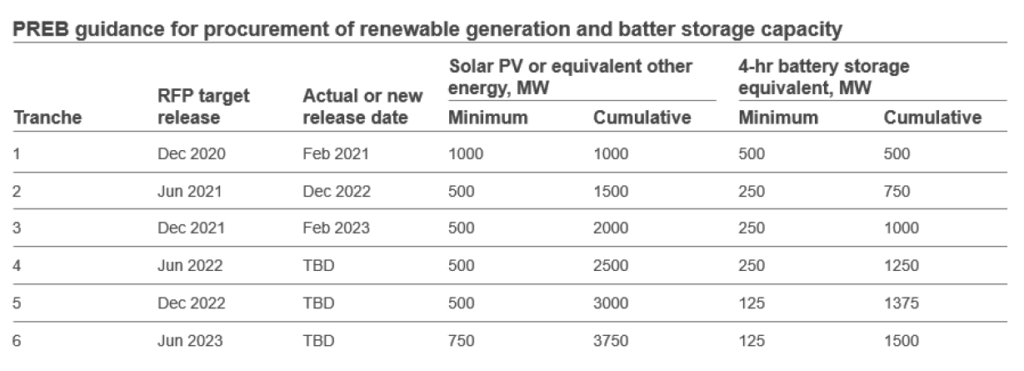
The IRP is a key document since, pursuant to Puerto Rico law, it sets forth the timetable and sequence for achieving the objective of 100% renewable generation by 2050. Unfortunately, the intermediate objectives set in the IRP currently in effect (approved in 2020) have not been met. As can be seen in the chart below, the procurement process for large-scale renewable generation is approximately two years behind schedule:


Source: PREPA Fiscal Plan 2023-24, p. 85.

According to the Fiscal Plan, “PREPA has renegotiated or completed the procurement of 844.8 MW of new renewable generation capacity.  However, as of the close of the second quarter of 2023, none of these projects have reached financial close or commenced construction, resulting in significant delays as compared to PREB-established procurement and development timelines.” (PREPA Fiscal Plan, p. 26) Furthermore, “on April 26, 2023 PREB issued an order requiring a sweeping investigation into the Tranche 1 renewable energy and battery storage procurement process due to persistent delays. The PREB order states that the delays in the Tranche 1 procurement process “could affect” renewable energy regulatory goals in the short-, medium- and long-term.” (PREPA Fiscal Plan, p. 54)

Given the delays that occurred during the Tranche 1 process, the PREB decided to appoint an “independent coordinator”, Acción Group, LLC, to carry out the Tranche 2 and Tranche 3 RFPs. It is not clear to us who manages and operates Acción Group as of this writing. In addition, RFPs for tranches 4 through 6 have been postponed indefinitely.

With respect to rooftop solar installations, LUMA claims to have connected over 50,000 customers, representing 300 MW of generation capacity, since it took over the operation of the T&D system in 2021. (PREPA Fiscal Plan, p. 19) The U.S. Department of Energy (“DOE”) estimates that, as of June 2023, there were 85,661 rooftop solar interconnections in Puerto Rico. While these statistics show some progress in the interconnection of rooftop solar systems, they also highlight the slow rate of the transition, as PREPA has more than 1,000,000 clients.

Reconstruction of the T&D System

According to the Fiscal Plan, “as of June 2, 2023, PREPA has been awarded over $15 billion of federal funding in total. Approximately $12 billion of FEMA funding is obligated for permanent work and has received approval for projects amounting to approximately $2.3 billion. The remaining obligated federal fundings include approximately $2.4 billion FEMA funding for emergency work, approximately $600 million FEMA funding for management costs, and approximately $2.3 million CDBG funding.” (PREPA Fiscal Plan, p. 87) Thus, in terms of funding for the rebuilding of the grid, only 19% has been “approved” to be spent.

In terms of the number of permanent work projects to rebuild the grid, a recent DOE presentation states that as of July 2023, there were 220 grid improvement projects in FEMA’s “pipeline”; 134 grid improvement projects had been “approved” by FEMA; and 60 grid improvements had “broken ground”. The DOE presentation did not set forth the total number of grid improvement projects that comprise the rebuilding of the entire grid.

Regardless of the metric we use, the conclusion appears to be that the grid reconstruction process has proceeded at a relatively slow pace. Several factors explain this situation. First, it is not clear, at least to outside observers, which grid modernization plan is the one that should be implemented: there is a plan designed by PREPA, there is the current IRP, there is LUMA’s system remediation plan, and there is the grid modernization plan being developed by the DOE as of this writing. It is not clear to us how each of these plans relates to the other nor which has precedence in the case of conflicts among and between them.

Second, both PREPA and FEMA have agreed to build out significant new generation capacity based on natural gas at the old Palo Seco plant site. This investment of approximately $900 million has been questioned by environmentalists as unnecessary and perhaps even unlawful given Puerto Rico’s legal requirement to transition to 100% renewable generation by 2050. Proponents, on the other hand, argue that this new fossil fuel generation is necessary to stabilize the system and to provide a “bridge” to full renewable generation on the island. It is important to address this policy issue as soon as possible to avoid further delays.

Finally, there is a strong disagreement among and between proponents of renewable generation regarding the issue of distributed generation versus centralized utility-scale solar farms. Proponents of rooftop solar systems argue there are sufficient roofs in Puerto Rico to install enough capacity so as to render unnecessary the buildout of large utility-scale solar farms in Puerto Rico.

Proponents of large-scale solar facilities argue that a system based solely on rooftops would be unstable given Puerto Rico’s energy demand, takes too long to bring up to scale, and does not take into account the needs of (1) people who live in multifamily units, (2) commercial clients, and (3) industrial and manufacturing operations. The DOE, in an interim report, concluded that Puerto Rico needs both kinds of systems.

This debate is more than a mere policy disagreement because the policy decision will influence the design of the new grid. If the government of Puerto Rico decides to rely mostly on distributed rooftop solar systems, the grid has to be designed in one way; while if it decides to rely mostly on centralized utility-scale solar generation, the grid has to be designed in another way. It appears the DOE has concluded that the new grid can be designed to accommodate both distributed rooftop solar generation, which is good for hard-to-reach, isolated “last-mile” communities, and large-scale utility generation, which can provide stable base loads to the system. Unfortunately, the DOE final report on grid design will not be ready until December of this year. So, it appears unlikely this policy disagreement will be solved before then.

Coordinating the reconstruction

Coordinating the reconstruction

Published on October 7, 2022 / Leer en español

Sergio portrait
Policy Director
SHARE

Hurricane Fiona once again laid bare the substantial vulnerability of Puerto Rican society. The impact of a weather event is not only a function of its force or potency, it is also a function of the pre-existing level of vulnerability of a given society. Puerto Rico was extremely vulnerable before Fiona since only 30% of all permanent reconstruction work related to Hurricane Maria had begun; thousands of people still lived in flood-prone areas; and essentially nothing had been done to strengthen the power grid and other critical infrastructure or increase their resilience. Given all that, the key question to ask is: why, five years after Hurricane Maria, is the reconstruction process so far behind?

This question is particularly relevant in the case of Puerto Rico’s electricity system. Over the past eight years, Puerto Rico has passed laws and adopted state-of-the-art regulations in the energy policy sector. In addition, the federal government has committed almost $12 billion for the reconstruction of the grid. Therefore, we have clear public policy objectives and the money to achieve them. The obvious question, then, is what is the flaw?

The short answer is that even before Fiona struck, the lack of coordination between the federal government, Puerto Rico’s government agencies, and the island’s municipalities was evident. For example, at a September 15 public hearing in Congress, representatives from FEMA, the GAO, and COR3, could not agree on the number of long-term projects underway and the amount of money that had been spent to strengthen the power grid.

The FEMA representative emphasized that it had committed some $9.5 billion for the long-term reconstruction of the network; while the GAO representative pointed out that of that amount only about $40 million had been spent; shortly thereafter, however, the director of COR3 described as “progress” that some $183 million had been spent on the reconstruction of the grid. It is obvious, then, that the parties are either not speaking the same language, or using the same definitions, or both. There is a clear lack of communication, which ultimately requires coordination.

In addition, in the case of the power grid, there appears to be no agreement on what the plan is to rebuild it. The Puerto Rico Energy Bureau argues that the grid should be rebuilt according to Puerto Rico’s Integrated Resource Plan (“IRP”), while PREPA appears to be working to implement a different plan called the “Ten Year Modernization Plan” and LUMA appears to be working on its own “System Remediation Plan.” Likewise, the federal Department of Energy (“DOE”) is currently working on another grid modernization plan for Puerto Rico, which should be completed by the end of 2023.

It is important to note that while the IRP establishes the legal requirements for the modernization and operation of the grid over the long term (twenty years), it was not written specifically for Maria’s reconstruction and recovery process. On the other hand, the plans submitted by PREPA and LUMA assume a shorter time frame and are proposals made specifically in relation to the ongoing reconstruction process. The DOE initiative appears to be an attempt to present a roadmap for achieving 100% of generation using renewable sources by 2050. Clearly, then, there is a failure of coordination, because while these plans have partial overlaps and intersect in some respects, they are based on different assumptions, have different implementation timelines, and, in the end, seek to achieve different goals.

President Biden recently visited Puerto Rico and announced that the DOE would be in charge of coordinating the work of the federal agencies to accelerate the electricity grid’s reconstruction. Even though we don’t have all the details this seems to be a step in the right direction. However, we believe the current confluence of events calls for President Biden to take bold action and order the creation of an entity similar to the Hurricane Sandy Rebuilding Task Force, which was created by President Obama under Executive Order 13632 of 7 December 2012 and encompass the entire reconstruction process, not just the energy sector.

A Puerto Rico Recovery Task Force would: have an explicit mandate to coordinate recovery efforts among and between the federal agencies and among and between the federal government and the government of Puerto Rico; provide for the inclusion of Puerto Rican elected officials at all levels and their representatives, including the COR3, through an advisory group; promote subsidiarity and inclusiveness by engaging local stakeholders, municipalities, community organizations, NGOs active in Puerto Rico, and business leaders; and strengthen the local economy by ensuring that residents of Puerto Rico and local business enterprises are hired on a priority basis.

In several weeks we will move on from the immediate response to Hurricane Fiona to planning for the reconstruction of the damage caused by that natural phenomenon. When the cameras are turned off, the international media stops covering Puerto Rico, and life on the island begins to resume its daily rhythms, it is imperative that we not forget those who lost their homes, the communities that were left inaccessible, and the small business owners who lost everything. At this juncture, the need to carefully define precise planning, coordination and execution frameworks, and to improve the flow of information, becomes clear. In other words, an entity is needed to comprehensively coordinate and manage Puerto Rico’s recovery.

This column was originally published in Spanish in El Nuevo DĂ­a on October 7, 2022.

Quo Vadis, Electric System? A Contextual Perspective

Quo Vadis, Electric System? A Contextual Perspective

Published on May 4, 2022 / Leer en español

Director, Madrid Policy Bureau
SHARE

The recent electrical outage in Puerto Rico has again brought to the fore the inordinate delays in modernizing the system, the lack of coordination between public and private entities involved in the task, and the urgent need to reconstruct the electrical grid in the right direction once and for all. To the electrical system’s lack of reliability and the frustrating slowness of the reconstruction process, it is now necessary to add an additional challenge: the instability in the global natural gas markets caused by Russia’s invasion of Ukraine and the uncertainty that now surrounds this energy source.

The planning guidelines driving Puerto Rico’s electric transition anticipate no less than two decades of natural gas in the island’s energy mix; it can thus be expected that the electric bill will continue to be affected by its price swings. It is important to highlight that the price of fossil fuels has already caused the price of electricity in the island to surge from 17± Kw/h a 30± Kw/h in the past two years.  In this Apuntes desde Madrid I will take a look at what has happened in Europe regarding natural gas in order to reflect on the implications of the new global scenario in the future of Puerto Rico’s electrical system.

At least two more decades tied to natural gas

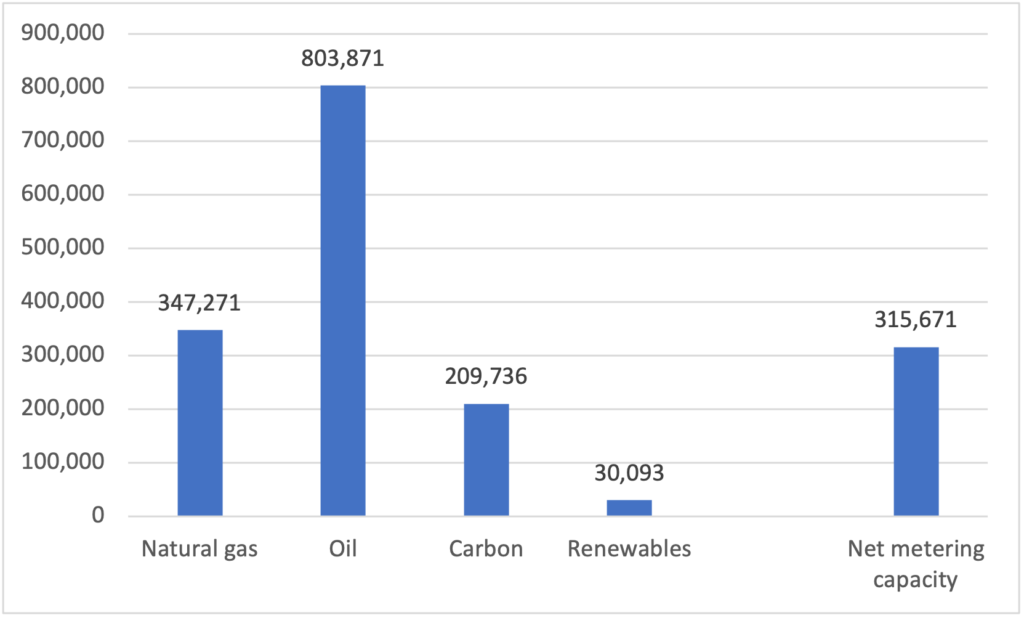
In January 2022 Puerto Rico produced most of its electricity using fossil fuels (57.8% oil, 25% natural gas), according to the U.S. Energy Information Administration (USEIA). Only 2.2% came from renewable sources produced by large-scale suppliers under contract with PREPA, even though  PR Law 17-2019 establishes a renewable energy generation goal of 40% for 2025 (60% for 2040 and 100% for 2050). It is interesting to note that the capacity of consumers to produce electricity (reflected in net metering statistics) increased from 202,992 MW (20,855 consumers) in 2020 to 315,671 MW (42,199 consumers) in January 2022. This would make distributed generation the third source of electricity in the island.

ELECTRICITY GENERATION (MW) / NET METERING CAPACITY  (MW)
JANUARY 2022

Source U.S. Energy Information Administration, EIA-923 and EIA-861
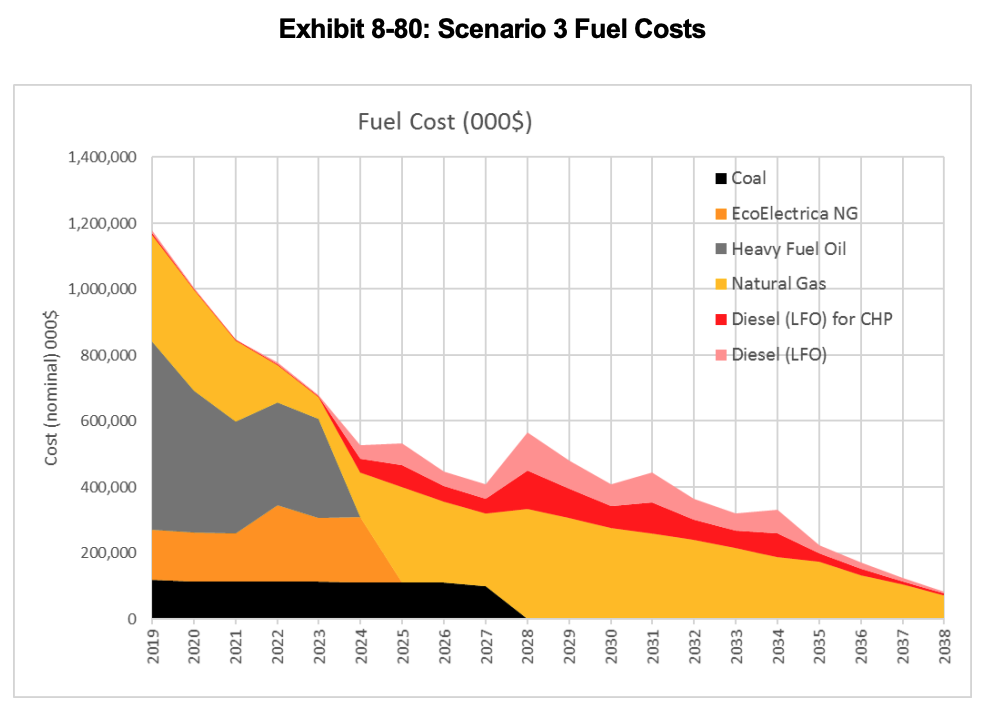
The future evolution of Puerto Rico’s electrical grid – contained in the Integrated Resource Plan (IRP) that PREPA submitted to the Puerto Rico Energy Bureau (PREB) in June 2019 and the Resolution that the PREB emitted in August 2020 – envisage natural gas as an important part of the island’s electrical infrastructure in the foreseeable future. Oil units will be retired as renewables are integrated into the system during the present decade (several of them do not comply with federal environmental standards) and the system’s transition will be anchored in natural gas. The selected planning scenario (Scenario 3 of the IRP) anticipates a significant penetration of renewable energy by 2038 (90% of installed capacity and 72% of generation) while continuing to rely on natural gas at least until 2040, according to a recent conversation with the PREB. The Bureau says that the transition will be anchored on existing gas facilities, although a new 300MW one could be built if the integration of renewables calendar fails.

This means that natural gas will be an important part of the electric bill in the foreseeable future (the yellow strip in the IRP graph below): consumers in the island will continue to be exposed to the fuel’s volatility in the global markets.

EXPECTED FOSSIL FUEL COSTS

Source: Puerto Rico Integrated Resource Plan 2018-2019
Europe and the “shock” of prices for natural gas

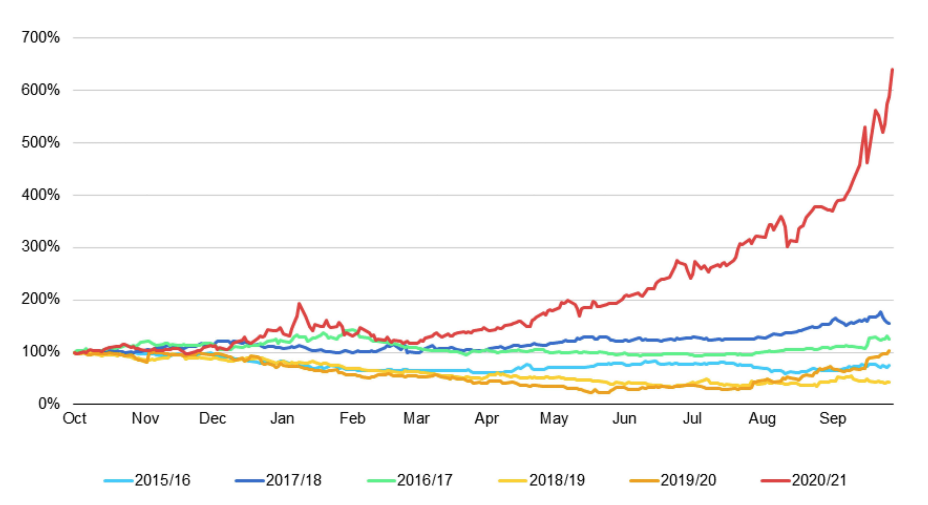
The global spike in the prices of natural gas has been dramatic: in Europe, the juncture has been compared to the 1970s oil crisis (in Puerto Rico we have the remains of the former CORCO refinery as a reminder of the juncture). The signals of the gas crisis started well before Russia’s invasion of Ukraine, at the beginning of 2021, with increased demand due to the rapid post-pandemic economic recovery and a particularly harsh 2020/2021 winter. Geopolitical factors also came into play: during the last quarter of 2021, Russia, the European Union’s principal supplier, reduced by 25% its gas exports to Europe as a way of pressuring Germany to certify the controversial Nord Stream 2 underwater pipeline (the German government had halted approval for security and non-compliance reasons).

EVOLUTION OF THE PRICE OF NATURAL GAS IN EUROPE (DUTCH TTF)

Source: International Energy Agency, Gas Market Report Q4-2021
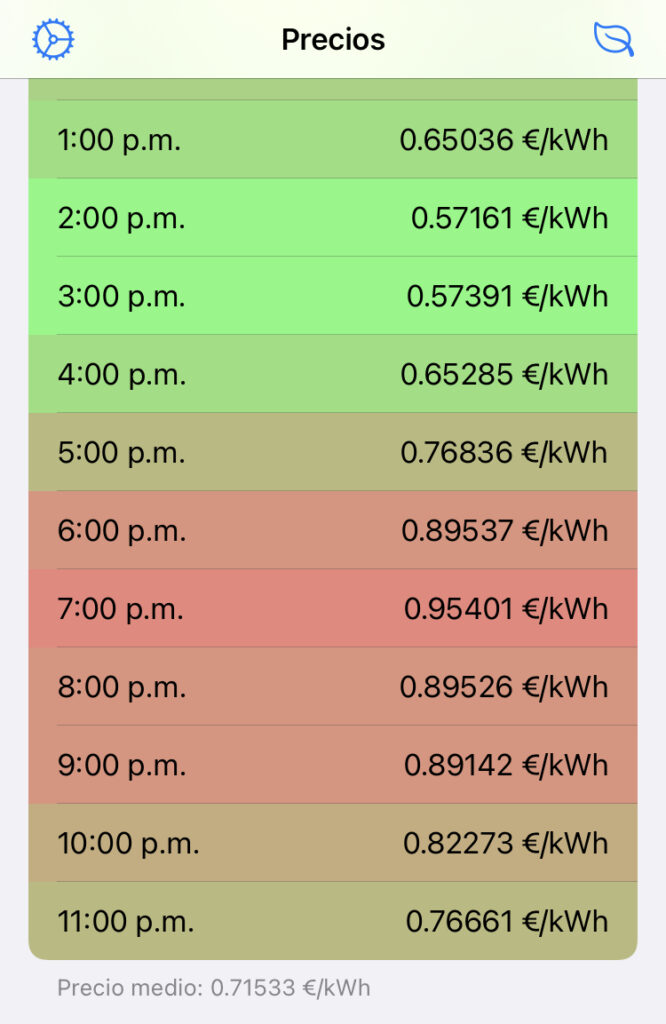
The marked increase in the price of natural gas provoked in turn a dramatic increase in the price of electricity: in Germany and Spain, for example, prices for the last quarter of 2021 were three and four times those of 2019 and 2020. The European Union  (EU) has a marginalist structure that ties the price of electricity to the costliest source of energy; until now, it served as an incentive for investment in renewables, but it has now provoked an upward spiral in the price of electricity. The upward trend was aggravated by the invasion of Ukraine: in Spain, for example, on March 8 (two weeks after the invasion) residential consumers in the regulated market (those that do not have fixed-rate contracts and pay a daily market price) paid 95 ¹ of euro per kWh during the 7 PM tranche (about $1.03 kWh, more than three times the cost in Puerto Rico).

PRICE OF ELECTRICITY FOR RESIDENTIAL CONSUMERS
WITH NO FIXED RATE CONTRACT, MARCH 8 2022

Source: PrecioLuz March 8, 2022

In Spain, the dramatic increase in the price of electricity provoked production stoppages in electro-intensive industries (steel mills, chemical plants), as well as enormous public pressure.  Social tensions have run high, and the fear of destabilization over the price of energy moved the Spanish government to approve a “crash programme” that included decreases in energy taxes (from 21 to 10%) in September of 2021 and, recently, credits and direct assistance to vulnerable businesses and consumers. The fiscal cost of the programme is € 24,000 million (about $ 25,300 million), a significant gap for the Spanish treasury (the spectre of the gilet jaunes, the French “yellow vests” has been all-too present in Spanish decision-making).  Both the International Energy Agency (IEA) and rating agency Fitch anticipate that the prices for natural and liquified gas will continue high for the remainder of 2022; managing the cost of electricity will continue to require significant political maneuvering.

Economic imperatives have intermingled with geopolitical ones aimed at reducing Europe’s dependency on Russian gas. Germany, for example, is considering the possibility of postponing the retirement of its carbon and nuclear plants and has started to build two liquified natural gas (LNG) terminals in order to receive supplies from alternative suppliers. The European Commission (EC) has launched an initiative to ensure gas supplies for the coming 2022 winter and to reduce demand for Russian gas to 1/3 of present demand by the end of the year (events seem to be overtaking the programme, as Russia has unilaterally stopped gas supplies to Poland and Bulgaria). The European Union (EU) has also started to diversify gas suppliers (the United States and Algeria figure prominently in the plan), increase its natural gas storage capacity, and implant block-purchase mechanisms similar to the one used for COVID-vaccine purchases.

Some think tanks such as the French Jacques De Lors understand that these short-term measures are not enough: the issue is not about finding new gas suppliers but about transitioning out from this energy source. The institute recommends accelerating the green transition: fast-forwarding the deployment of renewable sources; renovating buildings in order to reduce thermal needs (in Europe the need is to provide heat in winter; in Puerto Rico, the imperative is to cool interior environments); substituting grey with green hydrogen (hydrogen produced from green sources instead of gas); and excluding natural gas from sustainable finance taxonomies in order to minimize its attractiveness for investors.

Gonzalo Escribano, analyst at Spanish think tank Real Instituto Elcano understands that this new scenario opens the door for Spain to become a protagonist in Europe’s energy transition, particularly in the development and production of new technologies: green hydrogen (produced from renewable sources), marine eolic capacity (which harnesses wind in high seas), bio-combustibles (which is produced from organic residues or natural resources) and concentrated solar energy (which produces electricity from solar light using mirrors or lenses).

The transition to renewables: an expert’s opinion

Diego Rodríguez Rodríguez, professor at Universidad Complutense in Madrid and research associate at Spanish think tank FEDEA, understands that, even though in the short run the urgency to reduce dependency on Russia will slow the elimination of fossil fuels in Europe, the “shock” will actually accelerate the transition to renewable energy both in the medium and in the long-term. “We are in the process of abandoning natural gas”, Rodriguez recently told CNE, “there will be no more deployment of gas networks, except for hydrogen”.  The EU has recently launched RePowerEU, an initiative that will halve the consumption of natural gas by 2030 and that will accelerate the transition to renewable sources of energy. According to this new norm, all new gas infrastructure must eventually be converted to hydrogen.

Diego Rodríguez Rodríguez,  Universidad Complutense and FEDEA
RodrĂ­guez understands that the biggest challenges to achieving the transition will be administrative and technical since the funding will be readily available through the NextGen EU program (by contrast, in Puerto Rico, federal funding is geared towards reconstructing the grid, not towards new generation).  First, it will be necessary to break the bureaucratic bottlenecks in environmental assessments, which should be completed in five months instead of two years. Second, it will be necessary to deploy a robust electrical grid to integrate and transport new green generation.  As in Puerto Rico, the Spanish grid is operated by a private company, Red ElĂ©ctrica, but planning is made by public entities. Spain has recently approved a roadmap to renovate the Electrical Transport Grid which will entail a € 7,000 million investment (about $ 7,600 million) capable to integrate a new contingent of 37MW of renewable energy throughout the country. By 2026, 67% of electric generation should come from renewables, both land and marine-based (a timeline that is a decade and a half shorter than Puerto Rico’s).

RodrĂ­guez highlights the similarities between Puerto Rico and the Canary Islands archipelago: as islands, both have isolated electrical systems. For both, transitioning the electrical systems towards renewables poses a challenge. Most of the electricity generated in the Canary archipelago is fossil-fuel-based (mainly petroleum) – 91% in Lanzarote, 57% in Tenerife. Several decades back, the Canary Islands discussed converting its electric infrastructure to gas, but the endeavor was abandoned for environmental and cost reasons (a local councilperson said last year that renewables had rendered gas obsolete). Rodriguez says that the archipelago seems to have missed the boat on gas: it will not convert existing petroleum-based plants and will instead use these existing thermal units as “back up” in its transition to renewables (in contrast to Puerto Rico, the islands do not register violations to sulfur dioxide air quality norms since 2011). By 2030 the islands must have reduced fossil-based electricity to 50%.

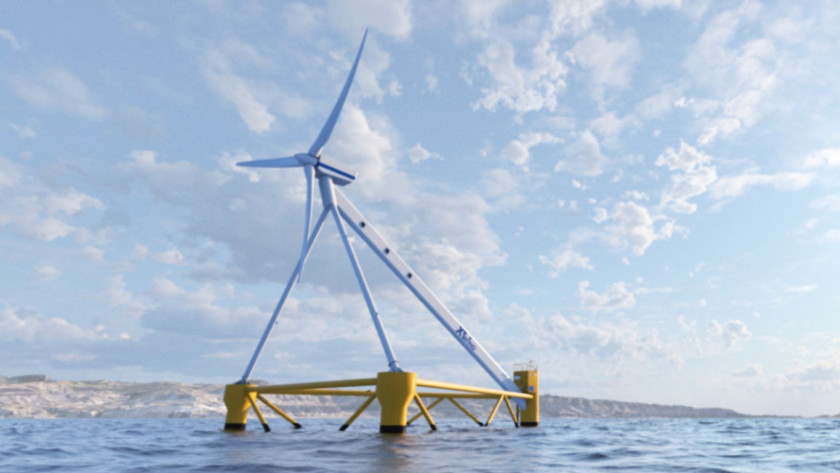
Renewable-based electricity is being integrated into the grid at an increasing pace, but it is still a small share of the archipelago’s mix, below the Spanish median, (17%, well above Puerto Rico). The islands face the environmental challenge of deploying solar panels and wind towers in landmasses of limited territorial extension (El Hierro, for example, is about half of Culebra). For Rodríguez, new technologies like marine eolic floating platforms (which allow deploying wind structures in deep waters) are the archipelago’s big hope and should be an important part of its energy transition: the first Spanish platform was tested and deployed in the archipelago’s waters.  Spain is planning to deploy fifteen floating eolic parks within the next decade and has earmarked € 200 million (about $ 217 million) for research and development of new marine-based new technologies.  Both Scotland and Holland are also betting heavily on marine eolic technologies.

Floating eolic platform

And Puerto Rico?

Should Puerto Rico continue depending on a natural gas infrastructure for several decades, as is contemplated in the current planning? It will all depend, according to the PREB, on the celerity with which renewables are integrated into the system.  The Bureau recently named an independent coordinator to oversee the process, after determining that PREPA “fails to comply with important directives and milestones” and that it “is not capable of executing the renewables Procurement Plan”. The integration of 5,157.82 MW of renewable and storage resources is foreseen between December 2023 and May 2026; the first units to be retired will be oil-fired ones, several of which are in non-compliance with federal environmental standards. Moreover, would it be possible to incorporate locally-based governance, production, and R + D in new technologies?  Without a doubt, the reconstruction of the electric infrastructure opens the door for such an aspiration, but it will be necessary to leave behind outmoded paradigms, address coordination failures between actors, and bestow the process with a true sense of urgency.