CNE Review – January 2022

Published on January 27, 2022 / Leer en español

See all editions of the
CNE Review
SHARE

In This Issue

It seems like it was only yesterday we were hearing for the first time about a strange new virus that affected the respiratory system. The past two years have gone by in a blur of adaptation (social distancing, wearing masks, using Zoom, mass vaccinations), upended routines (working from home, long-distance learning), and much COVID-related suffering.

As we begin the new year, you would be justified in being perhaps just a touch apprehensive about what 2022 has in store. No one really knows when the pandemic will be “over” (if we can use that term) and its economic, political, and social effects will play out only after several years. In light of such uncertainty, it is perfectly normal to be anxious about, well, pretty much everything.

Yet, as 2022 begins there is reason to believe that while we may need to keep adapting to new realities, the new year may also bring some positive developments for Puerto Rico. With that in mind, we present some themes to watch out for in 2022.

–Sergio M. Marxuach, Editor-in-Chief

Insights + Analysis from CNE

Six Topics to Watch in 2022

By Sergio M. Marxuach, Policy Director

  1. The Pandemic – The SARS-CoV-2 virus has consistently confounded some of the brightest scientific minds since it was first identified two years ago. It is also true, though, that our knowledge about the virus has grown exponentially during that time. In addition, we also have a better clinical understanding of the disease’s progression and have developed vaccines as well as new treatments for COVID-19. Nonetheless, we still have a ways to go before we can claim that COVID-19 is just another disease we can live with, like the flu. This is particularly true in the global South, where vaccination rates are still pitifully low. In the meantime, we know what we have to do: wear masks, keep social distancing, get vaccinated, and carry on.
  1. Puerto Rico’s Debt Restructuring – After five years of litigation and negotiation, Judge Laura Taylor Swain has confirmed a Plan of Adjustment for the debt of Puerto Rico’s central government. The proposed Plan of Adjustment is not perfect and it has been the subject of significant criticism. But it does offer some debt relief and lifts the bankruptcy cloud from Puerto Rico, which should be a net positive for people looking at potential investment in Puerto Rico. It is a really difficult task to determine, with any certainty, whether the proposed plan is adequate, the time horizon is too long and there are too many variables. We believe that both the best case scenario put forward by the FOMB and the worst case scenario favored by those who oppose the Plan are unlikely to occur. In real life, it is likely some things will be in our favor and others against. The difficulty lies in forecasting which variables will go which way. What we do know, is that everything depends on jumpstarting economic growth and that depends, in the short term, on the Hurricane Maria reconstruction process and, over the long term, on developing and implementing an economic growth plan for Puerto Rico.
  1. Hurricane Maria Reconstruction – It appears that 2022 will finally be the year when we start to see some significant new spending on reconstruction projects, especially in the housing and energy sectors. Hopefully, some of the obstacles imposed by the federal government have been cleared and the money can start flowing. Some difficult decisions regarding what gets rebuilt and what not and about energy generation technologies still lie ahead, though. In this sense, some of the most difficult questions in the reconstruction process are not technical but rather political in nature, as different groups vie with each other to push their own (interested) vision of how the reconstruction should play out.
  1. Mid-Term Elections – The entire U.S. House of Representatives and about a third of the Senate are up for reelection this fall. Most analysts and polls forecast that Republicans will gain control of at least one Congressional chamber, if not both. If that scenario is realized, any pending federal legislation extending or increasing federal spending in Puerto Rico, for example, extending SSI benefits to Puerto Rico or increasing the federal share (FMAP) of Medicaid costs, could be in jeopardy. In addition, under a Republican majority, Puerto Rico could even face the rescission of budgetary authority for certain programs or the reduction of funds already appropriated for certain uses. Thus, it is important that the Pierluisi administration move aggressively to push the Puerto Rican agenda in Washington, D.C. during the next few months. Once campaigning starts in earnest after the summer break, it may be too late.
  1. Inflation – Consumer prices are increasing at a rate not seen in forty years. This is due, in part, to the success of economic support measures in propping up demand when the COVID-19 pandemic struck. Central bankers provided huge amounts of liquidity to financial markets. Governments borrowed on a scale unseen since the second world war. In the United States alone, budget deficits exceeded 12% of GDP in both 2020 and 2021. All this stimulus prevented demand from plunging. Supply has been a different story, as the pandemic disrupted production worldwide. Supply chain bottlenecks and scrambled logistic networks led to unprecedented backlogs and delays, even as demand for physical goods increased relative to demand for services as people sheltered in place. Hence the price increases. In addition, firms in the developed world face a labor shortage, as workers, for reasons we don’t really fully understand, don’t return to work—there are 3.6 million fewer people working in the United States today than in February 2020. Economists disagree (big surprise here) as to whether this recent inflationary trend is a temporary or permanent phenomenon. On the former camp are those who emphasize supply dislocations that should eventually reverse themselves, while those on the latter side point to the risk of an inflationary wage spiral taking hold. Jay Powell, chairman of the Federal Reserve, stated recently that he (and the Fed Board of Governors) are uncomfortable with current price trends and the expectation is that interest rate increases are in the offing. It remains to be seen whether the Fed can tame inflationary pressures without inducing a recession or provoking a plunge in asset prices.
  1. The Return of Geopolitics – As 2022 begins, Russia is threatening to invade Ukraine, China is taking an increasingly assertive position in the South China Sea, and North Korea has tested new missiles. In addition, illiberal autocratic forces seem to be on the rise around the world. The strength of these movements will be tested in general elections in Brazil, France, Hungary, and in the midterms in the United States. At the same time, China is increasingly confident that its system is superior at promoting stability, growth, and innovation, especially in contrast with a divided and dysfunctional United States. Any intensification of the rivalry between China and the U.S. will affect us, as Puerto Rico’s future, for better or worse, is tied to the United States.
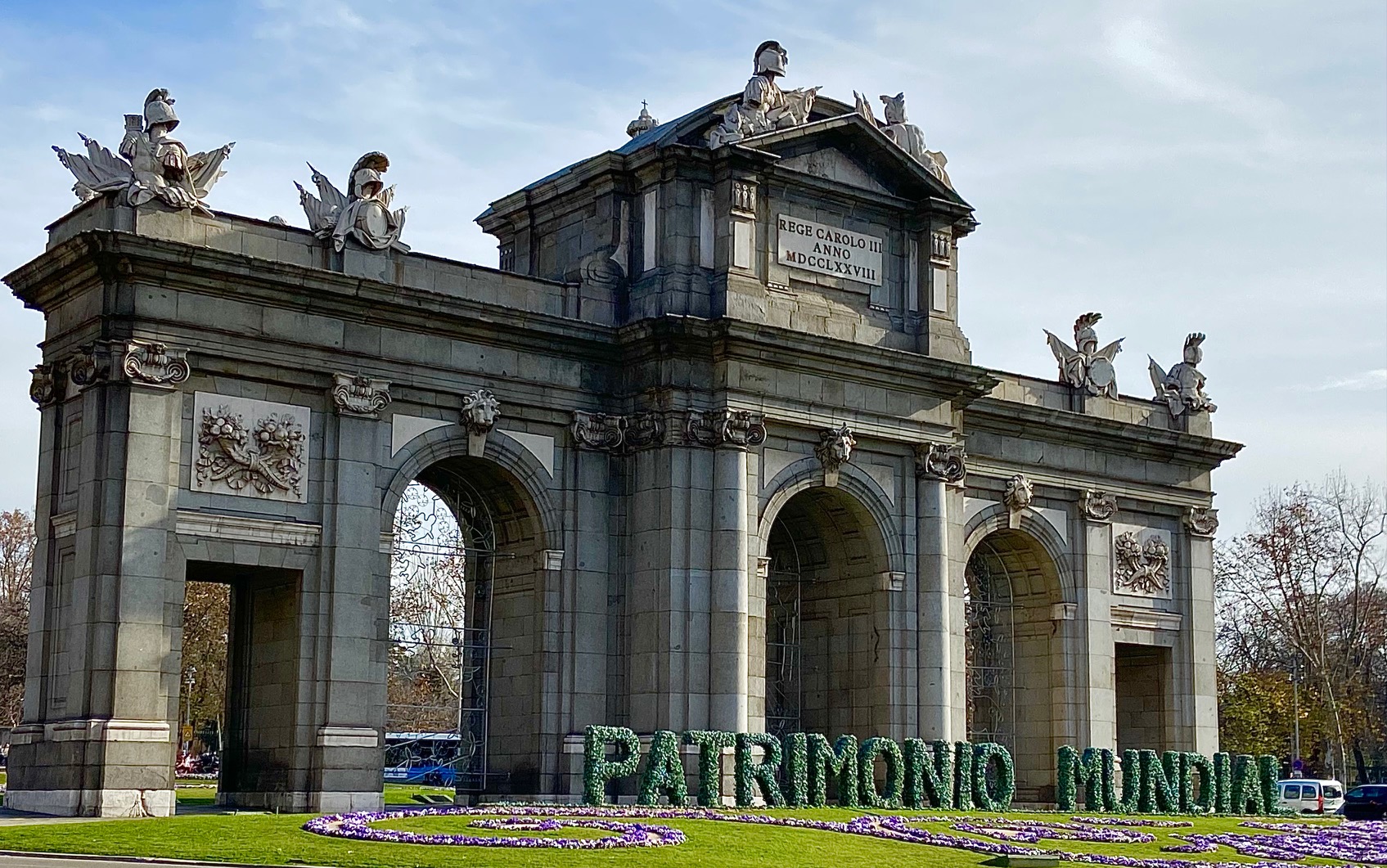
Puerta de Alcalá. Madrid, España.

From Madrid: On the Radar for 2022

By Jennifer Wolff, Ph.D., Director, Madrid Policy Bureau

The first month of the year is a good time to review, so we take this opportunity to outline some of the discussions that we will be following closely from Spain that may shed light on key issues for Puerto Rico during this year that has just begun.Click here to read the article in Spanish.

Growth Policy Summit 2021 Highlights
Click the video to watch highlights from the Growth Policy Summit 2021

On Our Radar...

Conflicts to Watch in 2022 – The Biden administration is confronting several acute humanitarian crises this year amid growing tensions with China, Iran, and Russia, according to the Council on Foreign Relations’ (CFR) fourteenth annual Preventive Priorities Survey. The survey “finds an alarming trend: severe food shortages, diminished foreign aid, political instability, and deteriorating economic conditions are accelerating humanitarian and refugee crises around the world.”

Schools and COVID – ”Children face learning loss, with studies showing that they are behind in math and reading, and face setbacks in social-emotional development due to disrupted in-person instructional time. A third-grader hasn’t had regular school since kindergarten, for example. A 12th-grader hasn’t had a regular year since ninth grade. Missed milestones for younger children include skills like learning to work in groups, lining up and moving into classrooms and eating lunch in cafeterias,” according to a recent story from the Wall Street Journal.

The Decline of American Conservatism – Writer David Brooks laments the current state of the American conservative movement in general, and the Republican Party in particular, in this interesting essay for The Atlantic.
CNE Review – September 2021

Published on September 16, 2021 / Leer en español

See all editions of the
CNE Review
SHARE

In This Issue

In this September issue of the CNE Review we seek to answer the following questions:

  • What is the current situation of the economy of Puerto Rico?
  • How do the three systemic shocks ­– the government bankruptcy, the hurricanes, and the pandemic – that have affected the island interact with each other?
  • What are some of the main risks to Puerto Rico’s economic growth in the short term?
  • What factors can stimulate or depress economic growth?

The agenda for Puerto Rico is full, to say the least. We hope the breakdown and brief analysis we provide in this CNE Review will be helpful to you in making sense of a complicated situation.

Keep reading for a summary of our policy brief. Click here to access the full text.

Insights + Analysis from CNE

The Threefold Challenge to the Puerto Rican Economy

By Sergio M. Marxuach, Policy Director

The Puerto Rican economy is simultaneously recovering from three systemic shocks:

The COVID-19 pandemic, which has adversely affected economic activity since the spring of 2020, is still an ongoing, developing event.

Four years after Hurricanes Irma and Maria, Puerto Rico is still recovering from the considerable damage inflicted by these storms.

Finally, the government of Puerto Rico is entering a critical phase of its debt restructuring process as ballots will be sent soon to creditors so they can vote on the Plan of Adjustment (“POA”) negotiated by the Fiscal Oversight and Management Board (“FOMB”). If certified by the court, Puerto Rico’s bankruptcy will be officially over and the POA will govern Puerto Rico’s fiscal policy for the next 25 years.

The COVID-19 Pandemic

In June 2020, the International Monetary Fund (“IMF”) described the COVID-19 pandemic as a “crisis like no other”. A year later, the direst predictions have not been realized, thanks in large part to unprecedented policy support from the public sector. It would be a mistake, though, to assume the crisis is over.

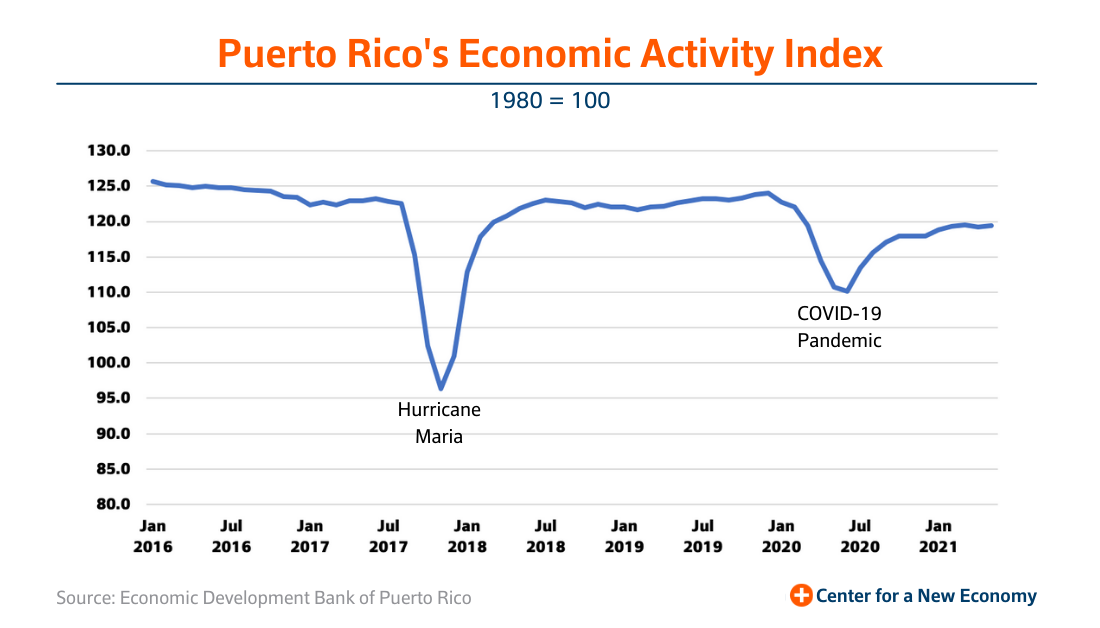
In Puerto Rico, just like in the rest of the world, the impact of the COVID-19 pandemic was swift and severe. According to data from the Puerto Rico Economic Development Bank, the Puerto Rico Economic Activity Index decreased from 122.1 in February of 2020 to 110.1 in June 2020, a decrease of 12 points or approximately 9.8%. As of June 2021, the index had a value of 118.9 points, which means we have made up for about two-thirds of the loss in economic activity. Keep in mind that this relatively rapid recovery is due largely to the positive effect of federal spending related to the COVID-19 pandemic.

Click here to read more about the effects of the pandemic on total employment in Puerto Rico and how federal pandemic funding may further impact recovery.

Hurricane Maria Reconstruction

Four years after Hurricane Maria wreaked havoc on the island and generated some $90 billion in damages, the pace of reconstruction remains slow. While Congress has allocated $64 billion for disaster relief and recovery operations in the island, as of June 30, 2021, only $18.6 billion, or approximately 29%, has been spent. Furthermore, some of the most important work, such as refurbishing and modernizing the electric grid, has not yet begun.

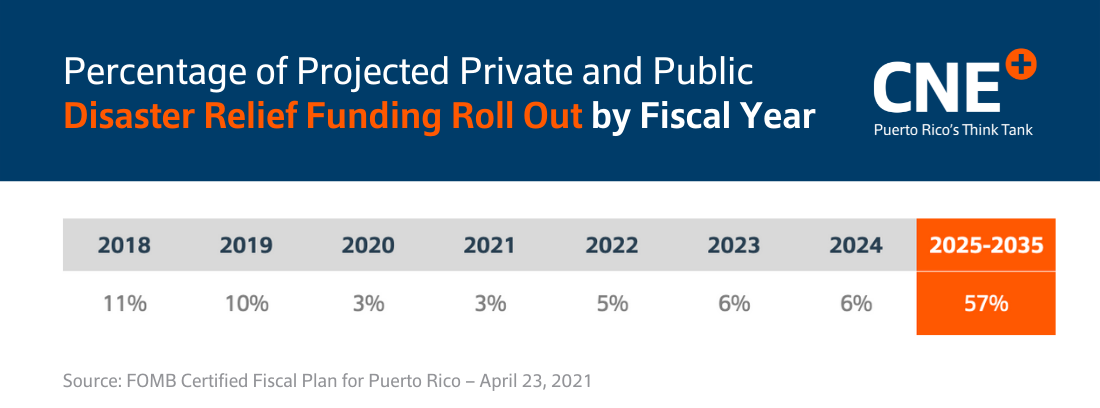
According to the FOMB, the pace of federal disbursements, and hopefully the reconstruction work, should pick up during the next couple of years, as shown in the table below. We note, though, that the bulk of recovery funding, some $47.44 billion, or approximately 57% of total funding, is scheduled to be disbursed during the ten-year period between 2025 and 2035.

This delayed disbursement schedule presents several risks for Puerto Rico. However, the main risk could be the creation of a false sense of complacency as the economy begins to grow when the federal money starts to flow.

Click here to learn the two reasons why it would be a mistake to believe that our economic problems will be over once the disbursement of federal reconstruction funding begins in earnest.

The Fiscal Plan and the POA

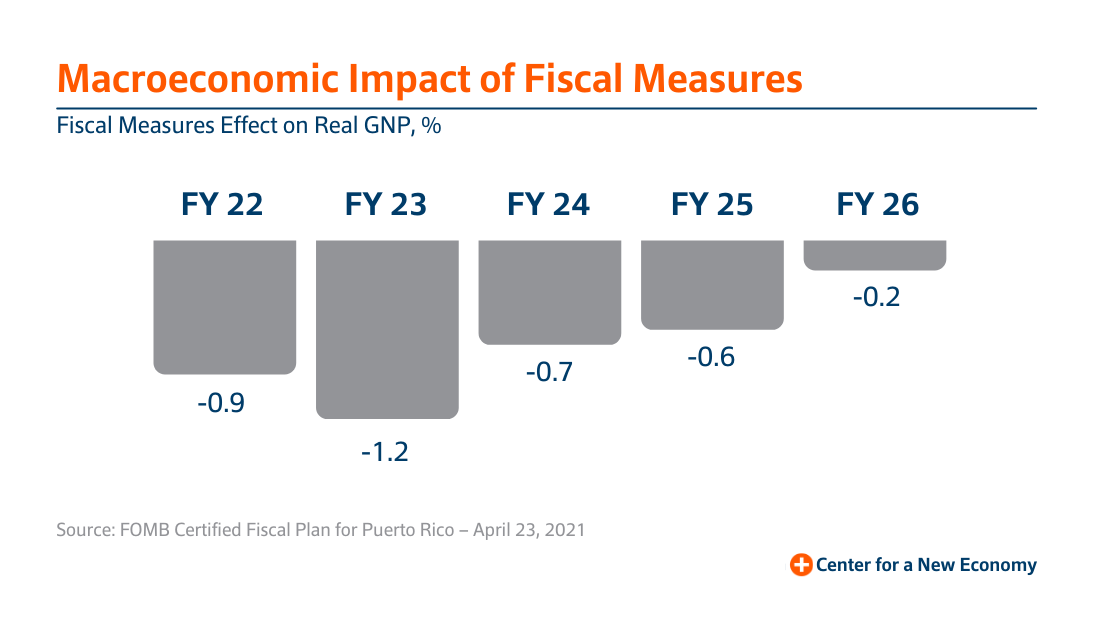
The Fiscal Plan certified by the FOMB for the central government sets in motion policies that have inconsistent effects on the real economy. First, the FOMB continues with the implementation of fiscal austerity measures, which it estimates will reduce GNP by 0.9%, 1.2%, and 0.7% during fiscal years 2022 (ongoing), 2023, and 2024, respectively. In their view, this fiscal consolidation is necessary to balance the budget in the short term. Note that the fiscal consolidation scheduled for FY2023 is particularly deep.

On the other side of the equation, the FOMB is promoting the implementation of “structural reforms” in the areas of social welfare, energy, and ease of doing business, which it estimates will have a cumulative positive impact equal to 0.75% of GNP by fiscal year 2026. Therefore, the net effect of the Fiscal Plan is a net drag on economic activity in the absence of other expansionary policy measures. The FOMB, however, believes that fiscal drag is reduced or eliminated completely when it factors in federal spending related to (1) the COVID-19 pandemic and (2) the reconstruction of the damage caused by Hurricane Maria. That bet, though, is not a sure thing. As we stated above, most of the COVID-19 funds have been spent already and the bulk of the reconstruction money is scheduled to be disbursed after FY 2025.

Because the Fiscal Plan is the master document upon which the long-term Plan of Adjustment is based, it is important to understand how this game of fiscal weights and counterweights plays out. Click here to learn more.

Conclusion

Puerto Rico’s short-term economic performance is overshadowed by a large cloud of uncertainty, as the island’s government concurrently addresses the impacts of three systemic shocks: the COVID-19 pandemic, Hurricane Maria, and the bankruptcy of the central government. Each of these processes generates its own set of risks, which oftentimes could interact among and between them in complex ways.

At a deeper level, however, it is worrisome that economic growth in the short term depends mostly on the receipt of federal transfers that we do not control. We worry that these expenditures will have a temporary positive impact on the economy that may set back efforts to develop a medium/long-term economic strategy or plan for Puerto Rico. Let’s avoid that trap and keep focused on addressing the structural factors that are the root cause of Puerto Rico’s long-term economic stagnation.

Welcome to a Brave New World

The CNE 2021 Growth Policy Summit will be held on December 3, 2021 and will bring together a dynamic mix of thought-leaders, policy-makers, and global innovators not only to spur thoughtful discussion and debate but more importantly, to provoke action and broad engagement.

Save the date, and join us in deciphering how to best leverage Puerto Rico’s resources and transform our economic model.

On Our Radar...

Afghanistan – Twenty years after 9/11 and the beginning of the war in Afghanistan there has been a lot of pontificating about American hubris. But, while that critique may be applicable to the war in Iraq, it is inappropriate in the case of Afghanistan. As historian Robert Kagan reminds us, it was fear, not hubris that led the U.S. into Afghanistan. I know this to be true because I was living and working in Manhattan when the attacks took place. Today, though, “the feelings and perceptions of threat that led them to war in Afghanistan have faded, and all that is left are the consequences of that decision, the costs in lives and money, the inevitably mixed and uncertain results, and the unanswerable question: Was it all worth it?”

End of Pandemic Unemployment Benefits – According to a recent analysis by the Wall Street Journal, “states that ended enhanced federal unemployment benefits early have so far seen about the same job growth as states that continued offering the pandemic-related extra aid.” This means the causes holding back workers from jumping into the labor market lie elsewhere.

The End of Reaganomics? – The $3.5 trillion spending package currently under consideration by Congress would be “the most significant expansion of the nation’s safety net since the war on poverty in the 1960s, devising legislation that would touch virtually every American’s life, from conception to aged infirmity”, according to this analysis by the New York Times. If enacted, it would also mark the end of 40 years of Thatcher/Reagan economic policies that led to increasing inequality, stagnating incomes for the middle class, and depleted government resources.

The Threefold Challenge to the Puerto Rican Economy

The Threefold Challenge to the Puerto Rican Economy

Published on September 15, 2021 / Leer en español

Sergio portrait
Policy Director
DOWNLOAD
SHARE

Introduction

The Puerto Rican economy is simultaneously recovering from three systemic shocks:

  • The COVID-19 pandemic, which has adversely affected economic activity since the spring of 2020, is still an ongoing, developing event. We really don’t know what the recovery from a global pandemic looks like, how long it will take, or which long-term structural shifts will flow from it.
  • Four years after Hurricanes Irma and Maria, Puerto Rico is still recovering from the considerable damage inflicted by these storms. While a lot of work has been done over the last four years, the remaining agenda of rebuilding schools, roads, and public health facilities and of mitigating existing risks to life and limb, is quite challenging.
  • Finally, the government of Puerto Rico is entering a critical phase of its debt restructuring process as ballots will be sent soon to creditors so they can vote on the Plan of Adjustment (“POA”) negotiated by the Fiscal Oversight and Management Board (“FOMB”). The POA has to be, among other things, in compliance with the Fiscal Plan for the central government and found by the court to be viable and in the best interests of the creditors. If certified by the court, Puerto Rico’s bankruptcy will be officially over and the POA will govern Puerto Rico’s fiscal policy for the next 25 years.

So, the agenda for Puerto Rico is full, to say the least. We hope the breakdown and brief analysis of these threefold challenges we provide in this brief will be helpful to you in making sense of a complicated situation.

The COVID-19 Pandemic

In June 2020, the International Monetary Fund (“IMF”) described the COVID-19 pandemic as a “crisis like no other”. At that time approximately 90% of the world economies went into recession simultaneously, the highest share since 1871; global GDP was expected to decline by 4.9%, and the expectations were for forgone production to add up to trillions of losses and millions of jobs destroyed.

A year later, the direst predictions have not been realized, thanks in large part to unprecedented policy support from the public sector. In the United States alone, Congress has authorized approximately $5 trillion in new pandemic-related spending, while the Federal Reserve has provided the financial system with an additional $4 trillion in liquidity. As a result, economic activity, income, and savings in the U.S. are already at or above pre-pandemic levels.

It would be a mistake, though, to assume the crisis is over. Total employment in the U.S. is currently some six million jobs below its February 2020 level; millions of renters risk losing their homes as moratoria on evictions end (or are found to be otherwise illegal); and the inflation rate is at levels unseen in a generation.

In Puerto Rico, just like in the rest of the world, the impact of the COVID-19 pandemic was swift and severe. As shown in the chart below, total non-farm employment decreased from 887,300 in March 2020 to 766,800 in April 2020, a loss of 120,500 jobs, or approximately 13.5% of the total. By June 2021, total employment had recuperated to about 853,800, which means we have made up for about two-thirds of the loss in employment.

Source: U.S. Bureau of Labor Statistics

In terms of economic activity, the story is quite similar. According to data from the Puerto Rico Economic Development Bank, the Puerto Rico Economic Activity Index decreased from 122.1 in February of 2020 to 110.1 in June 2020, a decrease of 12 points or approximately 9.8%. As of June 2021, the index had a value of 118.9 points, which, again, means we have made up for about two-thirds of the loss in economic activity.

Keep in mind that this relatively rapid recovery is due largely to the positive effect of federal spending related to the COVID-19 pandemic. According to the FOMB, Puerto Rico is expected to receive $43.5 billion in federal assistance related to COVID-19 over the FY2020—FY2023 period. The most recent Fiscal Plan for the Commonwealth estimates that “around 60% of this income support funding will be spent”, while the “remaining 40% of funds is projected to be saved and/or used to pay down debt, and then is spent over a 30 -year period according to the long -term consumption smoothing concept”. Thus, most of the economic support provided by this spending is already “baked-in” into current economic indicators.

In the short term, however, the COVID-19 pandemic is the most significant source of economic risk and uncertainty. While we have learned a substantial amount about the SARS-CoV-2 virus over the last eighteen months, the virus has also consistently confounded the best scientific minds on the planet. We are now in a race against the virus, trying to vaccinate the largest amount of people around the world before the virus evolves a vaccine-resistant variant. To the extent significant pockets of unvaccinated populations remain in the U.S. and around the world this risk will increase.

Eventually, though, we can expect the COVID-19 virus to reach a sort of equilibrium with its human hosts. For many experts, that will occur when the amount of people who have acquired immunity to the virus, either through vaccination or prior infection, is high enough to make this virus look more like the seasonal flu. It is unknown exactly when that will happen, but recent events in Florida, Mississippi, and Texas show we are still far from reaching that point. Until then, we will continue to see significant economic disruptions, recurring demand-supply imbalances, and periodic shipping logjams, with many governments continuously tightening and loosening restrictions on business and economic activity as the virus continues to wax and wane in accordance with its own evolutionary logic.

Hurricane Maria Reconstruction

Four years after Hurricane Maria wreaked havoc on the island and generated some $90 billion in damages, the pace of reconstruction remains slow — while Congress has allocated $64 billion for disaster relief and recovery operations in the island, as of June 30, 2021, only $18.6 billion, or approximately 29%, has been spent. Furthermore, some of the most important work — refurbishing and modernizing the electric grid; rebuilding schools, housing, roads, bridges, and healthcare facilities; and undertaking mitigation activities to increase resiliency and reduce the risk exposure of vulnerable populations — has not yet begun.

According to the FOMB, the pace of federal disbursements, and hopefully the reconstruction work, should pick up during the next couple of years. As shown in the table below, the Board expects disaster recovery expenditures to amount to $3.95 billion, $5.31 billion, and $4.68 billion for each of fiscal years 2022, 2023, and 2024, respectively. That would be equivalent to 5.6%, 7.5%, and 6.6% of nominal GNP in 2020. We note, though, that the bulk of recovery funding, some $47.44 billion, is scheduled to be disbursed during the ten-year period between 2025 and 2035.

Source: FOMB Certified Fiscal Plan for Puerto Rico – April 23, 2021

This delayed disbursement schedule presents several risks for Puerto Rico. For example, Congress may reprogram funding allocated for disaster recovery in the island, while the economic impact during any given year is diluted as funds are spent over 15 years. Conversely, the extended timeline may allow Puerto Rico to properly implement procurement regulations, auditing controls, and other compliance mechanisms required by the federal government and to avoid a foreseeable shortage of the skilled labor required for some of these large infrastructure projects.

In the end, however, the main risk regarding the Hurricane Maria reconstruction could be the creation of a false sense of complacency as the economy begins to grow when the federal money starts to flow. It would be a mistake to believe that our economic problems will be over once the disbursement of federal reconstruction funding begins in earnest for at least two reasons.

First, all that economic activity will be financed with federal funds transferred to Puerto Rico’s government instead of locally generated resources. It may be easy to forget that once the good times are rolling and erroneously believe the reconstruction is driven by the strengthening of the Puerto Rican economy, when in fact it is powered by Congressional largesse.

Second, the reconstruction process, by its nature, is designed to rebuild and repair what was damaged or destroyed by Hurricane Maria. In that sense, its main objective is to restore Puerto Rico’s capital endowment to its pre-hurricane state. The reconstruction of damaged or lost assets does not constitute a net addition to the island’s long-term productive capacity.

The Fiscal Plan and the POA

The Fiscal Plan certified by the FOMB for the central government sets in motion policies that have inconsistent effects on the real economy. First, the FOMB continues with the implementation of fiscal austerity measures, which it estimates will reduce GNP by 0.9%, 1.2%, and 0.7% during fiscal years 2022 (ongoing), 2023, and 2024, respectively. In their view, this fiscal consolidation is necessary to balance the budget in the short term. Note that the fiscal consolidation scheduled for FY2023 is particularly deep.

Source: FOMB Certified Fiscal Plan for Puerto Rico – April 23, 2021

On the other side of the equation, the FOMB is promoting the implementation of “structural reforms” in the areas of social welfare, energy, and ease of doing business, which it estimates will have a cumulative positive impact equal to 0.75% of GNP by fiscal year 2026. It is unclear, though, whether the government of Puerto Rico has the capability to implement these policies and, if implemented, whether they will have the economic impact forecasted by the FOMB.

In general, then, the certified fiscal plan would be a net drag on economic activity in the absence of other expansionary policy measures. The FOMB, however, believes that fiscal drag is reduced or eliminated completely when it factors in federal spending related to (1) the COVID-19 pandemic and (2) the reconstruction of the damage caused by Hurricane Maria.

Source: FOMB Certified Fiscal Plan for Puerto Rico – April 23, 2021

That bet, though, is not a sure thing. As we stated above, most of the COVID-19 funds have been spent already and the bulk of the reconstruction money is scheduled to be disbursed after FY 2025. Other risks to the Fiscal Plan include the potential loss of excise tax revenues from Act 154 and the loss or reduction of federal Medicaid funds. How this game of fiscal weights and counterweights plays out is important because the Fiscal Plan is the master document upon which the long-term Plan of Adjustment is based.

The POA will govern the restructuring of the central government obligations with 69 different classes of creditors and will determine Puerto Rico’s fiscal policy for the next 25 years. At the time of this writing, we don’t have all the information necessary to calculate a weighted average recovery, but creditor recovery rates range from 10% for certain unsecured creditors to 91.5% for government retirees. Some creditors will receive cash, others a combination of cash and new bonds, and still others will receive contingent value instruments, whose repayment depends on achieving certain revenue targets.

The POA will also require the government of Puerto Rico to pay annual debt service on the new bonds of approximately $1 billion and make yearly pension payments of about $2 billion, relative to a FY2022 general fund budget of approximately $10 billion. A full analysis of the POA is beyond the scope of this CNE Review but we should note that everything depends upon jumpstarting economic growth in Puerto Rico, which is necessary to generate the required government revenues to comply with the POA. And economic growth in the short term depends on the disbursement and successful management of federal funds and, to a lesser extent, the implementation of the “structural reforms” favored by the FOMB.

Conclusion

Puerto Rico’s short-term economic performance is overshadowed by a large cloud of uncertainty, as the island’s government concurrently addresses the impacts of three systemic shocks: the COVID-19 pandemic, Hurricane Maria, and the bankruptcy of the central government. Each of these processes generates its own set of risks, which oftentimes could interact among and between them in complex ways. For example, the implementation of fiscal measures to balance the budget could affect the capacity of the state to manage complex projects, while supply chain bottlenecks and inflation due to the COVID-19 pandemic may delay Hurricane Maria’s reconstruction efforts.

At a deeper level, however, it is worrisome that economic growth in the short term depends mostly on the receipt of federal transfers that we do not control. We worry that these expenditures will have a temporary positive impact on the economy that may set back efforts to develop a medium/long-term economic strategy or plan for Puerto Rico. Let’s avoid that trap and keep focused on addressing the structural factors that are the root cause of Puerto Rico’s long-term economic stagnation.