The Road to the Tobin Report
Published on September 16, 2025

Puerto Rico: A Child of the Postwar World (1947-1974)
Puerto Rico’s modern economic history begins with the end of the Second World War in 1945. It is perhaps quite difficult for people living in 2025 to imagine the state of the world at that time. Europe was shattered, full of ruins from the coast of Normandy all the way to the outskirts of Moscow; Britain was exhausted after six years of war; Germany was literally split in four parts; France was still traumatized by the shame of Nazi occupation and the guilt of those who collaborated with it; Japan had just witnessed the nuclear obliteration of two of its most important commercial and industrial cities; China was in the midst of a civil war; and India was still a colony of the British Empire. There was little trade, almost no international investment, transnational capital flows had slowed down to a trickle, and migration consisted of refugees displaced by the war, returning prisoners of war (POWs), and people escaping from the Soviet army in Eastern Europe. It is safe to say that globalization was then at a low point.
That was the global context that shaped the thinking of a group of relatively young technocrats who set out to modernize Puerto Rico in the 1940s. Back then, Puerto Rico was a small agricultural economy with a large labor surplus, little or no local capital, and an undeveloped local market. The basic idea was to exploit Puerto Rico’s advantages in that de-globalized world, namely, the ability to use the dollar as its currency, its cheap labor, the unrestricted flow of capital to and from the mainland, its privileged duty-free access to the U.S. market, and its political stability to attract U.S. capital to the island, match it with the excess pool of local labor, and export the resulting products to the United States, and, to a lesser extent, the rest of the world.
After a short stint trying a state-driven development strategy based on state-owned enterprises (cement, glass, cardboard, shoes, and bricks), Puerto Rico went ahead with the export-led strategy beginning in 1947: enacting tax exemptions and attracting U.S. capital to invest in light manufacturing operations. That investment, in turn, provided jobs to the thousands of under- or unemployed Puerto Ricans who lived in rural areas. Profits made by U.S. firms were also exempted from Federal income taxes until repatriation.
By most accounts, this “industrialization by invitation” model, with some later refurbishing, was relatively successful. Puerto Rican economic growth rates soared between 1947 and 1974, with real GNP increasing by an annual average of 6.9% during this period. Living standards increased as well, as measured by most standard indicators: literacy rates and educational attainment; health outcomes and life expectancy; infant mortality; access to clean water, electricity, and safer housing; and persons per physician all improved significantly.
Yet, by other measures, the structural transformation of Puerto Rico’s economy and society fell short of the mark. Rapid jobs growth in the manufacturing sector did not replace all the jobs lost in the agricultural/traditional sector, and total employment in 1960 was lower than in 1950. The apparent contradiction between rapid growth and relatively high unemployment is explained by a very low participation rate and a large reservoir of underutilized labor. Even with strong internal growth, Puerto Rico experienced a massive out-migration. Over 650,000 people left the island during the period between 1945 and 1964, out of a total population of 2.2 million in 1950.
By the mid to late 1960s, then, the government of Puerto Rico had already identified several deficiencies of its industrialization project: persistent high unemployment, which never fell below 10-11 percent; competition from other low-wage areas for the labor-intensive operations of U.S. companies; the over-concentration of industrial activities in a few urban areas; the abandonment of the agricultural sector; and the existence of large pockets of urban poverty.
The proposed solution was to build a massive capital-intensive petrochemical complex in the southern part of the island, spurred by a presidential Executive Order that exempted Puerto Rico from U.S. crude oil import quotas. The objective was to move to higher-value-added, capital-intensive manufacturing operations that created high-wage jobs as well as backward and forward linkages with the local economy. This plan succeeded in bringing some of the largest firms in the petrochemical industry to the island.
Yet it suffered from one obvious weakness: Puerto Rico’s new industrialization strategy was based on cheap access to raw materials, petroleum, which Puerto Rico neither produced nor controlled. This weakness became palpably clear with the Organization of the Petroleum Exporting Countries (OPEC) embargo following the Yom Kippur War of 1973.
Response to the Crisis
The oil shock, the ensuing global recession, and the impact of Federal anti-inflationary policies all contributed to a deep contraction in the Puerto Rican economy, increased unemployment, ballooning government deficits, the closing of the bond markets for Puerto Rico debt issues, and a significant reduction in productive investment. The Puerto Rican government responded with a traditional Keynesian program to stimulate demand: increasing government spending; acquiring privately held telephone and maritime shipping companies; lobbying for increases in Federal transfers; and continuing the subsidization of mainland companies that opened factories in the island. These demand-side policies, however, were generally ineffective in addressing the supply-side nature of the oil shock.
It is in that context that then-Governor Rafael Hernández Colón created several working groups to help him develop policies to address the crisis. First, he set up a Finance Council composed of cabinet-level secretaries. He also appointed an Interagency Committee to study and propose a general economic development strategy for the island. Finally, he appointed a Committee to Study Puerto Rico’s Finances in March 1974, which was chaired by James Tobin, Sterling Professor of Economics, Yale University. This Committee has been known in Puerto Rico ever since as the Tobin Committee. Other Committee members were: William Donaldson, Dean, School of Organization and Management, Yale University; Kermit Gordon, President, The Brookings Institution; Wilfred Lewis, Executive Director, National Planning Association; Sidney Robbins, Professor of Finance, Columbia University, Graduate School of Business; and William F. Treiber, Consultant, Federal Reserve Bank of New York.
The Tobin Committee began its work in May 1974. Its staff prepared 13 background papers, and the Committee submitted its final Report on December 11, 1975 (the “Tobin Report”). The Tobin Report is considered a seminal document in the economic history of the island for several reasons. First, it highlighted that while Puerto Rico’s political relationship with the United States had some advantages for the island in the form of “a common currency, a customs union, the unrestricted movement of funds, capital and persons between the two economies, exemptions from Federal income taxes, and eligibility for federal grants to the island’s government and its citizens”, this arrangement also implied “some constraints which must be recognized.” Back then, this was the quiet part that no one dared to say out loud.
Second, it correctly identified the growing gap between the island’s Gross Domestic Product (“GDP”) and its Gross National Product (“GNP”) due to the remittance of profits and interest to mainland firms and creditors and warned that “from the viewpoint of Puerto Rican residents’ welfare, high levels and rapid growth of GDP are of little merit if not accompanied by a high and rising GNP.” It also called for caution when dealing with multinational capital-intensive enterprises that are more interested in “profit shifting, rather than [in the] real and durable cost advantages of [its] Puerto Rican location.”
Third, the authors stressed the risks and downsides associated with a development strategy that placed an extreme reliance on external resources, especially as Puerto Rico had “gone further in two important respects: (1) tax exemption and other subsidies to attract Mainland industry, and (2) dependence on imports of capital from the Mainland rather than internal public or private saving.” They also stated very clearly that “Puerto Rico will be able to increase influence over its economic development when it reduces its dependence on external capital.”
Finally, the Report’s serious concerns about the increase in Federal transfers to individuals were right on point. Federal transfers for individuals contribute extraordinarily little to Puerto Rico’s growth, increase consumption mostly of imports, and do not provide additional resources for investment. The Report was also prescient when it warned that “probably the time is ending when Federal aid of Puerto Rico grows more rapidly than total Federal aid to states and local governments.”
In addition to identifying key shortcomings, limitations, and constraints of Puerto Rico’s economic development strategy, the Tobin Report is also an important document from an economic history perspective, as it preceded the “neoliberal turn” in macroeconomic policy in the U.S. and Europe by several years, at a time when left-leaning “dependencia” theorists were quite in vogue. Professor Tobin did not mince words or try to cover his tracks when he stated right in the transmittal letter to Governor Hernández Colón that “Puerto Rico faces several years of fiscal, financial, and economic austerity.”
Indeed, many of the Report’s recommendations later became associated with the IMF’s “structural reform programs” or “austerity policy packages.” Among these, we find the following:
- Generate budget surpluses through the “drastic restraint of expenditure and additional tax effort.”
- Limit the annual growth of the Commonwealth’s budget to 3 to 4 percentage points below the U.S. rate of price inflation.
- Freeze government wages and salaries for a three-year period.
- Reduce government employment, if only by attrition.
- Require government-owned enterprises to produce current surpluses.
- Review public enterprise pricing policies.
- Ask Congress to allow suspension or reduction of minimum wages for persons under 20 employed in Puerto Rico.
- Implement wage controls on all wages in Puerto Rico.
- Review all legislation that raises labor costs, including many compulsory holidays; vacations and sick leave; year-end bonuses; and overtime and free time.
- Reduce the issuance of new government debt.
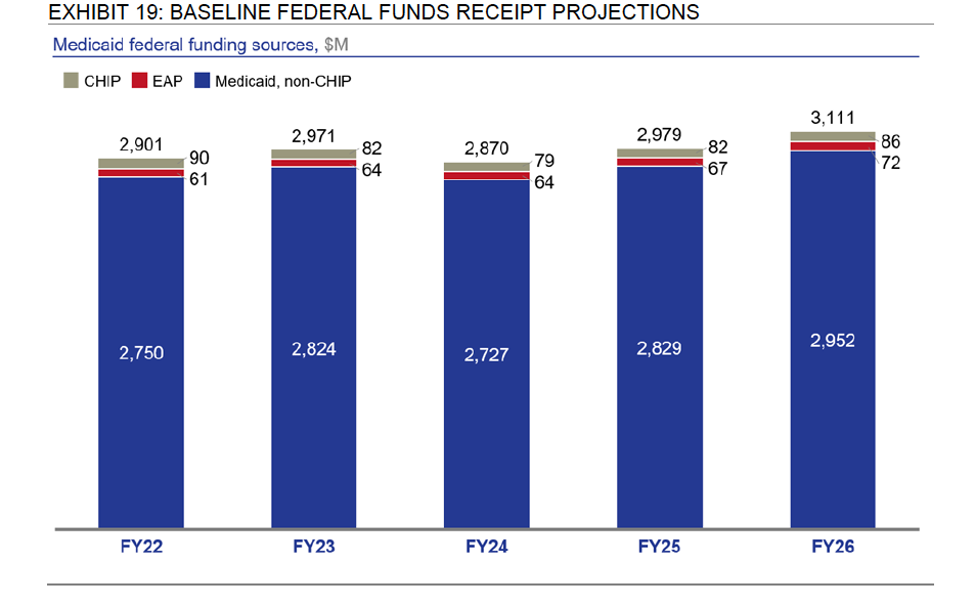
In some ways, Puerto Rico has never fully recovered from the first oil shock, which ended Puerto Rico’s petrochemical dreams and highlighted the danger of Puerto Rico’s dependence on imported fuel oil for electricity. Events in 1974 called for a thorough questioning of the prevailing economic strategy. Yet, instead of rethinking the existing economic model and restructuring the productive basis of the economy, the Puerto Rican government essentially refurbished the existing one: obtaining a new federal tax exemption for U.S. firms operating in Puerto Rico (Section 936), increasing government employment, seeking ever-larger increases in federal transfers (food stamps, among others), and issuing public debt in ever larger amounts.
By the early 21st century it was evident that this “economic model” had run its course: Section 936 was phased-out by the federal government; government employment increased to its upper limits; federal transfers became increasingly contingent on the economic and political dynamics in Washington, DC—and thus could not be a reliable basis of future growth—and public indebtedness reached historic highs in excess of 100% of GNP, eventually triggering a large-scale fiscal crisis.
With hindsight, it is clear that Puerto Rico’s growth in the early years of the new millennium was built on an unstable foundation. Lacking the tariff preferences that drove growth in the 1950s and 1960s, or the tax preferences that supported growth after the early 1970s, globalization eroded the advantages linked to Puerto Rico’s special access to the U.S. market that drove Puerto Rico’s post-war growth, without giving rise to new opportunities that Puerto Rico was able to capitalize on, given its subordinated political status.
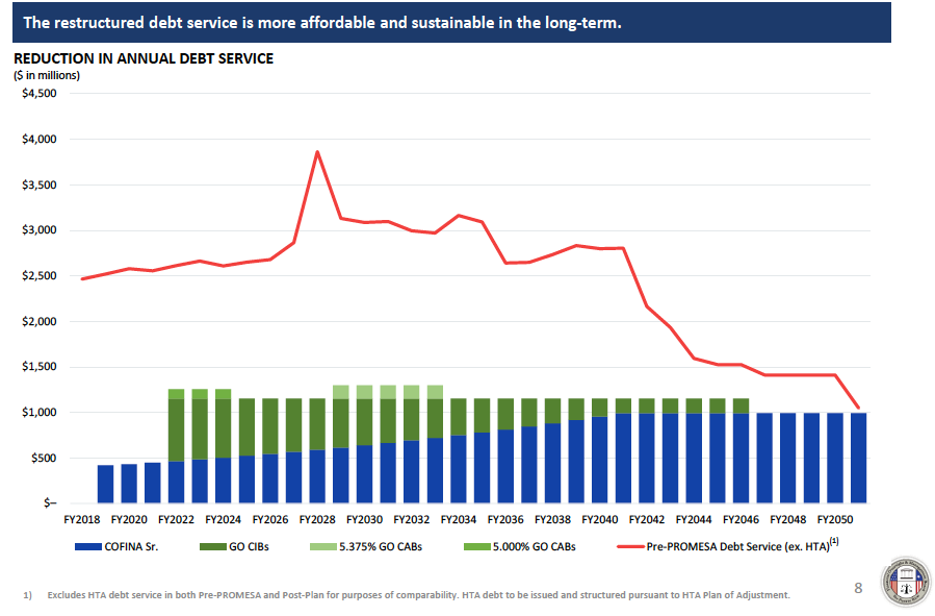
The Puerto Rican economy entered a period of sharp decline beginning in 2006, characterized by stagnant or negative growth rates, high unemployment, chronic budget deficits, significant population loss, and increasing indebtedness. By 2015, bonded debt exceeded $70 billion, more than 100% of the island’s GNP, and unfunded pension liabilities exceeded an additional $50 billion. At that time, the Governor declared the island’s public debt to be “unpayable” and, among other things, hired a group of consultants led by economist Anne Krueger. This team drafted a report that, not surprisingly, rehashed many of the recommendations set forth in the Tobin report.
The government of Puerto Rico was understandably reluctant to cut current expenses even as revenues slumped. Laying off government employees when the private economy was contracting would not only have left many families without any source of income but also added to the country’s general economic woes. The island, however, needed a mechanism to adjust its debts, and Congress eventually provided one by enacting the Puerto Rico Oversight, Management, and Economic Stability Act (“PROMESA”) in 2016.
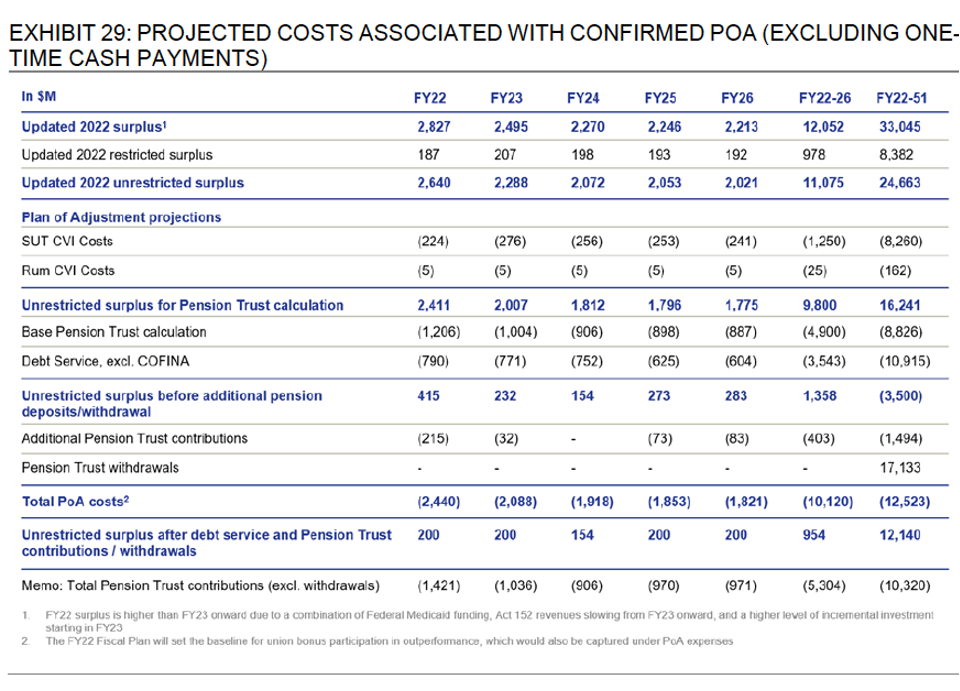
PROMESA provided for (a) the establishment of an unelected Financial Oversight and Management Board (FOMB) with ample powers (known locally as “la Junta”) to impose fiscal discipline on Puerto Rico, and (b) a court-supervised process for the orderly adjustment of the territory’s debts and obligations. The FOMB, in general, has implemented a broad fiscal consolidation program to stabilize the island’s public finances and managed to restructure most of Puerto Rico’s debt. The process, however, has been slow and expensive, as the FOMB enters its 10th year of operation.
As the island slowly progresses along the road of fiscal stability, the question arises as to what happens once the FOMB ceases its work. There appears to be no economic plan to sustain medium to long-term economic growth in Puerto Rico, and financial stability by itself will not be a source of growth.
It is in this context that revisiting the Tobin Report and its recommendations is important and relevant. That reconsideration, however, has to take into account the economic experience of the last fifty years, in Puerto Rico and abroad. The current economic environment is quite different than the one in 1974. Globalization seems to be slowing down, while support for international trade, investment, and migration has declined significantly among both advanced and developing economies. It is in this challenging time that we need to evaluate what policy recommendations make sense and which ones do not, which ones are still relevant, and which ones have not aged well, and eventually, which economic path makes sense for a small, open economy like Puerto Rico in the 21st century.



 The Brave New World of Artificial Intelligence – Advances in the development of new applications of artificial intelligence (“AI”) technology have the potential to create new ways of knowing and understanding reality and to disrupt many fields of human endeavor. Yet, AI, just like any other technology, can be used for both good or evil. This series of stories in the

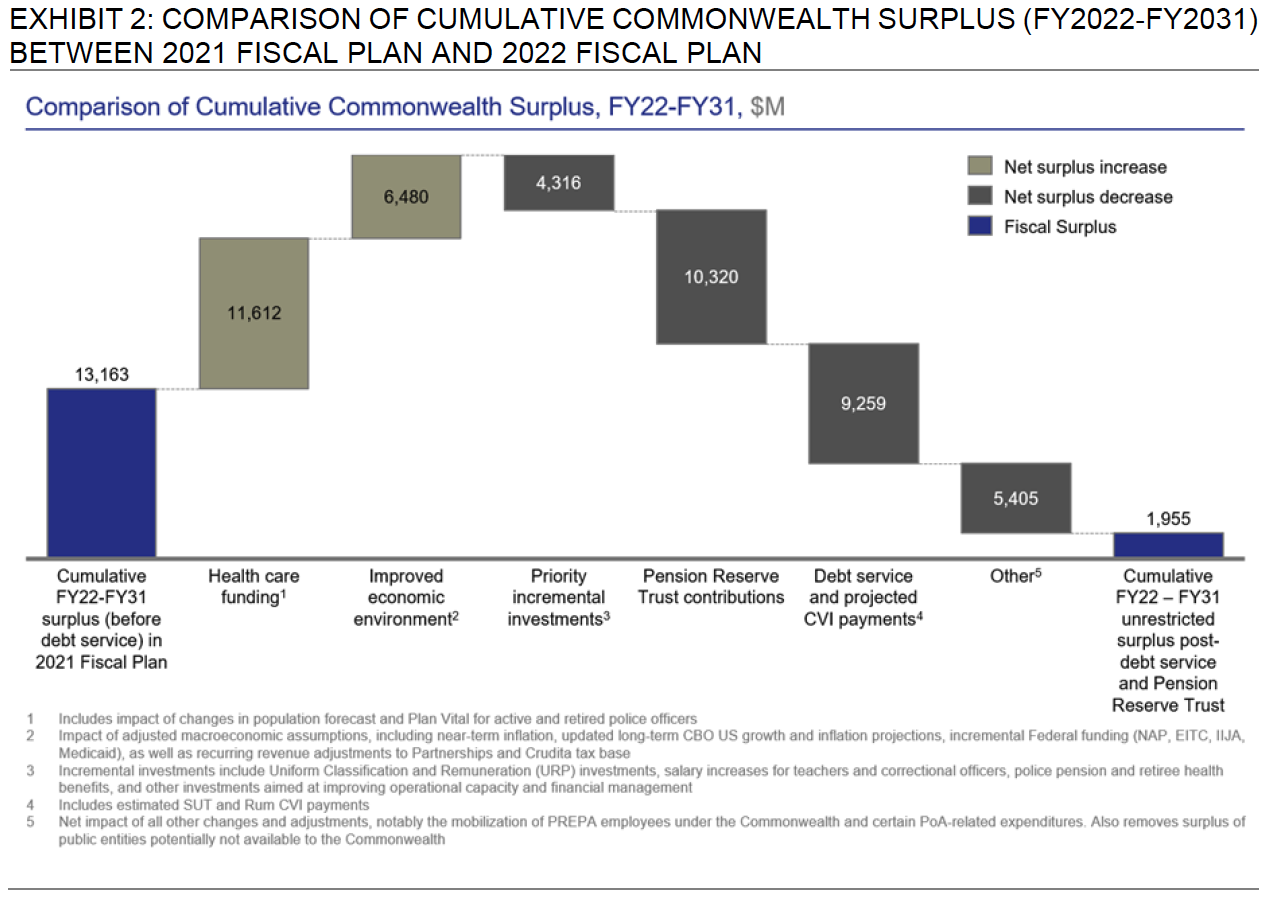
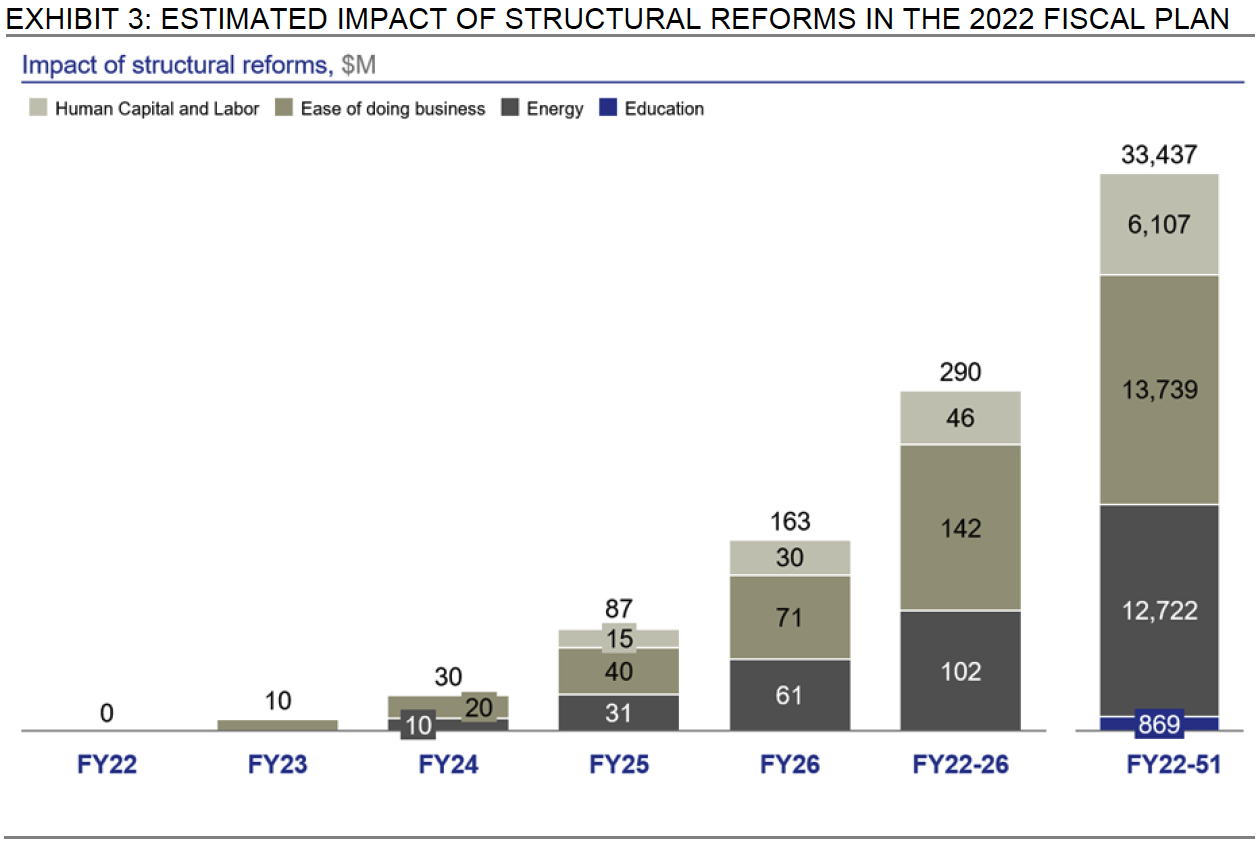
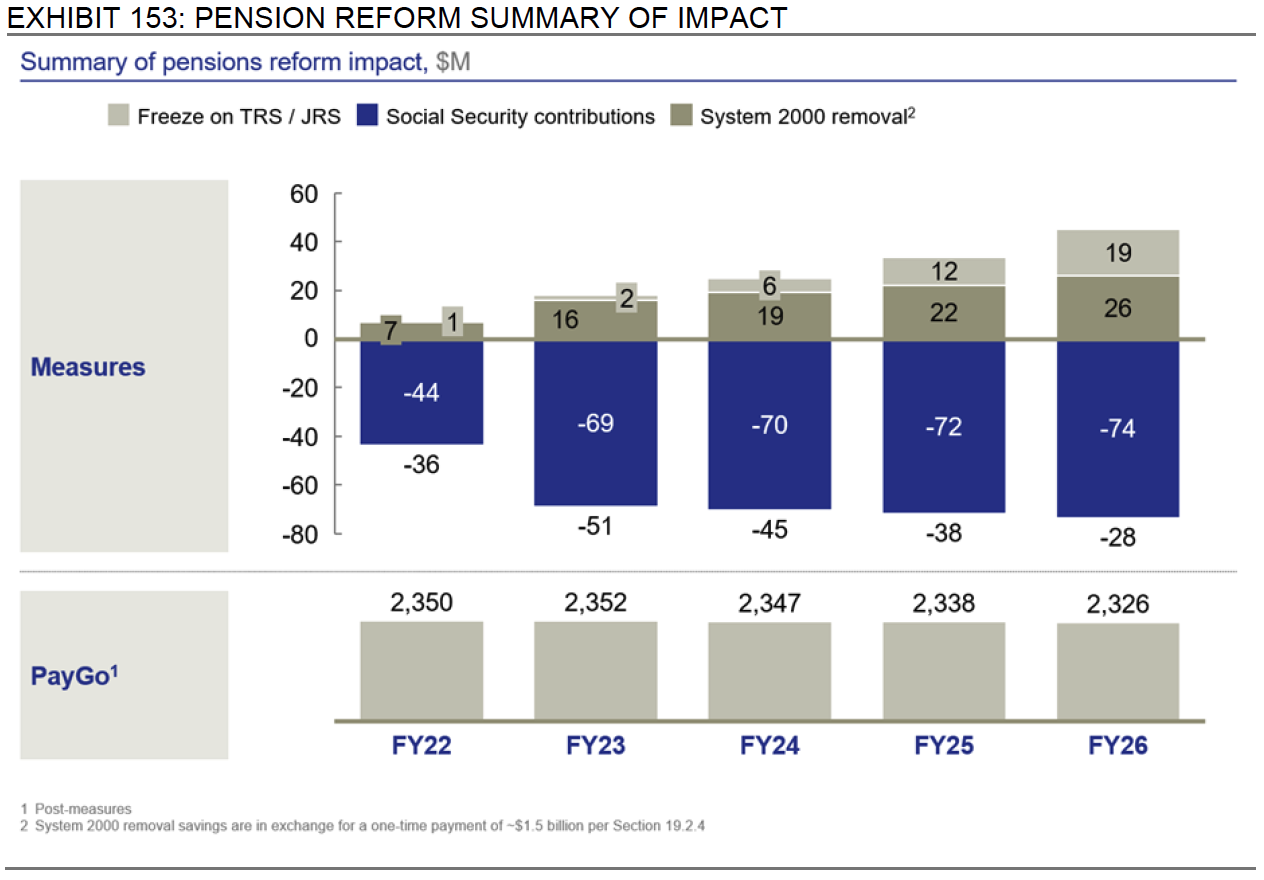 Source: FOMB, Certified Fiscal Plan for Fiscal Year 2022, p. 320.