Three key elements for an electric network that works

Three key elements for an electric network that works

Published on October 13, 2022 / Leer en español

Director, Madrid Policy Bureau
SHARE

The most recent massive outage caused by Hurricane Fiona in Puerto Rico, the disenchantment with LUMA’s performance, and the general frustration with the reconstruction and transformation process of the island’s electric infrastructure led me to ask two Spanish experts about the keys to having a functional electric system. In this Apuntes desde Madrid I spell out the learnings I derived from separate conversations with Diego Rodríguez Rodríguez, economist, professor at Universidad Complutense de Madrid and part of the Spanish think tank FEDEA; and with Ricardo Guerrero Lemus, applied physicist, professor, and part of the research group on renewable energies at Universidad de la Laguna in Tenerife, Canary Islands. Both hail from the Canary Islands Archipelago and thus understand the workings of isolated, antiquated and vulnerable island systems such as Puerto Rico’s.

The lessons point in three directions: normative (regulation, metrics), institutional (the effectiveness of government supervision, the collaboration between actors, innovation, research), and technical (digitalization, capacity of the network).

Electric outage in the aftermath of Hurricane Fiona. Image: El PaĂ­s

1. Spanish regulation establishes the guarantee of electric supply as a priority; non-compliance has concrete consequences for companies

The creation of an electricity market in 1977  after the integration of Spain into the European Union’s energy sector transformed the country’s electric sector from one in which one company, UNESA, coordinated the totality of the electric system and rates were fixed by the State, to a liberalized one in which private actors played within the framework of market competition. The regulatory framework associated with this change incorporated the notion of “supply guarantee”. This notion establishes the responsibility of these new actors to supply electric demand at all times and gives rise to a multiplicity of regulations that encompass from the generation of electricity in insular territories and the faculties of the operator of the electric grid during emergencies, to the ability of public administrations to impose sanctions against companies in cases of “energy zeros” (electric outages).

There are few “zeros” in Spain – the availability index in the peninsular network was of 98.5% in 2021 and the average time of outages was less than 25 seconds. Insular systems are more fragile: in 2021 the Canary Islands Archipelago had 4 electric outages of an average of 2.33 minutes each (Red ElĂ©ctrica, The Spanish Electricity Report). Outages, when they do happen, are severely sanctioned and include not only million-euro fines to companies, but compensation to consumers. During the last few years, the island of Tenerife, for example, has issued over € 64 million in sanctions for major “energy zeros”:

  • September 2019 – an electric interruption left the 950-thousand inhabitants of the island in the dark for 9 hours. Endesa, the company in charge of generation, and Red ElĂ©ctrica de España, the grid’s operator , were imposed fines of € 10 million and € 30 million Residents of urban areas were entitled to a € 21 credit for the electricity they did not receive (in Spain one pays not only for electricity consumed but for the maximum capacity the household can consume at any given moment). Consumers were urged to submit compensation claims for lost foodstuff or damaged appliances.
  • June 2020 – this time, Red ElĂ©ctrica was fined € 8 million for a 54 minute “zero” that affected almost 150-thousand consumers.
  • July 2020 – a “zero” of more than 16 hours brough a € 6 million fine to producer Unelco and another one of € 10 million to E-distribuciĂłn Red, distribution company.

In Puerto Rico no fines have been imposed for outages (despite the fact that the law allows them): the April 2022 outage, for example, is still under evaluation by the Energy Bureau/Negociado de EnergĂ­a (NEPR) as we write in October.

Click on the following video (in Spanish) to listen to Ricardo Guerrero Lemus about the guarantee of electric supply

2. The company in charge of the electric grid is actively supervised by the State and operates under clear performance parameters

In Spain, the operator of the electric network is a publicly-traded private company, Red ElĂ©ctrica de España (REE). Nonetheless, the Spanish state maintains a 20% participation through the Industrial Participation State Society/Sociedad Estatal de Participaciones Industriales (SEPI), a public corporation with investments in key sectors (naval construction, rural development, infrastructures, among others).  Supervision over REE is made by the Ministry of Ecologic Transition and Demographic Challenge/Ministerio de TransiciĂłn EcolĂłgica y Reto DemogrĂĄfico, which is in charge of the energy sector, and the National Commission for Markets and Competition/ComisiĂłn Nacional de Mercados y Competencia (CNMC); supervision by both agencies is particularly active. In Puerto Rico, public oversight over the company in charge of the network (LUMA) falls on the Authority for Public Private Alliances/Autoridad para las Alianzas PĂșblico Privadas (AAPP) and the Energy Bureau/ Negociado de EnergĂ­a de Puerto Rico (NEPR).  According to press reports, public oversight over LUMA has suffered from lack of coordination between these agencies, laxity, and, in some instances, lack of expertise.

Red ElĂ©ctrica’s remuneration system in Spain has been designed to incentivize good performance. Only operational costs related to “an efficient and well-managed company” are considered. Clear metrics have been incorporated into the system, including incentives related to compliance and penalties for failures in service.  In Puerto Rico, CNE has alerted about flaws in the contract subscribed between PREPA and LUMA and about the lack of precision of the performance parameters included in the contract.  The process to determine performance parameters for LUMA did not start in the NEPR until December 2020 – six months after the contract was signed – and even today, more than two years later, the process continues and is the subject of multiple motions and counter-motions. The performance report prepared in May 2022 by the NEPR (NEPR-MI-2019-007/June 2021-May 2022, 12-Month Metrics Summary) lacks data for almost 90 of the 565 parameters, both for generation and distribution, as well as in the area of financial performance. Specifically, in the area of transmission and distribution (in charge of LUMA), the NEPR found “compliance” in only 4 of the 14 parameters, “non-compliance” in 6, and lacked data for 4.

As a comparison:

  • Red ElĂ©ctrica manages 27,300 miles of electric circuits in Spain; LUMA manages 2,500 miles of transmission and distribution lines in Puerto Rico.
  • In Spain, Red ElĂ©ctrica has one operating group in charge of electricity transport and another one in charge of construction and maintenance of the transmission and distribution network; in Puerto Rico both functions have been delegated to LUMA.
  • During 2020-2022 Red ElĂ©ctrica de España’s yearly compensation for electricity transport was fixed at between € 71.8 y  € 74.6 million; that is, incentives could represent some € 2.8 million to the company. LUMA’s base compensation for this coming (first) year of the contract is set at $ 70 million in 2020 dollars adjusted for inflation; incentives can be of up to an additional $ 13 million. LUMA currently operates Puerto Rico’s grid under a Supplementary Agreement that allows it to receive a base compensation of  $115 million in 2020 dollars adjusted to inflation. The first adjustment for inflation has already resulted in an increase of  $7 million over the base compensation.

Click on the following video (in Spanish) to listen to Rodríguez Rodríguez about state supervision over the grid’s operator

3. Spain’s electric grid is digitalized and is managed transparently in order to facilitate the integration of renewables

The penetration of renewable sources for the generation of electricity in Spain has reached important levels: it represents 57% of installed capacity and 48% of produced electricity.  It thus exceeds the 39% of renewable electricity generated in the totality of the European market. In contrast, in the USA electricity generated from renewable sources stands at 24%; in Puerto Rico, renewable generation in large-scale facilities under contract by PREPA is of 2%.

These achievements in Spain have been possible, among other things, thanks to the creation of a pioneer system for managing the integration of renewable sources that has set the standard for Europe. Through the digitalization of the electric grid (a smart grid), Spain has an REE-operated Control Center for the Integration of Renewables that every 12 seconds obtains from renewable generation sources, information on their production, voltage and connection quality. Working in tandem with a state-of-the-art energy storage system, this digital control center brings stability to the generation of energy from renewable sources, which by nature fluctuates with climatic conditions. Moreover, information on connection nodules available for new connections to the grid is open-sourced, something that facilitates planning and the entry of new renewable generation suppliers (see for example, the list of the 920 nodules that were available on October 3 throughout the country).  Planning is a live, dynamic and continuous process: it integrates Autonomous Communities and private actors from the sector with proposals for expansion and enhancement of the grid (in 2019, 1,335 proposals were received, most of them related to renewables.

At the consumer level, the use of “smart” (digitized) electric meters for “net metering”, ie, the technical aspect, has run parallel to changes in regulation. These facilitate both the production of energy at the point of consumption, as well as the interconnection between consumers and prosumers (consumers that produce their own energy). The need for permitting for self-consumption facilities was eliminated, as well as the so-called “sun-tax”, which required prosumers to pay for their connection to the electric grid. Electric toll charges for use of low-voltage lines were also eliminated. Consumers continue to contribute to the electric system through a fixed potency charge that is included in their bills and is calculated by the National Commission for Markets and Competition based on the cost of maintaining and modernizing the distribution and transmission network. The juridical figure of an “energy community” was also created.  “Energy communities” can be of two types: a sort of cooperative in which partners put up capital to install an energy facility, or that of an association between a consumer who buys the electricity from a prosumer neighbor, all facilitated by the digitalization of the electric grid.

Click on the following video (in Spanish) to listen to Ricardo Guerrero Lemus on energy communities

This normative and technical push has coincided with massive European Union funding, a key element in growing self-consumption into a large massive scale. Grants are allowing consumers to amortize their investment in photovoltaic panels in three to five years, instead of one or two decades. The European Union has at least 12 funds available to promote the evolution of the energy sector. Spain has assigned  € 660 millions of these funds to the Autonomous Communities in order to facilitate self-consumption, which still has a relatively low level of penetration in the peninsula (the Spanish Photovoltaic Union/UniĂłn Española Fotovoltaica says that there are only 150,000 self-consumption facilities in the country versus 2 million in Germany; in Puerto Rico self-consumption reached 18% in January 2022). It is expected that these regulatory changes and increased public funding will give impulse to the sector, something that is already occurring in the Canary Islands Archipelago.

The Canary Islands, like Puerto Rico, is still dependent on petroleum for most of its electric generation. Located near the African coast, its distance from the Iberian peninsula (more than 1,200 miles) makes its electric system an isolated one (like Puerto Rico’s). During the first five months of 2022, the Canary Islands Archipelago tripled its installed capacity for electric self-consumption (mostly solar), and although still small in numbers, the sector is expected to grow exponentially.  Local public administrations and universities have started betting strongly on renewable sources and the creation of prosumers. The islands have 4,800 yearly hours of solar light and 200 square km of idle surfaces (rooftops, parking spaces): some venture that self-generation could become a key anchor for the islands’ electric system.  The University of La Laguna, in Tenerife, for example, is actively undertaking research on renewable sources for energy and on the development of intelligent electric grids in island contexts.   It has also started an outreach effort with the island’s Town Hall to guide the population on the formation of energy communities and on the use of rooftops for the production of photovoltaic energy.

Blackstart 2022: The Zero Hour

Blackstart 2022: The Zero Hour

Published on September 20, 2022 / Leer en español

Sergio portrait
Policy Director
SHARE

Hurricane Fiona has caused the collapse of Puerto Rico’s electricity system, again. After the storm, the island essentially had to reactivate its power system from what is called a “blackstart” in the industry, which is the technical term that describes the process of reactivating the power generation system after a total blackout.

The sad thing is that we know what we have to do and we haven’t done it. After the ravages caused by Maria, a new vision for the system was developed and laws and regulations were amended to upgrade transmission and distribution networks and encourage consumer use of renewable energy sources. Puerto Rico already has a forward-looking vision for the energy sector and the legislation and regulations to implement it. We also have clear guidelines for regulators regarding environmental goals, renewable energy standards, energy efficiency, and energy demand management.

We know that, in terms of generation, large generation facilities with payback cycles of more than 30 years are increasingly a thing of the past. We also know that, on the transmission and distribution side, the grid must evolve to efficiently and reliably incorporate distributed generation with renewable sources, and the use of batteries at the grid level, as well as at the retail level, to allow the storage of electricity when its immediate use is not required and thus promote and increase the value of intermittent generation resources.

However, we have fully failed in the execution. Emergency repairs for Maria’s damage to the system ended in 2018. Since then, we have done little or nothing to redesign and modernize our electric system. We should not be surprised, then, that we are facing another general blackout and the need to evacuate cancer patients from the most advanced treatment center in Puerto Rico. This is unacceptable.

The first step now after Fiona is to conduct a thorough assessment of the damage to the energy system. It is imperative to know which parts failed, when, how, and why. Once we have that analysis, we must take advantage of this juncture to bring the island’s stagnant power system into the 21st century. In other words, we must use the “blackstart” to make a major qualitative leap.

Second, we need to have a serious conversation as a country about this issue and identify where we have failed in the implementation process. Part of the problem is that PREPA is bankrupt, highly inefficient, has been used by political parties for decades to reward their members, insists on using fossil fuels as if we were in the 1950s, and is perhaps the second most corrupt agency in government after the Department of Education. If we were starting from scratch this would not be the organization to be in charge of the process.

Another factor that explains the lack of progress is that several complex processes that affect Puerto Rico’s electrical system are running concurrently and it seems that there is no one coordinating them to avoid that what is being done on one side adversely affect what is being done on the other. Among these processes are the restructuring of PREPA’s debt; the transfer of the operation of the transmission and distribution system to LUMA; the possible privatization of PREPA’s generation assets; the slow reconstruction and modernization of the transmission and distribution system; and the incorporation of renewable sources.

These processes have been affected by the multiplicity of federal and state agencies with partial jurisdiction over Puerto Rico’s energy sector, for example, the U.S. Department of Energy, FEMA, the U.S. Department of Housing and Urban Development (HUD), the Puerto Rico Energy Bureau, PREPA, LUMA, the P3 Authority, COR3, the Puerto Rico Housing Department, the Puerto Rico Public Energy Policy Program in the Department of Economic Development and Commerce, a recently appointed Assistant Secretary to the Governor in charge of energy issues, and the Financial Oversight and Management Board for Puerto Rico. It seems, then, that no one entity is in charge of the whole, no one agency is really looking at the complete puzzle.

Finally, we should not kid ourselves, rebuilding the grid involves the expenditure of a lot of money. Between FEMA and HUD, nearly $12 billion has been allocated for this project. This has caused many entities, both for-profit and NGOs, to lobby for a portion of that money, each extolling the recommendations of their “experts” and the merits of their “plan” for the system.

The result of all of the above has been total paralysis. We need to put aside the petty politics, get the contract hacks out of the way, identify the obstacles and bottlenecks that have impeded progress, and rethink how we are going to implement what we already know we need to do. Enough of hospitals without electricity. The zero hour is here.

This column was originally published in Spanish in El Nuevo DĂ­a on September 20, 2022.

CNE Review – September 2022

Published on September 14, 2022 / Leer en español

See all editions of the
CNE Review
SHARE

SPECIAL EDITION

Another Look at the PREPA-LUMA Agreement

For more than 20 years, CNE has stressed that the transformation of Puerto Rico’s energy sector is one of the most important processes for the future of our people and the economy. This work takes time, commitment, and sometimes the courage to say what no one wants to hear.

In August 2020, CNE published an extensive analysis of the operation and maintenance agreement between the Puerto Rico Electric Power Authority & LUMA. We stated then that the complex contract had deficiencies and should be revised. We presented the 14 key areas where we found risks and offered recommendations to address them.

Unfortunately, time has proven us right again. We find ourselves at another frustrating and challenging juncture.

In this edition of the CNE Review, we present several pieces for our readers: a summary of the policy brief by our Policy Director, the policy brief, and a webpage. Click the links below to access them.

Again, we offer our expertise – first to clarify misunderstandings and facilitate the navigation of a complex transaction and also, to provide a route forward for the benefit of Puerto Rico.

The only option is to work through this together.

Insights + Analysis from CNE

Another Look at the PREPA-LUMA Agreement

Our objective with this new analysis is to provide a succinct evaluation of the situation today, analyze some of the options available to the government of Puerto Rico and hopefully clarify some of the confusion surrounding the operation of this public-private partnership agreement.

Beyond PREPA & LUMA

This webpage aims to place the PREPA & LUMA agreement in the broader context of the transformation of Puerto Rico’s energy sector. Many other processes are going on simultaneously, and CNE has been monitoring and analyzing them.

Another Look at the PREPA-LUMA Agreement

By Sergio M. Marxuach, Policy Director

Where are we today?

To understand where we are today, we need to understand the series of events that brought us here and the timeline that was triggered by the execution of two agreements by the Puerto Rico Electric Power Authority (“PREPA”) and LUMA. These are the Operation and Maintenance Agreement (the “O&M Agreement”) and the Supplemental Agreement. This means that:

  • First, LUMA has been operating the Puerto Rico transmission and distribution system (“T&D System”) for approximately 15 months now pursuant to the terms and conditions of the O&M Agreement as amended by the Supplemental Agreement.
  • Second, the Supplemental Agreement established an interim period of operation, which ends on November 30, unless the government of Puerto Rico requests its extension.
  • Third, the clock has not started running on the 15-year term of the O&M Agreement, as Section 2.4 of the Supplemental Agreement clearly states “the occurrence of the Interim Period shall not in any way reduce or be applied against the Initial Term.” Thus, assuming the Title III Exit occurs by December 31, 2022, the first full year of the O&M Agreement 15-year term would be 2023.
  • Fourth, the fixed Service Fee payable to LUMA in accordance with the Supplemental Agreement is significantly higher than the fixed fee it would receive under the O&M Agreement. According to Section 3.3 the “Interim Period Service Fee” shall be $115,000,000 in 2020 dollars, adjusted for inflation in accordance with Annex VIII of the O&M Agreement, in contrast with the Service Fee payable under the O&M Agreement which is $70,000,000 in 2020 dollars, adjusted for inflation in the same manner, for the first year of the contract. Click here for more information on the timeline and its implications.

After 15 months of operation, it is clear that LUMA is not measuring up to expectations. Both the Puerto Rico Energy Bureau and the P3 Authority have been critical of various aspects of LUMA’s performance. So far LUMA: has incurred budget overruns; has failed to meet key performance metrics regarding the duration and frequency of outages; is behind schedule in meeting certain maintenance goals (for example, controlling vegetation growth around important lines); and has shown little evidence that it is achieving the savings it represented it would generate from more efficient management of the T&D System. It is up to the government of Puerto Rico, then, to defend the interests of the Puerto Rican people.

Given the current state of play and the growing dissatisfaction with LUMA’s performance


…what are some of the most likely scenarios and their consequences?

1. Run Out the Clock

The government of Puerto Rico could just wait until November 30, 2022, and both agreements would terminate. This would have at least two consequences:

  • PREPA would be required to pay LUMA a termination fee of $115,000,000 in 2020 dollars, adjusted for inflation.
  • A transition period would begin, during which LUMA would wind up its operations and transfer them to a successor operator. PREPA would be responsible for paying a transition fee to cover the cost of LUMA’s operations during this period.

The problem with this scenario is that it appears there are no candidates to be a successor operator in the event of termination. That is, there appears to be no Plan B. Click here for details on Scenario 1.

2. Go the Long Way

The government of Puerto Rico could seek to terminate the O&M Agreement by claiming, through a written notification, the occurrence of at least one Event of Default due to LUMA’s failure to perform a material obligation under the O&M Agreement. A notification of this kind will trigger a long and winding dispute resolution process to terminate the O&M Agreement.

But even if the O&M Agreement is successfully terminated, the same problem remains, who would take over the operation and maintenance of the Puerto Rico T&D System?

3. Play Hardball

Under this scenario, the objective would not be to terminate the O&M Agreement but to turn up the heat on LUMA.

The government of Puerto Rico could do this in any number of ways, but the most effective probably would be by withholding a portion of the Interim Period Service Fee payable to LUMA.

In that event, LUMA would probably argue that such withholding constitutes an Owner Event of Default under the O&M Agreement. The government of Puerto Rico could then seek to start the long and complex dispute resolution process described in Scenario 2.

The idea is that the tedious negotiation and mediation process will force the parties to the table and agree on a set of actions to be undertaken by LUMA to improve its performance. Click here for details on Scenario 3.

The Consequences of Having No Plan B

As we have mentioned above, Scenarios 1 and 2 both suffer from the same fatal defect: there is no obvious candidate to take over the operation of the T&D System in the event of a termination.

Returning the operation of the T&D System to PREPA, a criminally corrupt and extremely inefficient corporation, would be a regression, instead of progress towards meeting Puerto Rico’s energy objectives.

In the alternative, seeking a new operator under the law would be cumbersome and could take up to two years and it is not clear there would be much interest in taking over LUMA’s role.

In addition, we have to consider the impact that a termination could have on the disbursement of the FEMA and CDBG-DR funds allocated for the reconstruction of the grid.

In the end, it is just as irresponsible to grant LUMA a blank check as it is to terminate the O&M Agreement without identifying a viable successor operator. Thus, the most practical scenario is Scenario 3 or a variation thereof. Click here for details.

When Can I Expect My Electricity Bill to Decrease Significantly?

Many factors affect the cost per kWh in Puerto Rico, some of which are within our control and some that are not. Yet, the most important in terms of lowering the cost of electricity in Puerto Rico is the transition to large-scale renewable sources of generation.

According to unaudited financial information available from PREPA’s website, during the period between July 2021 and May 2022, PREPA spent $1.85 billion on fuel and $758 million on purchased power, which is equivalent to 73% of total expenditures of $3.568 billion incurred during that period. Thus, our monthly bill will not significantly decrease in the short term unless (1) the world price of oil and natural gas suddenly plunges; or (2) Puerto Rico significantly increases its capacity to generate electricity from large-scale renewable sources. That is why we emphasize and underscore the need to start rolling out large-scale renewable energy projects.

Conclusion

As we have seen, it is possible to terminate the Agreement with LUMA but there will be some severely adverse consequences, especially if there is no Plan B. Under current circumstances, we would counsel against that course of action. That does not mean, however, that there is nothing that the government can do. Scenario 3 described above is one possible alternative. At a minimum, though, we recommend that the P3 Authority hire an independent firm of world-class engineers, with no business or political connections to Puerto Rico, to relentlessly and unwaveringly supervise LUMA’s performance of its obligations under the Agreement.

Finally, we warn our readers against believing those who are already peddling easy fixes and trafficking in false hopes with the expectation of financial or political gains, or both. There are no effortless solutions to Puerto Rico’s energy problems. It will take several years of steadfast hard work to rebuild the system and decrease energy rates. There are no shortcuts, no easy answers, and no straightforward ways out. The only option is to work through it. Otherwise, we face the unpleasant prospect of several more years of economic decline and social stagnation that would entail.

Another Look at the PREPA-LUMA Agreement

Another Look at the PREPA-LUMA Agreement

Published on September 13, 2022 / Leer en español

Sergio portrait
Policy Director
DOWNLOAD
SHARE

Introduction

Puerto Rico’s energy system has been in the news again. Rate increases, widespread outages, and generally unreliable service have combined to generate street protests as well as calls by politicians, artists, and other stakeholders for the government of Puerto Rico to cancel or terminate the public-private partnership agreement with LUMA Energy for the operation of the island’s electric grid.

As of the date of this Policy Brief, it is clear that LUMA has not performed up to expectations. A recent analysis by the Puerto Rico Energy Bureau (the “PREB”) found that both the duration and frequency of outages had increased during the six months between January and June of the current calendar year. This is a particularly disappointing finding because, while we understand that bringing the performance of the system up to world-class standards will take years, so far we have not seen even nominal progress towards achieving that objective. Indeed, according to the PREB’s analysis, the needle is moving in the opposite direction. Instead of seeing modest and continuous progress, say a 3 or 4 percent reduction in the duration of outages, we are, in a sense, in negative territory.

In addition, LUMA has faced difficulties in operating within approved and established budgets, and any savings it may have generated so far from the more efficient operation of the grid appear to be negligible. This is unacceptable.

However, while we fully sympathize with and support the demands for affordable and more reliable electric service in Puerto Rico, the objective reality is that not all of our electric power troubles can be blamed on LUMA. The transmission and distribution system, while functional, has been in a fragile state since the emergency repairs related to the damage caused by Hurricane Maria were finalized in 2018.

In addition, PREPA’s generation fleet, with the exception of a handful of units that have been retrofitted to burn natural gas, has not been modernized. It still relies mostly on oil and diesel fuel for the generation of electricity. This means that Puerto Rico is at the mercy of oil and natural gas markets, which have been roiled recently by the unexpectedly rapid economic recovery from the Covid-19 pandemic, the strong post-pandemic shift towards the consumption of manufactured goods (instead of services), other constraints on energy supply, and the invasion of Ukraine by Russia.

Therefore, a share of the outages, at least those related to the patched-up state of the grid, and the rate increases, which are mostly, if not wholly, a function of increases in fuel costs, cannot be properly charged to LUMA.

CNE already published an extensive analysis of the operation and maintenance agreement, back on August 2o2o. Our objective with this new analysis is to provide a succinct evaluation of the situation today, analyze the options available to the government of Puerto Rico, and hopefully clarify some of the confusion surrounding the operation of this public-private partnership agreement.

Where Are We Today?

In order to understand where we are today, we need to understand the series of events that brought us here and the timeline that was triggered by the execution of the operation and maintenance agreement. This review may be a little tedious but it is absolutely necessary to understand the nature of the transaction Puerto Rico executed in 2020, as well as the options available today. So, let’s take it from the top, as music teachers say.

On June 22, 2020, the Puerto Rico Electric Power Authority (“PREPA” or “Owner”), the Puerto Rico Public-Private Partnerships Authority (the “P3 Authority” or the “Administrator”), and LUMA Energy LLC (“LUMA” or “Operator”), entered into an Operation and Maintenance Agreement (the “O&M Agreement”).

  • The execution of the O&M Agreement started the clock on a transition period (the “Front-End Transition Period”), defined in the O&M Agreement as the period between the Effective Date of the O&M Agreement (June 22, 2020) and the “Service Commencement Date.”
  • The Service Commencement Date, in turn, is defined in Section 4.7(b) of the O&M Agreement as the date on “which a handover to Operator of the O&M Services occurs, which shall be (i) the first (1st) Business Day of a calendar month that is at least three (3) Business Days following the date on which Administrator delivers a certificate to Operator confirming that all Service Commencement Date Conditions have been met or (ii) such other date as the Parties may agree. The satisfaction or waiver of all the Service Commencement Date Conditions is required for the achievement of the Service Commencement Date.”
  • So, in theory, the Service Commencement Date under the O&M Agreement should have been June 1, 2021.
  • But that is not the entire story. The parties also executed on June 22, 2020 a Supplemental Agreement, at the behest of the Fiscal Oversight and Management Board (“FOMB”). The Supplemental Agreement amended parts of the O&M Agreement and entered into effect on June 1, 2021 (the “Supplemental Agreement Effective Date”).
  • Among the most significant of those amendments, we find the following in Section 6.1 of the Supplemental Agreement: “in addition to the Service Commencement Date Conditions set forth in the O&M Agreement, it shall be a Service Commencement Date Condition that the Title III Exit shall have occurred and that the Title III Plan and order of the Title III Court confirming same shall be reasonably acceptable to Operator. The Parties shall follow the process set forth in the O&M Agreement for establishing the Service Commencement Date, upon which date this Supplemental Agreement shall terminate and be null and void.”
  • Thus, the Supplemental Agreement changed the Service Commencement Date under the O&M Agreement, added a key condition to the Service Commencement Date under the O&M Agreement (the Title III Exit,) and partially substituted the timeline set forth in the O&M Agreement by creating an “Interim Period” of operation.
  • Pursuant to Section 2.3 of the Supplemental Agreement the “Interim Period Service Commencement Date” shall be the first (1st) Business Day of a calendar month that is at least three (3) Business Days following the date on which the Administrator delivers a certificate to the Operator” confirming that certain conditions set forth in the Supplemental Agreement have been satisfied. That date was June 1, 2021.
  • In turn, Section 2.4 of the Supplemental Agreement defines the “Interim Period” of operation as the period between the effective date of the Supplemental Agreement and “the earlier of (a) the Service Commencement Date [under the O&M Agreement] and (b) the Interim Period Termination Date [under the Supplemental Agreement].”
  • The “Interim Period Termination Date” occurs automatically in the event that the Service Commencement Date under the O&M Agreement does not occur on or prior to the date that is eighteen (18) months after the Supplemental Agreement Effective Date (June 1, 2021). In that case, “the Supplemental Agreement and the O&M Agreement shall automatically terminate without further action by Operator, and without need for a court decision or arbitral award confirming such termination.”
  • However, “the Interim Period Termination Date may, if requested by Administrator, be extended by the mutual agreement of the Parties prior to the then-current Interim Period Termination Date.”

So, where does that leave us? First, LUMA has been operating the Puerto Rico transmission and distribution system (the “T&D System”) for approximately 15 months now pursuant to the terms and conditions of the O&M Agreement as amended by the Supplemental Agreement.

Second, this means that the clock has not started running on the 15-year term of the O&M Agreement, as Section 2.4 of the Supplemental Agreement clearly states “the occurrence of the Interim Period shall not in any way reduce or be applied against the Initial Term.” Thus, assuming the Title III Exit occurs by December 31, 2022, the first full year of the O&M Agreement’s 15-year term would be 2023.

Third, the fixed Service Fee payable to LUMA in accordance with the Supplemental Agreement is significantly higher than the fixed fee it would receive under the O&M Agreement. According to Section 3.3 the “Interim Period Service Fee” shall be $115,000,000 in 2020 dollars, adjusted for inflation in accordance with Annex VIII of the O&M Agreement, in contrast with the Service Fee payable under the O&M Agreement which is $70,000,000 in 2020 dollars, adjusted for inflation in the same manner, for the first year of the contract. The same pattern prevails during the entire Interim Period.

This higher fee could be interpreted in two ways. First, it could be construed as a pressure mechanism on bondholders to reach a Title III agreement as soon as possible because the Interim Period Service Fee is considered an “administrative expense” that has priority over payments to bondholders. In theory, the sooner the Interim Period ends, the more cash available to bondholders as the obligation to pay the higher Interim Period Fee ends.

The other way to interpret this clause could be as a pressure mechanism on the government of Puerto Rico, specifically PREPA, to exit the Title III process as soon as possible, again to save money on the Service Fee payable to LUMA.

Whichever way it cuts, however, it does not appear to have had much of an effect on the Title III negotiations. It has certainly benefitted LUMA.

Finally, the Supplemental Agreement sets forth additional causes for termination that could be invoked by either the P3 Authority or LUMA.

What Are Some of the Most Likely Scenarios?

Given the current state of play and the growing dissatisfaction with LUMA’s performance, what are some of the most likely scenarios and their consequences?

Scenario 1: Run Out the Clock

Section 7.1(a) of the Supplemental Agreement provides for the automatic termination of both the O&M Agreement and the Supplemental Agreement in the event that the Service Commencement Date under the O&M Agreement does not occur within 18 months of the Supplemental Agreement Effective Date. Given that the Supplemental Agreement Effective Date is June 1, 2021, the Section 7.1(a) term expires on November 30, 2022.

In addition, since it is likely that at least one condition precedent to the Supplemental Agreement Effective Date, namely a Title III Exit Ÿ which requires that a Title III Plan be approved by creditors and the issuance of an order of the Title III Court confirming the same Ÿ will NOT occur on or prior to November 30, 2022, the government of Puerto Rico will have to make a policy decision regarding the extension of the Interim Period Termination Date under the Supplemental Agreement.

The language of Section 7.1(a) is quite clear:

This Supplemental Agreement and the O&M Agreement shall automatically terminate without further action by Operator, and without need for a court decision or arbitral award confirming such termination, in the event that the Service Commencement Date does not occur on or prior to the date that is eighteen (18) months after the Supplemental Agreement Effective Date (such date, the “Interim Period Termination Date”), which Interim Period Termination Date may, if requested by Administrator, be extended by the mutual agreement of the Parties prior to the then-current Interim Period Termination Date.

From a reading of the plain language of the agreement, we can reach the following conclusions:

  • First, the termination of both agreements is automatic on the Interim Period Termination Date.
  • Second, a close reading of the relevant language shows that it is within the discretion of the government of Puerto Rico to let the clock run out on both agreements. The Supplemental Agreement clearly states that the Interim Period Termination Date may (instead of “shall”), if requested by the P3 Authority (as Administrator of the O&M Agreement), be extended by mutual agreement. If the government of Puerto Rico does not request the extension of the Interim Period, then the automatic termination language becomes effective.
  • Third, contrary to popular belief, there is no requirement to obtain the prior approval of the FOMB to let both contracts expire pursuant to Section 7.1(a) of the Supplemental Agreement.

The termination of both the O&M Agreement and the Supplemental Agreement would have at least two consequences. First, pursuant to Section 7.2(c)(i) of the Supplemental Agreement, PREPA would be required to pay LUMA the Operator Termination Fee, which in this case would be equal to the Interim Period Service Fee (see Section 4.2(d) of the Supplemental Agreement). As we explained above, the Interim Period Service Fee is $115,000,000 in 2020 dollars, adjusted for inflation.

Second, the termination of both agreements would trigger the clock on the Back-End Transition period, which could last up to twelve months and during which LUMA would wind up its operations and transfer them to a successor operator. PREPA would be responsible for paying a Back-End Transition Fee to cover the cost of LUMA’s operations during this period. The problem with this scenario is that it appears there are no candidates to be a successor operator in the event of termination. That is, there appears to be no Plan B.

Scenario 2: Go the Long Way

In the alternative, the government of Puerto Rico could seek to declare the occurrence of an Operator Event of Default under section 14.1 of the O&M Agreement. That section describes several events any one of which would constitute an Event of Default under the O&M Agreement. In all likelihood, the government would probably seek to declare an Event of Default pursuant to Section 14.1(d), for the failure of the Operator to perform a material obligation under the O&M Agreement.

This process would begin with the government of Puerto Rico sending a notification to LUMA describing what it deems to be at least one Operator Event of Default. Delivery of the notification then triggers a long and winding process to terminate the O&M Agreement:

  • First, the Operator would have 60 days to “cure” the default and an additional 30 days if it is “diligently attempting in good faith to cure such failure and it is reasonably expected that such failure is curable”.
  • If the default is not cured within the 90-day period, then the Administrator may terminate the O&M Agreement upon not less than one hundred twenty (120) days prior written notice to Operator, subject, to the extent required by law, to the prior approval of the PREB or the FOMB (if then in existence). Notice that in this scenario, in contrast with termination pursuant to the Supplemental Agreement, obtaining prior approval from the FOMB may be necessary to the extent required by applicable law.
  • At this point, however, LUMA has the right to contest, pursuant to a Dispute Resolution mechanism set forth in Article 15 of the O&M Agreement, whether an Event of Default has actually occurred.
  • The Article 15 Dispute Resolution Process begins with a Notice of Dispute setting forth the subject of the Dispute Resolution Process. Once the Notice of Dispute is delivered, the Designated Persons of the parties have 30 days to negotiate in good faith a solution to the dispute.
  • If after 30 days of negotiations the dispute is still unresolved, then the parties have two options: (1) if it is a “Technical Dispute”, they must submit it to an independent expert who shall have 60 days to make his determination, which shall be binding upon the parties; or (2) if it is a dispute other than a Technical Dispute, then the dispute could be referred to Mediation by either the Administrator or the Operator.
  • If the parties choose Mediation, then the parties shall appoint a mediator, who shall have 90 days to mediate the dispute. If the dispute is not resolved within 90 days, then the Mediation process shall be terminated.
  • At this point, either party may file a civil lawsuit seeking relief in the courts of the Commonwealth of Puerto Rico.
  • If the government of Puerto Rico obtains a decision in its favor, subject to any appeals, then it could proceed to terminate the O&M Agreement.

If the government of Puerto Rico successfully terminates the O&M Agreement due to an Operator Event of Default it is entitled, depending on the reason for the termination, to receive payment from the Operator of the Owner Termination Fee, which is equal to $20,000,000 in 2020 dollars, adjusted for inflation, if the termination occurs during the first five years of the term of the contract, or $10,000,000 in 2020 dollars, adjusted for inflation, if the termination occurs on any other year thereafter.

The termination of the O&M Agreement pursuant to Article 14 would also trigger the clock on the Back-End Transition period, which could last up to twelve months and during which LUMA would wind up its operations and transfer them to a successor operator. PREPA would also be responsible for paying the Back-End Transition Fee to cover the cost of LUMA’s operations during this period.

But the same problem remains, who would take over the operation and maintenance of the Puerto Rico T&D System?

Scenario 3: Play Hardball

Under this scenario, the objective would not be to terminate the O&M Agreement but to turn up the heat on LUMA to get it to improve its performance. The government of Puerto Rico could do this in any number of ways, but the most effective probably would be by withholding a portion of the Interim Period Service Fee payable to LUMA. In that event, LUMA would probably argue that such withholding constitutes an Owner Event of Default under Section 14.3 of the O&M Agreement.

At that point, however, the government of Puerto Rico could invoke the provisions of the Dispute Resolution mechanism pursuant to Article 15, which would set in motion the same dispute resolution process described in Scenario 2. The idea is that the tedious negotiation and mediation process will force the parties to the table and agree on a set of actions to be undertaken by LUMA to improve its performance. It remains to be seen, however, whether the government of Puerto Rico has the backbone and the resolve to execute this Scenario.

The Consequences of Having No Plan B

As we have mentioned above, Scenarios 1 and 2 both suffer from the same fatal defect: there is no obvious candidate to take over the operation of the T&D System in the event the O&M Agreement is terminated.

Devolving the operation of the T&D System to PREPA, a criminally corrupt and extremely inefficient corporation, would be a regression, instead of progress towards meeting Puerto Rico’s energy objectives. In addition, most of PREPA’s employees with experience in T&D have either retired or moved to other government agencies. Thus, even if it were desirable to return the operation of the grid to PREPA it may be unable to do so.

In the alternative, seeking a new operator pursuant to the Puerto Rico P3 law would be a cumbersome process that could take up to two years. Given the experience with LUMA, it seems highly unlikely to us that many world-class companies will be lining up to take up its place as operator under the same terms and conditions granted to LUMA. If anything, any such interested company would probably seek even more favorable terms than the ones currently set forth in the O&M Agreement. There is also the risk that a hastily put together fly-by-night operator with political connections may obtain the new contract, leaving Puerto Rico with the worst of both worlds: a fragile T&D System and an incompetent, corrupt operator. A scenario that would be absurd in almost any other country, but which cannot be categorically ruled out in Puerto Rico today.

In addition, we have to take into account the impact that terminating the O&M Agreement now could have on the disbursement of the FEMA and CDBG-DR funds allocated for the reconstruction of the grid. The likely scenario is that both agencies would adopt a wait-and-see attitude with respect to such disbursement as legal and operational wrinkles are worked out. This means that the reconstruction of the grid would take even longer than the currently projected 10 years.

All of the above leads us to conclude that the most practical scenario is Scenario 3 or a variation thereof. After 15 months of operation, it is clear that LUMA is not measuring up to expectations. Both the PREB and the P3 Authority have been critical of various aspects of LUMA’s performance. So far LUMA: has incurred budget overruns; has failed to meet key performance metrics regarding the duration and frequency of outages; is behind schedule in meeting certain maintenance goals (for example, controlling vegetation growth around important lines); and has shown little evidence that it is achieving the savings it represented it would generate from more efficient management of the T&D System. It is up to the government of Puerto Rico, then, to defend the interests of the Puerto Rican people.

When Can I Expect My Electricity Bill to Decrease Significantly?

This is a difficult question to answer both honestly and with any accuracy due to several reasons. There are many factors that could affect the cost per kWh in Puerto Rico, some of which are within our control and some that are not. Some of these factors are, for example:

  • The restructuring of PREPA’s debts in a court-supervised process pursuant to Title III of PROMESA, the settlement of which may require an increase in rates to pay creditors;
  • The privatization of PREPA’s generation fleet, which probably will require the payment of a service fee to a private operator and thus perhaps result in another rate increase;
  • The modernization and reconstruction of the grid, which is necessary to maximize the interconnection of renewable energy generation resources;
  • The transition to large-scale renewable generation resources, which is taking longer than expected and is being opposed by special interests from the oil and natural gas sector;
  • The war in Ukraine, which has generated a spike in the price of both oil and natural gas;
  • The increased world demand for and high cost of rare earth metals, which are necessary for manufacturing batteries, certain kinds of solar panels, and wind turbines;
  • Puerto Rico’s government lack of capacity to successfully execute complex policies and, unfortunately, complex problems oftentimes, not to say almost always, require complex solutions; and
  • Perhaps related to the prior point, the multiplicity of federal and state agencies with partial jurisdiction over Puerto Rico’s energy sector Ÿ among others we can name the DOE, FEMA, HUD, the PREB, PREPA, LUMA, the P3 Authority, COR3, the Puerto Rico Department of Housing, the Puerto Rico Energy Policy Office in the Department of Economic Development and Commerce, a recently appointed Deputy Chief of Staff to the Governor in charge of energy issues, and the FOMB Ÿ means that no entity is really in charge, no agency is actually looking at the entire puzzle.

Of all the factors mentioned above, perhaps the most important in terms of lowering the cost of electricity in Puerto Rico is the transition to large-scale renewable sources of generation. According to unaudited financial information available from PREPA’s website, during the period between July 2021 and May 2022, PREPA spent $1.85 billion on fuel and $758 million on purchased power, which is equivalent to 73% of total expenditures of $3.568 billion incurred during that period. This means that your monthly bill will not significantly decrease in the short term unless (1) the world price of oil and natural gas suddenly plunges; or (2) Puerto Rico significantly increases its capacity to generate electricity from large-scale renewable sources.

To put the situation in perspective, even if we assume that terminating the O&M Agreement would immediately generate $115,000,000 in savings, which is not necessarily true because, as we have seen, PREPA would still have to cover LUMA’s costs of operation during the Back-End Transition Period, the savings per client would amount to $6.42 per month, or 21 cents per day, on average.

That is why we emphasize and underscore the need to start rolling out large-scale renewable energy projects. Rooftop solar systems can be a part of the solution but it is unlikely that building an island-wide reliable “grid of grids” consisting solely of interconnected rooftop solar systems can be accomplished in Puerto Rico in a financially feasible manner. Puerto Rico’s relatively large-scale industrial sector calls into question the reliability of such a grid, while its high poverty rates and low wages cast a shadow on its financial viability.

Conclusion

As we stated at the beginning, we empathize with those who are advocating for a more reliable, affordable, and dependable electric power system in Puerto Rico. Unfortunately, the public debate on this issue has devolved into a silly shouting match between those who support LUMA and those who are against it. But to paraphrase Pope Francis, reducing complex reality to simple binaries is the result of mediocre thinking and when faced with such a reductive, partial mental scheme we must try to transcend it.

The current public debate is a circus sideshow because both sides are wrong: it is equally irresponsible to grant LUMA a blank check as it is to terminate the O&M Agreement without identifying a viable successor operator. In our view, the key questions are (1) why has LUMA been unable to meet basic performance objectives during the past 15 months?; (2) what is the government willing and able to do about it?; (3) what are the consequences of terminating the O&M Agreement?; and (4) what are the viable alternatives to LUMA, that is what is Plan B? These are the questions we should be asking and analyzing.

As we have seen, it is possible to terminate the agreement with LUMA but there will be some severely adverse consequences, especially if there is no Plan B. Under current circumstances, we would counsel against that course of action. That does not mean, however, that there is nothing that the government can do. Scenario 3 described above is one possible alternative.

At a minimum, though, we recommend that the P3 Authority hire an independent firm of world-class engineers, preferably from the mainland or from Europe, with no business or political connections to Puerto Rico, to relentlessly and unwaveringly supervise LUMA’s performance of its obligations pursuant to the O&M Agreement.

Finally, we warn our readers against believing those who are already peddling easy fixes and trafficking in false hopes with the expectation of financial or political gains, or both. There are no effortless solutions to Puerto Rico’s energy problems. It will take several years of steadfast hard work to rebuild the system and decrease energy rates. There are no shortcuts, no easy answers, and no straightforward ways out. The only option is to work through it. Otherwise, we face the unpleasant prospect of several more years of economic decline and social stagnation that would entail.

Quo Vadis, Electric System? A Contextual Perspective

Quo Vadis, Electric System? A Contextual Perspective

Published on May 4, 2022 / Leer en español

Director, Madrid Policy Bureau
SHARE

The recent electrical outage in Puerto Rico has again brought to the fore the inordinate delays in modernizing the system, the lack of coordination between public and private entities involved in the task, and the urgent need to reconstruct the electrical grid in the right direction once and for all. To the electrical system’s lack of reliability and the frustrating slowness of the reconstruction process, it is now necessary to add an additional challenge: the instability in the global natural gas markets caused by Russia’s invasion of Ukraine and the uncertainty that now surrounds this energy source.

The planning guidelines driving Puerto Rico’s electric transition anticipate no less than two decades of natural gas in the island’s energy mix; it can thus be expected that the electric bill will continue to be affected by its price swings. It is important to highlight that the price of fossil fuels has already caused the price of electricity in the island to surge from 17± Kw/h a 30± Kw/h in the past two years.  In this Apuntes desde Madrid I will take a look at what has happened in Europe regarding natural gas in order to reflect on the implications of the new global scenario in the future of Puerto Rico’s electrical system.

At least two more decades tied to natural gas

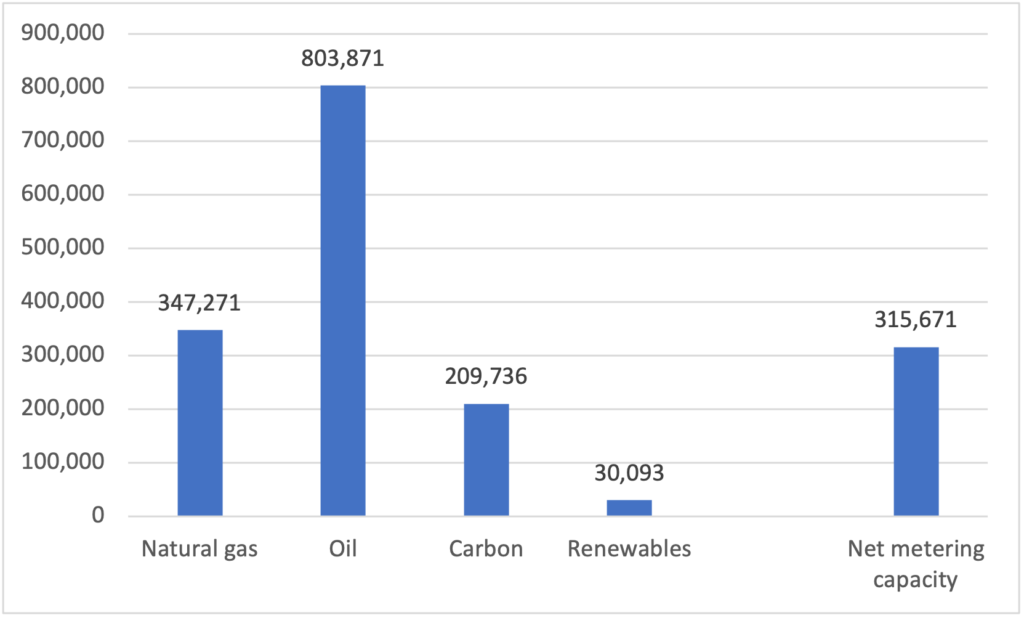
In January 2022 Puerto Rico produced most of its electricity using fossil fuels (57.8% oil, 25% natural gas), according to the U.S. Energy Information Administration (USEIA). Only 2.2% came from renewable sources produced by large-scale suppliers under contract with PREPA, even though  PR Law 17-2019 establishes a renewable energy generation goal of 40% for 2025 (60% for 2040 and 100% for 2050). It is interesting to note that the capacity of consumers to produce electricity (reflected in net metering statistics) increased from 202,992 MW (20,855 consumers) in 2020 to 315,671 MW (42,199 consumers) in January 2022. This would make distributed generation the third source of electricity in the island.

ELECTRICITY GENERATION (MW) / NET METERING CAPACITY  (MW)
JANUARY 2022

Source U.S. Energy Information Administration, EIA-923 and EIA-861
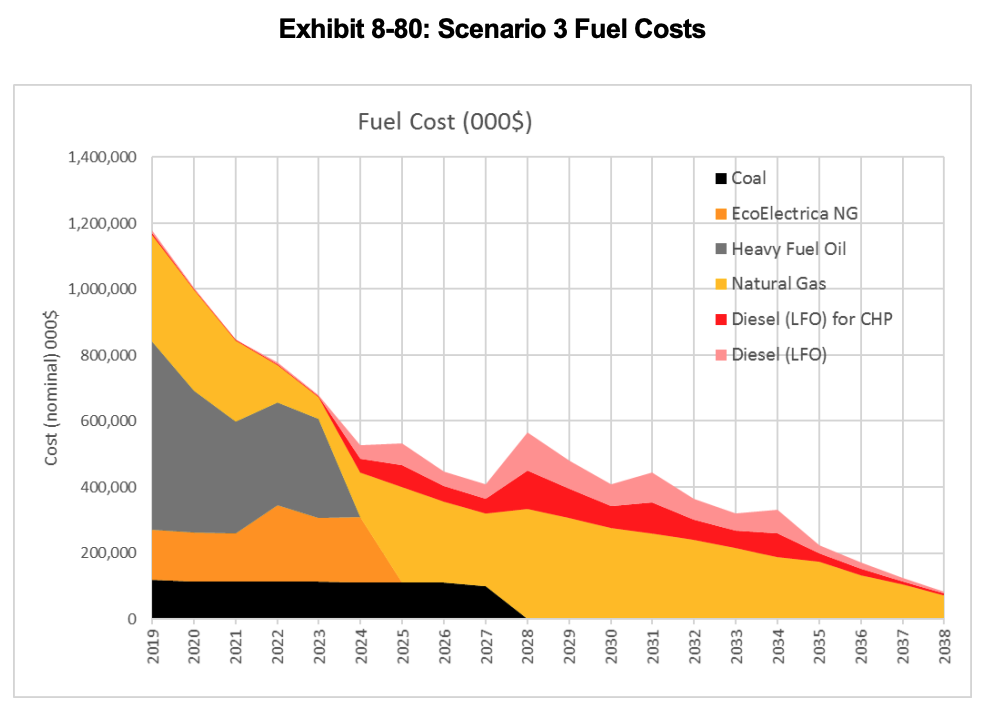
The future evolution of Puerto Rico’s electrical grid – contained in the Integrated Resource Plan (IRP) that PREPA submitted to the Puerto Rico Energy Bureau (PREB) in June 2019 and the Resolution that the PREB emitted in August 2020 – envisage natural gas as an important part of the island’s electrical infrastructure in the foreseeable future. Oil units will be retired as renewables are integrated into the system during the present decade (several of them do not comply with federal environmental standards) and the system’s transition will be anchored in natural gas. The selected planning scenario (Scenario 3 of the IRP) anticipates a significant penetration of renewable energy by 2038 (90% of installed capacity and 72% of generation) while continuing to rely on natural gas at least until 2040, according to a recent conversation with the PREB. The Bureau says that the transition will be anchored on existing gas facilities, although a new 300MW one could be built if the integration of renewables calendar fails.

This means that natural gas will be an important part of the electric bill in the foreseeable future (the yellow strip in the IRP graph below): consumers in the island will continue to be exposed to the fuel’s volatility in the global markets.

EXPECTED FOSSIL FUEL COSTS

Source: Puerto Rico Integrated Resource Plan 2018-2019
Europe and the “shock” of prices for natural gas

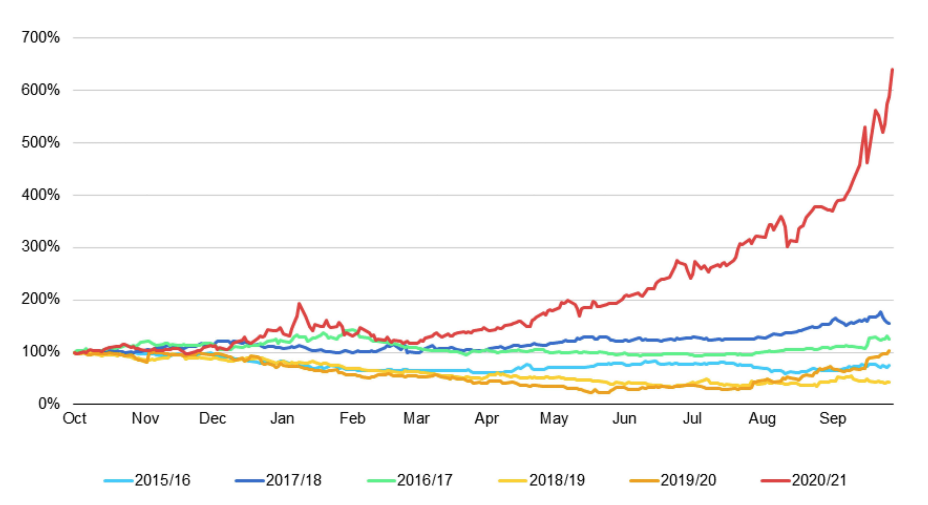
The global spike in the prices of natural gas has been dramatic: in Europe, the juncture has been compared to the 1970s oil crisis (in Puerto Rico we have the remains of the former CORCO refinery as a reminder of the juncture). The signals of the gas crisis started well before Russia’s invasion of Ukraine, at the beginning of 2021, with increased demand due to the rapid post-pandemic economic recovery and a particularly harsh 2020/2021 winter. Geopolitical factors also came into play: during the last quarter of 2021, Russia, the European Union’s principal supplier, reduced by 25% its gas exports to Europe as a way of pressuring Germany to certify the controversial Nord Stream 2 underwater pipeline (the German government had halted approval for security and non-compliance reasons).

EVOLUTION OF THE PRICE OF NATURAL GAS IN EUROPE (DUTCH TTF)

Source: International Energy Agency, Gas Market Report Q4-2021
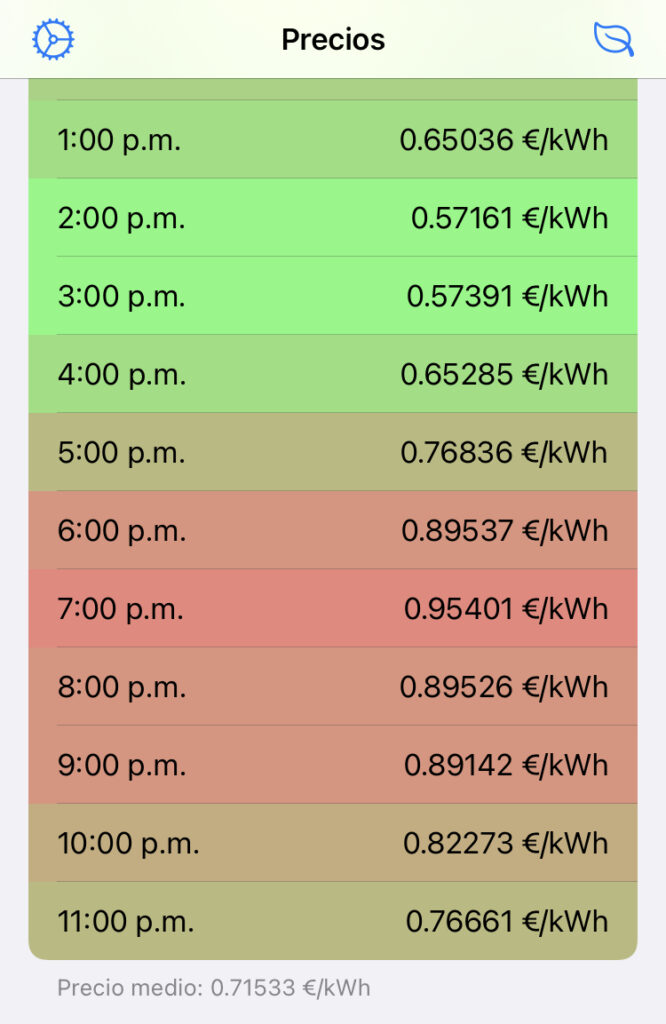
The marked increase in the price of natural gas provoked in turn a dramatic increase in the price of electricity: in Germany and Spain, for example, prices for the last quarter of 2021 were three and four times those of 2019 and 2020. The European Union  (EU) has a marginalist structure that ties the price of electricity to the costliest source of energy; until now, it served as an incentive for investment in renewables, but it has now provoked an upward spiral in the price of electricity. The upward trend was aggravated by the invasion of Ukraine: in Spain, for example, on March 8 (two weeks after the invasion) residential consumers in the regulated market (those that do not have fixed-rate contracts and pay a daily market price) paid 95 ¹ of euro per kWh during the 7 PM tranche (about $1.03 kWh, more than three times the cost in Puerto Rico).

PRICE OF ELECTRICITY FOR RESIDENTIAL CONSUMERS
WITH NO FIXED RATE CONTRACT, MARCH 8 2022

Source: PrecioLuz March 8, 2022

In Spain, the dramatic increase in the price of electricity provoked production stoppages in electro-intensive industries (steel mills, chemical plants), as well as enormous public pressure.  Social tensions have run high, and the fear of destabilization over the price of energy moved the Spanish government to approve a “crash programme” that included decreases in energy taxes (from 21 to 10%) in September of 2021 and, recently, credits and direct assistance to vulnerable businesses and consumers. The fiscal cost of the programme is € 24,000 million (about $ 25,300 million), a significant gap for the Spanish treasury (the spectre of the gilet jaunes, the French “yellow vests” has been all-too present in Spanish decision-making).  Both the International Energy Agency (IEA) and rating agency Fitch anticipate that the prices for natural and liquified gas will continue high for the remainder of 2022; managing the cost of electricity will continue to require significant political maneuvering.

Economic imperatives have intermingled with geopolitical ones aimed at reducing Europe’s dependency on Russian gas. Germany, for example, is considering the possibility of postponing the retirement of its carbon and nuclear plants and has started to build two liquified natural gas (LNG) terminals in order to receive supplies from alternative suppliers. The European Commission (EC) has launched an initiative to ensure gas supplies for the coming 2022 winter and to reduce demand for Russian gas to 1/3 of present demand by the end of the year (events seem to be overtaking the programme, as Russia has unilaterally stopped gas supplies to Poland and Bulgaria). The European Union (EU) has also started to diversify gas suppliers (the United States and Algeria figure prominently in the plan), increase its natural gas storage capacity, and implant block-purchase mechanisms similar to the one used for COVID-vaccine purchases.

Some think tanks such as the French Jacques De Lors understand that these short-term measures are not enough: the issue is not about finding new gas suppliers but about transitioning out from this energy source. The institute recommends accelerating the green transition: fast-forwarding the deployment of renewable sources; renovating buildings in order to reduce thermal needs (in Europe the need is to provide heat in winter; in Puerto Rico, the imperative is to cool interior environments); substituting grey with green hydrogen (hydrogen produced from green sources instead of gas); and excluding natural gas from sustainable finance taxonomies in order to minimize its attractiveness for investors.

Gonzalo Escribano, analyst at Spanish think tank Real Instituto Elcano understands that this new scenario opens the door for Spain to become a protagonist in Europe’s energy transition, particularly in the development and production of new technologies: green hydrogen (produced from renewable sources), marine eolic capacity (which harnesses wind in high seas), bio-combustibles (which is produced from organic residues or natural resources) and concentrated solar energy (which produces electricity from solar light using mirrors or lenses).

The transition to renewables: an expert’s opinion

Diego Rodríguez Rodríguez, professor at Universidad Complutense in Madrid and research associate at Spanish think tank FEDEA, understands that, even though in the short run the urgency to reduce dependency on Russia will slow the elimination of fossil fuels in Europe, the “shock” will actually accelerate the transition to renewable energy both in the medium and in the long-term. “We are in the process of abandoning natural gas”, Rodriguez recently told CNE, “there will be no more deployment of gas networks, except for hydrogen”.  The EU has recently launched RePowerEU, an initiative that will halve the consumption of natural gas by 2030 and that will accelerate the transition to renewable sources of energy. According to this new norm, all new gas infrastructure must eventually be converted to hydrogen.

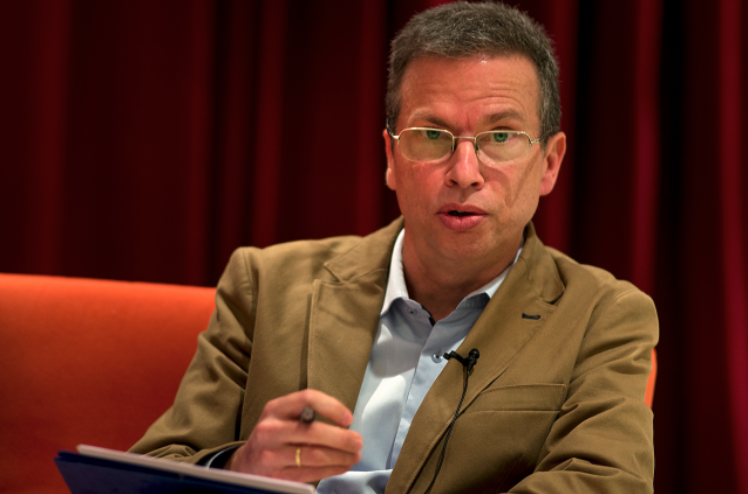
Diego Rodríguez Rodríguez,  Universidad Complutense and FEDEA
RodrĂ­guez understands that the biggest challenges to achieving the transition will be administrative and technical since the funding will be readily available through the NextGen EU program (by contrast, in Puerto Rico, federal funding is geared towards reconstructing the grid, not towards new generation).  First, it will be necessary to break the bureaucratic bottlenecks in environmental assessments, which should be completed in five months instead of two years. Second, it will be necessary to deploy a robust electrical grid to integrate and transport new green generation.  As in Puerto Rico, the Spanish grid is operated by a private company, Red ElĂ©ctrica, but planning is made by public entities. Spain has recently approved a roadmap to renovate the Electrical Transport Grid which will entail a € 7,000 million investment (about $ 7,600 million) capable to integrate a new contingent of 37MW of renewable energy throughout the country. By 2026, 67% of electric generation should come from renewables, both land and marine-based (a timeline that is a decade and a half shorter than Puerto Rico’s).

RodrĂ­guez highlights the similarities between Puerto Rico and the Canary Islands archipelago: as islands, both have isolated electrical systems. For both, transitioning the electrical systems towards renewables poses a challenge. Most of the electricity generated in the Canary archipelago is fossil-fuel-based (mainly petroleum) – 91% in Lanzarote, 57% in Tenerife. Several decades back, the Canary Islands discussed converting its electric infrastructure to gas, but the endeavor was abandoned for environmental and cost reasons (a local councilperson said last year that renewables had rendered gas obsolete). Rodriguez says that the archipelago seems to have missed the boat on gas: it will not convert existing petroleum-based plants and will instead use these existing thermal units as “back up” in its transition to renewables (in contrast to Puerto Rico, the islands do not register violations to sulfur dioxide air quality norms since 2011). By 2030 the islands must have reduced fossil-based electricity to 50%.

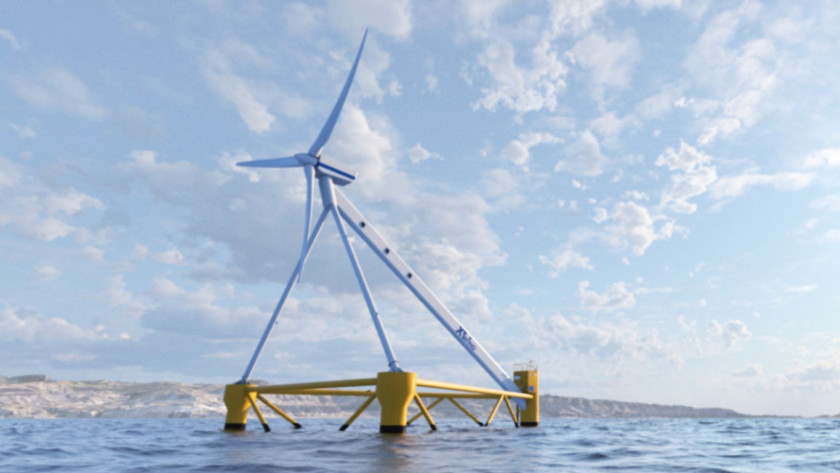
Renewable-based electricity is being integrated into the grid at an increasing pace, but it is still a small share of the archipelago’s mix, below the Spanish median, (17%, well above Puerto Rico). The islands face the environmental challenge of deploying solar panels and wind towers in landmasses of limited territorial extension (El Hierro, for example, is about half of Culebra). For Rodríguez, new technologies like marine eolic floating platforms (which allow deploying wind structures in deep waters) are the archipelago’s big hope and should be an important part of its energy transition: the first Spanish platform was tested and deployed in the archipelago’s waters.  Spain is planning to deploy fifteen floating eolic parks within the next decade and has earmarked € 200 million (about $ 217 million) for research and development of new marine-based new technologies.  Both Scotland and Holland are also betting heavily on marine eolic technologies.

Floating eolic platform

And Puerto Rico?

Should Puerto Rico continue depending on a natural gas infrastructure for several decades, as is contemplated in the current planning? It will all depend, according to the PREB, on the celerity with which renewables are integrated into the system.  The Bureau recently named an independent coordinator to oversee the process, after determining that PREPA “fails to comply with important directives and milestones” and that it “is not capable of executing the renewables Procurement Plan”. The integration of 5,157.82 MW of renewable and storage resources is foreseen between December 2023 and May 2026; the first units to be retired will be oil-fired ones, several of which are in non-compliance with federal environmental standards. Moreover, would it be possible to incorporate locally-based governance, production, and R + D in new technologies?  Without a doubt, the reconstruction of the electric infrastructure opens the door for such an aspiration, but it will be necessary to leave behind outmoded paradigms, address coordination failures between actors, and bestow the process with a true sense of urgency.

CNE Review – October 2021

Published on October 21, 2021 / Leer en español

See all editions of the
CNE Review
SHARE

In This Issue

In the past few weeks, we have been hearing diverse opinions as to who bears responsibility for the recent rolling blackouts. Some are placing the blame on LUMA, others on the Puerto Rico Electric Power Authority (PREPA). Prompted by these discussions, we find it necessary to, once again, address the current energy crisis.

In this edition of the CNE Review, we will take a look at some of the early events that foretold the demise of Puerto Rico’s energy system, such as PREPA’s operating losses and increased levels of indebtedness, to the shortcomings of the recent agreement with LUMA for the operation and maintenance of the electric grid. We also provide recommendations as to what can be done to tackle the ongoing crisis.

Keep reading for a summary of our analysis. Click here to access the full text.

Insights + Analysis from CNE

The Demise of Puerto Rico’s Electrical System

By Sergio M. Marxuach, Policy Director

We have been hearing some rosy statements about how well the Puerto Rico Electric Power Authority (“PREPA”) used to work. it would be a mistake to romanticize the old PREPA. As we will demonstrate below, things were not all copacetic when PREPA was in charge. Puerto Rico’s energy woes were years in the making and are the direct result of PREPA’s mismanagement, negligence, and corruption.

However, PREPA’s indictment is not LUMA’s vindication. LUMA had about a year to prepare for the takeover of Puerto Rico’s electricity grid and its performance so far has been, in the best case, deficient, and in the worst, dismal. Its management, so far, has utterly failed to deliver on its promises.

Thus, it is important to keep in mind that both PREPA and LUMA bear responsibility for the recent malfunctioning of Puerto Rico’s electricity system. It is in the best interests of both companies to change their ways, for their own benefit and the wellbeing of the Puerto Rican people.

Interpreting PREPA’s last two bond offerings

The Official Statements for PREPA’s last two bond offerings, dated April 12, 2012 (the “2012 OS”) and August 15, 2013 (the “2013 OS”), respectively, contain a wealth of data and information about Puerto Rico’s electricity system.

After close scrutiny of these documents, we found that a combination of (1) low liquidity; (2) funding current spending with long-term debt; and (3) limited access to the capital markets due to increased levels of indebtedness and debt service, resulted in a significant reduction in system maintenance expenditures from $250.6 million during fiscal year 2007 to $213.9 million during fiscal year 2013, a decrease of $36.7 million, or 14.6%. (2012 OS, p. 71 and 2013 OS, p. 58)

The lack of maintenance, in turn, affected overall system performance as demonstrated by several key metrics.

Click here to read more about the three main reasons why system maintenance expenditures were reduced and the particular ways in which the system’s performance was affected.

A Series of Unfortunate Events?

While PREPA officially claimed that it suffered from a series of unfortunate events caused by a menagerie of small animals, the truth is that by the time PREPA filed for bankruptcy in May 2017 the system was already thoroughly fragile, with decreasing available capacity; increasing outage rates; and limited available reserves. And then Hurricane MarĂ­a hit, devastating the transmission and distribution system in September 2017.

Despite the massive effort to restore electric service after Hurricane Maria, it was always understood that it was not a permanent fix — a thorough refurbishing of the grid was necessary to bring it up to 21st century standards. PREPA estimated such refurbishing would cost north of $10 billion. Years of negotiations with FEMA followed, until an agreement was reached in December 2020. In the meantime, the patched-up grid kept acting up. On the generation side not much happened either, as evidenced by the continued dispatch of the Palo Seco generation plant.

The Arrival of LUMA

Such was the neglected state of Puerto Rico’s electricity system — an old, unreliable, fossil fuel-based generation fleet connected to a functional but fragile and unstable transmission and distribution grid — when PREPA and the government of Puerto Rico executed a long-term agreement for the operation and maintenance of the electric grid (the “O&M Agreement”) with LUMA, a Canadian/Texan consortium.

The video below (in Spanish) summarizes what LUMA and PREPA are each in charge of and the extent of coordination needed between the two entities.

That coordination is executed in accordance with the terms and conditions of another agreement among and between PREPA, LUMA, and the Puerto Rico P3 Authority (“P3”): the GridCo – GenCo Power Purchase & Operating Agreement (the “PPOA”). Click here to read some of the key terms and conditions of the PPOA.

In a nutshell, PREPA is responsible for the operation and maintenance of the generation fleet, while LUMA is in charge of funding PREPA’s operations on a monthly basis and dispatching load into the grid. Given the complicated character of this relationship, we suspect that the recent rolling blackouts are as much a function of (1) a decrepit generation fleet and an unstable transmission and distribution grid as of (2) a series of coordination failures between PREPA and LUMA.

What can we expect moving forward and what can we do?

Given this state of affairs, this is what we can expect


  • It will take about 10 years to upgrade the transmission and distribution system, with or without LUMA. This task is exceedingly complex and expensive. And there are no shortcuts.
  • The modernization of the generation fleet will also take several years, be it with additional natural gas capacity, increased generation from renewable sources, or a combination of both.
  • The above means that in the short term electric service in Puerto Rico will continue to be unreliable and expensive.
  • Rising fossil fuel prices (including natural gas), the unavailability of several low-cost generation units to meet base load due to unforeseen breakdowns, and the obligation to eventually start paying debt service on PREPA’s restructured indebtedness, will be the main drivers of the cost of electricity in Puerto Rico.


and what we hope can be done:

  • Nonetheless, some remedial measures could be implemented in the short term to stabilize the transmission and distribution system and to reduce the dependence on the use of high-cost peaking units. It is up to both PREPA and LUMA to identify those “quick wins” and execute them.
  • In addition, the transition to renewable generation must continue. The generation of electricity using renewable sources protects both the environment, by lowering emissions of greenhouse gases, and consumers, by stabilizing the price of electricity. It is not true that electricity from renewable sources is always more expensive than electricity generated with traditional fuels. The technology for solar and/or wind generation in combination with battery storage has developed significantly during the last few years, in some cases approaching the costs of natural gas generation.
  • Furthermore, in order to properly compare costs between one kind of generation and another, it is necessary to add the cost of the environmental and health damages caused by fossil fuel generation. Adding in the costs of these negative externalities almost always reveals that fossil generation is costlier than initially thought. The imposition of a carbon tax is one of several policy alternatives to force polluters to internalize the cost of these negative externalities they impose on society at large.
  • Finally, it is imperative that the government agencies in charge of implementing energy policy in Puerto Rico have the necessary resources to execute their respective missions: (1) the PREB to regulate rates and promote long-term planning for the system; (2) the P3 Authority to effectively monitor and robustly enforce the O&M Agreement with LUMA; and (3) PREPA to adequately coordinate the day-to-day operation of the generation system.

Want to learn more?

On Our Radar...

Climate Change – This fall, from October 31 through November 12, the 26th gathering of the Conference of the Parties to the United Nations Framework on Climate Change, or COP26 for short, will take place in Glasgow. According to a recent paper published by Chatham House, if emissions of greenhouse gases follow the current trajectory “there is a less than five per cent chance of keeping temperatures well below 2°C above pre-industrial levels, and less than one per cent chance of reaching the 1.5°C target set by the 2015 Paris Agreement”
and “many of the climate change impacts described in this research paper are likely to be locked in by 2040, and become so severe they go beyond the limits of what nations can adapt to.”

How Democracies Die – The breakdown of democratic regimes has been studied for decades by historians, sociologists, and political scientists. What is different now, is that many of those analyses focus on the United States, including this thought-provoking essay published in The Atlantic by Eliot A. Cohen, where he concludes that if the U.S. “succumbs to its internal divisions, to its preoccupation with partisan feuding and its desire to withdraw from international politics, the world order, such as it is, will crumble.”

The Future of Work – In this interesting op-ed for the New York Times, Jonathan Malesic writes that “work sits at the heart of Americans’ vision of human flourishing. It’s much more than how we earn a living. It’s how we earn dignity: the right to count in society and enjoy its benefits. It’s how we prove our moral character. And it’s where we seek meaning and purpose, which many of us interpret in spiritual terms
But work often doesn’t live up to these ideals. In our dissent from this vision and our creation of a better one, we ought to begin with the idea that each one of us has dignity whether we work or not. Your job, or lack of one, doesn’t define your human worth.”

The Short Memory of the Masters of Disaster

The Short Memory of the Masters of Disaster

Published on October 20, 2021 / Leer en español

Sergio portrait
Policy Director
DOWNLOAD
SHARE

Introduction

Historians, whenever possible, try to work using primary sources — diplomatic cables, a ship captain’s log, a soldier’s diary, ancient pictographs from a scroll— for a reason. Human memory is short and fallible, while written records can faithfully preserve first-hand accounts of human folly, in theory, forever. Of course, interpretations of those sources can and should be challenged, but once a source’s authenticity has been established its evidentiary value is beyond reproof.

Recently, we have been hearing some unreasonably rosy statements about how well the Puerto Rico Electric Power Authority (“PREPA”) used to work. What caught my attention was that these utterances were not made by the usual suspects, by which I mean people who speak in hushed and reverent tones about “Governor Tugwell” and “Mr. Luchetti”, the “glory that was PREPA” and how it was the “crown jewel”. To them I say, well, sic transit and good luck with that — all those things happened a long time ago. Those of us who have lived through PREPA’s implosion should know better.

That is why I looked up the Official Statements for PREPA’s last two bond offerings, dated April 12, 2012 (the “2012 OS”) and August 15, 2013 (the “2013 OS”), respectively. These documents contain a wealth of data and information about Puerto Rico’s electricity system. And they tend to be accurate, as they are prepared in accordance with federal securities laws.

Speak, Memory

So what did we find? First off, we found that as of August 2013, PREPA had been reporting operating losses for several years in a row. According to the 2013 OS: “For each of the last four fiscal years the Authority incurred losses before contributed capital in accordance with GAAP. These losses reflect the continuation of a historical trend of net losses that have resulted in a deficit in the Authority’s consolidated net assets of $515.7 million as of June 30, 2012. This means that, as of June 30, 2012, the Authority’s total liabilities of $10.8 billion exceed its total assets of $10.3 billion.” (2013 OS, p. 21). In other words, PREPA was already insolvent, on a balance sheet basis, as of the end of fiscal year 2012.

Furthermore, during fiscal years 2011, 2012, and 2013 PREPA’s liquidity deteriorated significantly and “due to liquidity constraints the Authority had a need to use lines of credit and Power Revenue Bonds to finance its operational expenses.” (2013 OS, p. 22). This practice raises a red flag for two reasons. First, using long-term debt to finance operating expenses is always first and foremost a clear sign of financial distress. And, second, by diverting debt proceeds to pay for operational expenses, this practice limited the amount of funds available for financing the capital expenditures necessary for system maintenance. This affected the maintenance for the entire system, including the generation component, as “about half of the $787.5 million in capital expenditures for the five fiscal years ended June 30, 2013 for production plant was spent for such scheduled maintenance.” (2013 OS, p.38).

By 2013 it was well known that PREPA relied too much on debt to finance its capital improvement program. Indeed, both the 2012 OS and the 2013 OS state that such reliance “has caused the Authority’s level of indebtedness and related debt service requirements to increase significantly” and “the Authority’s Consulting Engineers have recommended that the Authority increase the amount of its capital improvement program funded from internally-generated sources.” (2012 OS, p. 17 and 2013 OS, p. 21). Alas, PREPA never did comply with that recommendation.

It should not be surprising then that this combination of (1) low liquidity; (2) funding current spending with long-term debt; and (3) limited access to the capital markets due to increased levels of indebtedness and debt service, resulted in a significant reduction in system maintenance expenditures. And that is exactly what the Official Statements demonstrate, a reduction in maintenance spending, from $250.6 million during fiscal year 2007 to $213.9 million during fiscal year 2013, a decrease of $36.7 million, or 14.6%. (2012 OS, p. 71 and 2013 OS, p. 58)

The lack of maintenance, in turn, affected overall system performance. Between 2007 and 2011, the annualized electric generation equivalent availability decreased significantly, from 84% in 2007 to 78.9% in 2011; while the equivalent forced outage rate (an indication of the average percentage of total dependable generating capacity which is unavailable throughout the year due to forced outages or partial generating capacity outages) increased considerably, from 10% to 15.8%, during the same period. (2012 OS, p. 51). Meanwhile, the Dependable Reserve Margin, which is the reserve capacity available as a percentage of peak load, was forecast to decrease from 77% in 2014 to 67% in 2018. (2013 OS, p. 40).

A Series of Unfortunate Events?

So, while PREPA officially claimed that it suffered from a series of unfortunate events caused by a veritable menagerie of small animals, both feral and domestic — wandering cats, leaping lizards, hopping iguanas, and critters of a hitherto unknown genus and species that ostensibly “lived” inside electricity meters — most of which presumably faced a ghastly demise by coming into contact with the wrong end of a 13 kV line, the truth is that by the time PREPA filed for bankruptcy in May 2017 the system was already thoroughly fragile, with decreasing available capacity; increasing outage rates; and limited available reserves. The masters of disaster have a short memory, indeed.

And then Hurricane María hit, devastating the transmission and distribution system in September 2017. According to data from the Federal Emergency Management Agency (“FEMA”), within hours of Hurricane María’s landfall in Puerto Rico, 100 percent of PREPA’s clients were without electric power service and 80 percent of its infrastructure was destroyed. After a slow start, tainted by some unbecoming shenanigans involving two fly-by-night corporations based in the mainland, it took several billion dollars and the better part of a year to restore electric service throughout the island.

However, as important and massive as that job was, it was always understood that it was not a permanent fix — a thorough refurbishing of the grid was necessary to bring it up to 21st century standards. PREPA estimated such refurbishing would cost north of $10 billion. Years of negotiations with FEMA followed, until an agreement was reached in December 2020. In the meantime, the patched-up grid kept acting up.

On the generation side not much happened either, as evidenced by the continued dispatch of the Palo Seco generation plant, a fantastically aged contraption, described by a former Assistant Secretary of the U.S. Department of Energy in a 2019 Congressional hearing as a “defunct facility.” To be fair, two generation units of the San Juan plant were recently “upgraded” to burn natural gas, but through a suspicious transaction that is currently under scrutiny by the Federal Energy Regulatory Commission.

The Plot Thickens

Such was the neglected state of Puerto Rico’s electricity system — an old, unreliable, fossil fuel-based generation fleet connected to a functional but fragile and unstable transmission and distribution grid — when PREPA and the government of Puerto Rico executed a long-term agreement for the operation and maintenance of the electric grid (the “O&M Agreement”) with LUMA, a Canadian/Texan consortium.

Under the O&M Agreement, PREPA is in charge of the generation (along with a couple of private generators) and LUMA is in charge of the transmission grid. In practice, though, things are seldom so clear cut; because if electricity is to be delivered to the final customers, then PREPA and LUMA have to interconnect and closely coordinate the amount of energy loaded into the system at any given time.

In general, the demand and supply of electricity have to be balanced at all times. If the transmission lines are congested because the load exceeds the demand then the grid will not accept additional load and some generation will shut down. Conversely, if demand exceeds the capacity of the grid to deliver electricity at any given time, then parts of the transmission and distribution system will go offline. So, keeping the lights on requires a kind of hand-in-glove coordination between PREPA and LUMA, as PREPA runs the generation fleet but LUMA determines which generation resources interconnect with the grid, at what time, and in which order.

That coordination is ostensibly executed in accordance with the terms and conditions of another agreement among and between PREPA, LUMA, and the Puerto Rico P3 Authority: the GridCo – GenCo Power Purchase & Operating Agreement (the “PPOA”). To the best of our knowledge, the PPOA has not been made public, but Exhibit H to the O&M Agreement sets forth a term sheet for the PPOA. According to the term sheet, these are some of the key terms and conditions of the PPOA:

  • Pursuant to the PPOA, GenCo agrees to sell and GridCo agrees to accept delivery of and purchase the Energy and/or Dependable Capacity of the Generating Facilities, which shall not be reduced except as provided by the PPOA.
  • Each Generating Facility will be assigned a “Dependable Capacity” which is the net electric generating capacity (gross electric generating capacity less station use) in kW, as determined by testing to be performed from time to time pursuant to the PPOA, which shall also determine the optimal output to meet system load requirements at the lowest possible cost to reliably service customers while recognizing the operational limits of the generation facilities

  • For any contract year
GenCo shall prepare and deliver to the T&D Operator (with copy to GridCo)
its proposed operations and maintenance budget (the “Operating Budget”) and proposed capital budget (the “Capital Budget”, together with the Operating Budget, the “Budgets”) for such year, together with financial forecasting for the following two (2) contract years.
  • The Operating Budget for any contract year shall include a month-by-month estimate of (i) the working capital reasonably determined by GenCo to be needed for the day-to-day operation of GenCo, (ii) fixed and variable operations and maintenance costs, and (iii) costs and expenses associated with fuel purchases (including a two percent (2%) in excess of the total amount for excess expenditures that may arise in any contract year), in each case for the following contract year.
  • GridCo shall pay GenCo a monthly amount based on the approved budgets, including any costs and expenses for approved capital improvements relating to the Generating Facilities and related supplemental working capital and all costs and expenses associated with the operation and maintenance of a ramped down unit and/or Generating Facility (the “Monthly Generation O&M Charge”).
  • The T&D Operator, as agent of GridCo and dispatch manager, shall at its sole discretion have the right to dispatch the units at the Generating Facilities within their operational limits and in accordance with the principles related to the dispatch of power and electricity set forth in Schedule 1 to Annex I (Scope of Services) of the T&D O&M Agreement.

So there you have it. PREPA is required to provide “dependable generation capacity” in exchange for a monthly payment from LUMA to cover operating and maintenance expenses, as well as approved capital expenditures; while LUMA has absolute control to dispatch generation and manage system load at any given time.

Notice the complex nature of the current arrangement: PREPA is responsible for the operation and maintenance of the generation fleet, while LUMA is in charge of funding PREPA’s operations on a monthly basis and dispatching load into the grid. Given the complicated character of this relationship, we suspect that the recent rolling blackouts are as much a function of (1) a decrepit generation fleet and an unstable transmission and distribution grid as of (2) a series of coordination failures between PREPA and LUMA.

Given this state of affairs, this is what we can expect and what we hope can be done:

  • It will take about 10 years to upgrade the transmission and distribution system, with or without LUMA. This task is exceedingly complex and expensive. And there are no shortcuts.
  • The modernization of the generation fleet will also take several years, be it with additional natural gas capacity, increased generation from renewable sources, or a combination of both.
  • The above means that in the short term electric service in Puerto Rico will continue to be unreliable and expensive.
  • Rising fossil fuel prices (including natural gas), the unavailability of several low-cost generation units to meet base load due to unforeseen breakdowns, and the obligation to eventually start paying debt service on PREPA’s restructured indebtedness, will be the main drivers of the cost of electricity in Puerto Rico.
  • Nonetheless, some remedial measures could be implemented in the short term to stabilize the transmission and distribution system and to reduce the dependence on the use of high-cost peaking units. It is up to both PREPA and LUMA to identify those “quick wins” and execute them.
  • In addition, the transition to renewable generation must continue. The generation of electricity using renewable sources protects both the environment, by lowering emissions of greenhouse gases, and consumers, by stabilizing the price of electricity. It is not true that electricity from renewable sources is always more expensive than electricity generated with traditional fuels. The technology for solar and/or wind generation in combination with battery storage has developed significantly during the last few years, in some cases approaching the costs of natural gas generation.
  • Furthermore, in order to properly compare costs between one kind of generation and another, it is necessary to add the cost of the environmental and health damages caused by fossil fuel generation. Adding in the costs of these negative externalities almost always reveals that fossil generation is costlier than initially thought. The imposition of a carbon tax is one of several policy alternatives to force polluters to internalize the cost of these negative externalities they impose on society at large.
  • Finally, it is imperative that the government agencies in charge of implementing energy policy in Puerto Rico have the necessary resources to execute their respective missions: (1) the PREB to regulate rates and promote long-term planning for the system; (2) the P3 Authority to effectively monitor and robustly enforce the O&M Agreement with LUMA; and (3) PREPA to adequately coordinate the day to day operation of the generation system.

Conclusion

While we understand and sympathize with the feelings of frustration expressed by many Puerto Ricans in connection with recent rolling blackouts, it would be a mistake to romanticize the old PREPA. As we have demonstrated above, things were not all copacetic when PREPA was in charge, Puerto Rico’s energy woes were years in the making and are the direct result of PREPA’s mismanagement, negligence, and corruption. Handing control back to the masters of disaster is not an option.

However, PREPA’s indictment is not LUMA’s vindication. LUMA had about a year to prepare for the takeover of Puerto Rico’s electricity grid and its performance so far has been, in the best case, deficient, and in the worst, dismal. Its management, so far, has utterly failed to deliver on its promises.

Finally, it is important to keep in mind that both PREPA and LUMA bear some responsibility for the recent malfunctioning of Puerto Rico’s electricity system. The process negotiated under the aegis of the Puerto Rico P3 Authority requires good faith efforts from both companies to run the system successfully. We suspect, though, that PREPA is desperately clinging to its old ways of doing things, while LUMA has probably not internalized the fact that it needs to modify its standard playbook to account for an old, unstable, and unreliable electric system. It is in the best interests of both companies to change their ways, for their own benefit and the wellbeing of the Puerto Rican people.