The Abundance We’re Not Tapping

The Abundance We're Not Tapping

Published on September 2, 2026 / Leer en español

Sergio portrait
Policy Director
SHARE

According to the latest annual report from the energy think tank Ember, in 2025 clean energy supplied all of the net growth in global electricity demand. Solar power alone covered 75% of that growth; renewable sources surpassed a third of world generation for the first time, overtaking coal; and in China and India, countries that skeptics said “would never act,” fossil fuel generation fell for the first time.

That’s the starting point of a recent conversation between journalist Ezra Klein and environmentalist Bill McKibben that deserves attention in Puerto Rico. McKibben sums it up with a simple image: clean energy is no longer “the Whole Foods of energy”: virtuous, expensive, a luxury of conscience; it’s “the Costco of energy”: cheap, available in bulk, ready to install. According to McKibben, at some point this decade we crossed an invisible line: generating electricity by pointing a piece of glass at the sun became cheaper than generating it by burning something.

The examples are everywhere. China installs the equivalent of one large coal plant’s worth of solar panels every eight hours. For long stretches of most days, California generates more than 100% of its electricity from clean sources, and after nightfall the batteries that stored the afternoon’s solar energy are often the main source of supply; in three years, that state added storage capacity equivalent to twelve nuclear plants and cut the natural gas it uses to generate electricity by 60%. Australia produces so much surplus solar power at midday that generating companies give electricity away between noon and 3 p.m.

Three lessons for the island emerge from that conversation.

First, solar paired with storage is already the fundamental resource of a modern electric system. Battery costs have fallen so fast that any generation plan or procurement process at PREPA, LUMA, and Genera based on assumptions from just two years ago is obsolete and needs to be reassessed. Meanwhile, between 2023 and 2025 the cost of natural gas generation projects rose 66% and the time needed to bring them online increased 23%, according to BloombergNEF.

Second, the Strait of Hormuz crisis showed that dependence on imported fuel is not just an economic problem but a strategic vulnerability. Every solar panel and every battery installed in Puerto Rico works as insurance against price shocks and against disruptions in supply chains we don’t control.

Third, and most important, the obstacle is no longer technological or economic; it’s political and institutional. The pace of renewable technology development and basic economic efficiency both point to the same conclusion: the most effective strategy for lowering the electric bill is to speed up approval of utility-scale solar projects. The lack of progress in Puerto Rico is driven by the influence of fossil fuel companies and by institutional inertia.

In his latest book, McKibben writes that the Vatican is about to become the first state in the world whose energy derives entirely from the sun, and he offers a mantra for this era: “energy from heaven, not from hell.” On an island with more sun than most other places on the planet, with one of the most fragile grids and some of the highest electricity rates under the American flag, continuing to bet on imported fuel is sheer stubbornness. Energy abundance is here. What’s missing is the will to use it.

This content was translated from Spanish to English using artificial intelligence and reviewed by a human editor before publishing. The Spanish version of this column was originally published in El Nuevo Día on September 2, 2026.

CNE Review – March 2026

Published on March 25, 2026 / Leer en español

See all editions of the
CNE Review
SHARE

In This Issue

In this edition of the CNE Review, our Policy Director Sergio M. Marxuach analyzes the PREPA Title III bankruptcy case as it enters its ninth year: still unresolved, and with enormous consequences for Puerto Rico’s electricity rates, grid investment, and economic future.

We also include a Data Snapshot showing how the size of a potential settlement would translate directly into costs for ratepayers.

Finally, in our On Our Radar section, we share a recent article on technology and the economy that caught our attention this month.

Insights + Analysis from CNE

PREPA Title III: Threading the Needle

By Sergio M. Marxuach, Policy Director

Nine years into PREPA’s Title III bankruptcy proceeding, there is still no agreement between the Financial Oversight and Management Board and the utility’s major creditor groups. The stakes could not be higher: how this case is resolved will shape Puerto Rico’s electricity rates, its capacity to attract private investment in renewable energy, and the long-term viability of the grid itself.

A November 2024 First Circuit ruling changed the landscape. The court affirmed that bondholders hold an $8.5 billion claim secured by a lien on PREPA’s net revenues, but also clarified that their actual recovery depends on what those revenues turn out to be, and that they have no recourse to any other government assets. Both sides, in other words, had something to celebrate.

The single most consequential variable is time. Every year that PREPA remains in bankruptcy is a year in which grid investment is deferred, federal incentives go unused, costly litigation drags on, transition to renewables is delayed, work on the master Integrated Resource Plan stalls, and the island’s population and economic base continue to erode – reducing the very revenue base that is expected to service PREPA’s restructured debt.

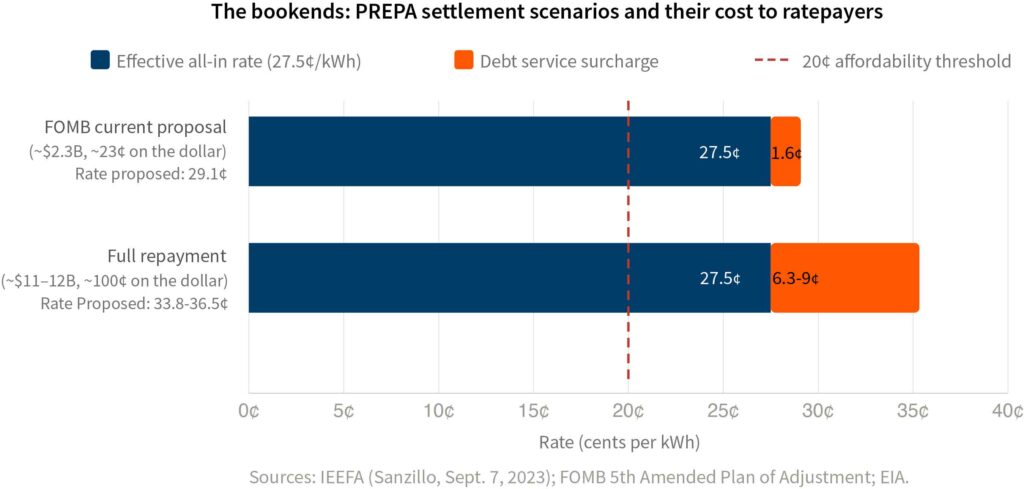
The analysis in this brief identifies two bookend scenarios. At the low end, the FOMB’s proposed 23-cent recovery, roughly $2.3 billion in new bonds, would add an estimated 1.6 cents per kWh to customer bills. At the high end, full repayment of $11 to $12 billion would require surcharges of 6 to 9 or more cents per kWh, pushing blended rates to 34 to 37 cents and almost certainly triggering a rate-revenue death spiral that would accelerate grid defection, erode the revenue base, and ultimately make the plan unworkable.

The window for a reasonable settlement is narrow, and every year of delay is itself a cost Puerto Rico cannot afford.

Data Snapshot

Puerto Rico already pays 27.5 cents per kWh (including provisional charges approved by the regulator at the end of 2025), well above the 20-cent affordability threshold recognized by both the Legislature and the Oversight Board. The size of PREPA’s bankruptcy settlement will directly determine how much higher the rates go. These two scenarios illustrate the range of outcomes analyzed in the brief, from the FOMB’s current proposal to full repayment, and what each would cost ratepayers every month. For a full analysis, read the brief.

On Our Radar

The Anthropic Economic Index: AI’s Uneven Footprint on Labor Markets – Anthropic’s January 2026 Economic Index report — the most comprehensive empirical analysis to date of how artificial intelligence (AI) is reshaping labor markets — finds that nearly half of all occupations now see Claude being used for at least a quarter of their tasks, up from 36% when the Index was first introduced. The pattern of use has also shifted: augmentation (52% of interactions) has now overtaken automation (45%), suggesting that workers are increasingly using AI to extend their capabilities rather than simply replacing discrete tasks. Estimated productivity gains, when adjusted for model reliability on complex tasks, are projected at approximately one percentage point of annual labor productivity growth over the next decade.

Critically, the Index also surfaces a structural concern: Claude disproportionately handles higher-skill tasks within any given occupation, meaning that when those tasks are displaced, the remaining work is systematically less complex — a dynamic the report terms net occupational deskilling. AI adoption remains highly uneven, strongly correlated with per capita income across countries, and concentrated within the top decile of task types. For policymakers in Puerto Rico and across the Caribbean, the Index’s findings underscore both the transformative potential and the distributional risks of AI adoption in lower-income, service-dependent economies.

PREPA Title III: Threading the Needle

PREPA Title III: Threading the Needle

Published on March 24, 2026 / Leer en español

Sergio portrait
Policy Director
DOWNLOAD
SHARE

The Puerto Rico Electric Power Authority (PREPA) filed for debt restructuring on July 2, 2017, under Title III of the Puerto Rico Oversight, Management, and Economic Stability Act (PROMESA). The case is administered by the U.S. District Court for the District of Puerto Rico, with Judge Laura Taylor Swain presiding. Title III proceedings are bankruptcy-adjacent but are not governed directly by the U.S. Bankruptcy Code; the judge applies select provisions of federal bankruptcy law, incorporated by reference into PROMESA, to the U.S. territory’s public debtors. Under this structure, Puerto Rico has found that declaring bankruptcy is expensive. Total advisory and professional fees paid to attorneys, financial advisors, and consultants across all parties in all Title III proceedings under PROMESA have now surpassed $1.5 billion, a figure that sets a record for a municipal restructuring of this type.

PREPA’s case is the last major outstanding Title III restructuring. As we enter the ninth year of the never-ending saga known as the PREPA Title III case or bankruptcy process, and sure as winter turns to spring, there is no agreement yet between the Financial Oversight and Management Board (FOMB) and PREPA’s major creditor groups, including its bondholders.

Why a Reasonable Settlement is Important

Rebuilding and modernizing Puerto Rico’s electric power system represents one of the most complex institutional, financial, and technical challenges currently facing any U.S. jurisdiction. Nearly a decade after Hurricane Maria devastated the island’s grid in September 2017, and almost nine years into PREPA’s Title III bankruptcy proceeding, the system remains trapped in a web of mutually reinforcing structural contradictions that no single reform has successfully addressed.

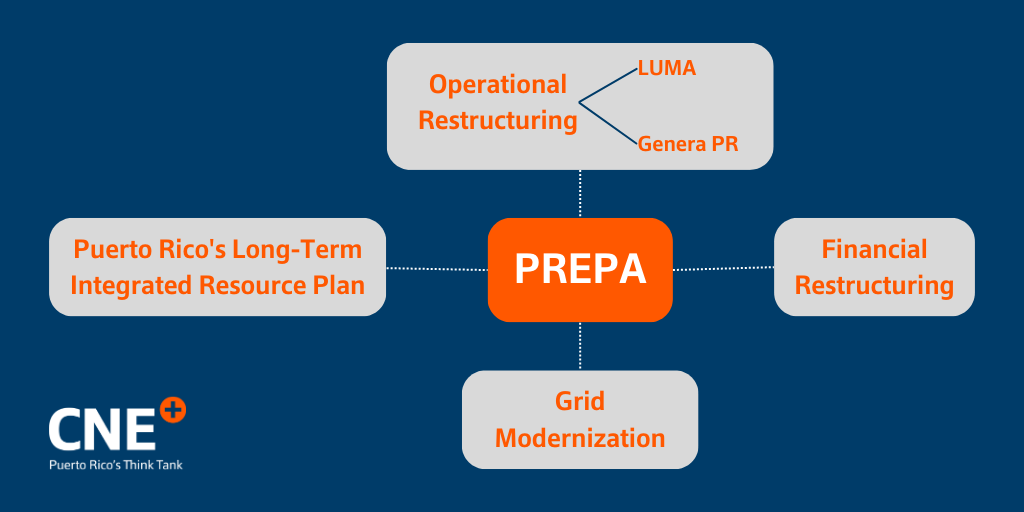
The Puerto Rico electric power system consists of six critical subsystems: (1) the restructuring of PREPA’s financial obligations; (2) the reconstruction of the damage caused to the grid by Hurricane Maria; (3) the transition to 100% renewable generation by 2050, as mandated by Puerto Rico law; (4) the operation of the transmission and distribution (T&D) grid pursuant to the terms and conditions of the LUMA T&D operation and management agreement; (5) the operation of the PREPA legacy generation fleet pursuant to the terms and conditions of the Genera PR operation and management agreement; and (6) the drafting and implementation of the Integrated Resource Plan (IRP) for the entire electric system.

These six subsystems are not independent policy challenges or technical tasks that can each be solved in isolation from the others. Collectively, they form a tightly connected system with reinforcing feedback loops and critical balancing mechanisms, which oftentimes interact in a nonlinear, dynamic way that inevitably produces outcomes at variance with stated policy objectives. In the context of Puerto Rico’s electricity sector policy, these concepts explain why standard policy tools —rate design, capacity expansion, regulatory standards— often fail to produce the intended effects. The Title III case impacts them all.

When analyzing potential settlement deals with bondholders, it is necessary to keep in mind the following:

  • The Puerto Rican economy and the Puerto Rico electric system interact with each other. Affordable, reliable electric power is necessary, but not sufficient, to generate sustainable economic growth. Higher economic growth, in turn, increases employment and demand for electricity, which requires new investment to meet the additional demand, which eventually supports additional economic activity, which further increases employment and economic growth, and so on. This cycle also works in reverse: when power costs are high or electric service is unreliable, economic activity contracts, employment decreases, and demand for electricity declines. A downturn in demand for electricity, if permanent, creates a difficult situation as the operator still has to generate sufficient revenues to operate the system, leading to increases in rates, which in turn put downward pressure on employment and economic activity, further decreasing demand for electricity. Any proposed settlement with PREPA’s bondholders has to take into account this interactive relationship between the island’s economy and the cost of electricity.
  • In addition, Puerto Rico has approximately $13.5 billion available in FEMA Public Assistance obligations for grid reconstruction, with total federal allocations exceeding $16 billion across all programs, most of which remains unspent. A swift and reasonable settlement of PREPA’s bankruptcy would theoretically restore market confidence and allow PREPA to leverage federal funds with private co-investment. A prolonged dispute or full repayment would destroy this leverage.
  • The prolonged bankruptcy has also been a headwind on new investment in renewable energy generation at the utility-scale level. Most private investors seeking to finance a new solar farm with a power purchase and operating agreement (PPOA) with PREPA would be quite reluctant, and reasonably so in our opinion, to execute a long-term agreement with a bankrupt entity. The Title III case, therefore, is effectively a bottleneck slowing down new private sector investment in renewable generation at scale. This is important because if Puerto Rico currently generated, say, 40% of all its electricity using utility-scale solar generation, it would produce materially significant net savings on fuel expenditures that could then be passed on to ratepayers. Replacing current fossil fuel generation, which has a highly variable cost dependent on events affecting the global fuel markets, with lower, fixed cost utility-scale renewable generation would (1) permanently decrease PREPA’s fuel expense and, everything else being equal, (2) significantly improve PREPA’s operating margin, which would provide headroom for significantly lowering customer rates.
  • The long-term planning for the system has also been affected by the long-running bankruptcy procedures. It is difficult to plan large expenditures for fixed investments with a long useful life if the planners do not know how much of PREPA’s outstanding legacy debt would have to be paid and on what terms, and if future access to the capital markets remains uncertain. The IRP is the master planning document for the electric power system, covering a 20-year planning horizon. The 2019 IRP, prepared by Siemens, recommended aggressive renewable deployment, grid decentralization through mini-grids, and phased retirement of fossil fuel assets. The 2025 IRP, currently in development by LUMA with interim filings in November 2024 and February 2025, represents the first comprehensive update since LUMA assumed T&D operations. The IRP’s recommendations regarding capital investment, decommissioning timelines, adoption of new generation technologies, and rate trajectories will all be significantly influenced by the PREPA bankruptcy settlement.
  • Finally, an unreasonable bankruptcy settlement could spark a Rate-Revenue Death Spiral. Elevated electricity rates (driven by high fossil fuel costs and debt service requirements) increase the economic incentive for customers to reduce their consumption through energy efficiency or to exit the grid entirely through distributed renewable generation, particularly rooftop solar. This grid avoidance reduces the load volume that PREPA must serve, eroding its total revenue. To maintain sufficient revenue for debt service and operations, PREPA must increase rates further, which accelerates grid avoidance. The cycle reinforces itself, with rates rising faster than demand falls, eventually reaching a point where the most efficient investment for a customer is to exit the grid entirely.
  • The Rate-Revenue Death Spiral has policy implications that extend beyond financial sustainability. As rates increase, residential customers with capital (typically higher-income households) invest in distributed solar and battery storage, while renters and lower-income homeowners who cannot make the upfront investment bear the burden of rate increases. This creates a regressive distributional outcome: lower-income customers subsidize the energy independence of higher-income customers. Moreover, customers who exit the grid through distributed generation retain backup service from the utility, effectively requiring the remaining customers to finance infrastructure that serves the departed customer’s occasional needs.

State of Play

Last time we checked with our protagonists, the bondholder groups were celebrating a November 2024 ruling from the First Circuit Court of Appeals in Boston which held, among other things, that bondholders held an $8.5 billion claim (plus accrued interest and fees) secured by a properly perfected lien on PREPA’s past, present, and future net revenues, as opposed to being secured only by funds deposited in certain PREPA accounts. According to some analysts, this ruling has fundamentally altered the negotiating dynamic. Yet, as of this writing and to the best of our knowledge, it has not been fully incorporated into a revised Plan of Adjustment.

We note, however, that the phrase “among other things” is carrying a lot of weight in that sentence, because the First Circuit also held that (1) even though bondholders could make a claim in the amount of $8.5 billion, that does not mean they would actually recover that amount in full; their recovery is, instead, contingent on PREPA’s future net revenues, if any; and (2) bondholders had no recourse, other than PREPA’s net revenues, as their source of repayment. This latter holding is extremely important because it means bondholders cannot seek recovery from any other PREPA assets or from any other Puerto Rico government sources, such as the general fund. The FOMB, thus, also had reason to celebrate the ruling.

In early August, President Trump removed six of seven sitting Oversight Board members. Judge Swain then suspended all case deadlines on August 8, 2025, and ordered the Board to report on its operational status. The suspension effectively froze proceedings for several months. Eventually, three of the removed board members were reinstated by a federal court. The Trump administration has announced its intention to appeal this decision, but is waiting for the court system to rule on a similar dispute before taking further action regarding the FOMB (at least for now).

Boundaries of a Potential Settlement with Bondholders

So, given this state of play, what are the boundaries of a potential settlement with bondholders?

PREPA currently charges approximately 27.5 cents per kWh (including active Puerto Rico Energy Bureau -approved temporary surcharges as of late 2025 of 1.92 cents for pension payments and 1.49 cents for operating expenditures), already among the highest utility rates in the United States and significantly above the 20 cents per kWh affordability threshold recognized by both the Puerto Rico Legislature and the FOMB. Puerto Rico’s median household income is approximately $25,000 (2023 ACS) — roughly one-third the U.S. mainland median — and approximately 40% of residents live below the federal poverty line. The island’s economic activity index has contracted or stagnated since 2024, reflecting a difficult environment that severely limits the economy’s capacity to absorb rate increases.

PREPA generates approximately 19–20 billion kWh of electricity annually (EIA/CRS 2023). Given declining population and ongoing customer defection to rooftop solar, this volume is expected to decrease over a 35-year bond amortization period. A $1 billion debt obligation, financed over 35 years at 4.5–5%, generates annual debt service requirements of approximately $57–61 million, which translates to a rate surcharge of roughly 0.29–0.32 cents per kWh based on current consumption levels. This surcharge does not include any other charges that would be necessary to finance an estimated $6 billion in additional capital spending required to modernize the grid and which is not covered by currently available federal funding.

Based on those assumptions, we believe there are two “bookend” scenarios that determine the universe of potential settlement agreements with bondholders.

The low-end scenario is bounded by the Oversight Board’s current proposed range (23 cents recovery under the 5th Amended Plan). The FOMB’s revised plan, which proposed $2.3 billion in new bonds (representing roughly a 23% recovery), was projected by the Institute for Energy Economics and Financial Analysis (IEEFA) to add approximately 1.6 cents per kWh to customer bills over 35 years, costing ratepayers a total of roughly $5.1 billion (Sanzillo, IEEFA, Sept. 7, 2023).  Under this scenario, PREPA would still be required to raise additional capital for grid investment, likely from a market that views any new indebtedness as deeply subordinated to the bonds issued to exit the Title III proceeding because bankruptcy exit bonds would presumably be secured with a first lien on PREPA’s net revenues.

This scenario is perhaps the most realistic and favorable for Puerto Rico ratepayers and the grid investment program, but creditors relying on the First Circuit lien ruling are unlikely to accept it absent further litigation losses.

At the other end of the spectrum, full repayment of the face value of PREPA’s bonded debt — plus post-petition interest, administrative claims, and fees, as the holdout coalition contends — would produce a total obligation of approximately $11–12 billion. This scenario is not considered economically feasible by most parties to the proceeding, including Judge Swain, who has publicly characterized some of the bondholders’ arguments as “likely delusional” (Slavin, Judge pushes PREPA, creditors to negotiate deal in 60 days. Bond Buyer. July 11, 2024).

A recovery in the order of $9–12 billion would require rate surcharges probably in the range from 6.3 to more than 9 cents per kWh, producing a new blended rate of 34–37+ cents per kWh. This plan would almost certainly be non-confirmable under PROMESA’s feasibility standard: at rates this high, customer defection to rooftop solar accelerates, the revenue base erodes faster than debt is serviced, and PREPA’s balance sheet becomes permanently insolvent, making it impossible for PREPA to perform under the plan without re-defaulting. Population flight and eventual system collapse would further hollow out the very revenue base on which any settlement’s long-term sustainability depends.

Conclusion

The PREPA Title III case is approaching a critical decision point. The November 2024 First Circuit ruling has given a second wind to bondholders, and the Oversight Board faces the challenge of crafting a confirmable plan that respects creditor rights while preserving Puerto Rico’s economic viability.

This is admittedly a difficult needle to thread. Pay too little and the economic impact is manageable, but the settlement is likely to be contested for years, and the capacity to issue new debt to fund grid capital investments in the future is, in the best case, constrained. Offer too much and the legal viability of the plan is compromised — and in the unlikely event such a plan is confirmed, its impact on the economy of Puerto Rico could be devastating while eliminating any possibility of future grid investment capacity.

In the end, the single most consequential variable is time. Every year that PREPA remains in bankruptcy is a year in which grid investment is deferred, federal incentives go unused, costly litigation drags on, the transition to renewables is delayed, work on the master IRP stalls, and the island’s population and economic base continue to erode — reducing the very revenue base that is expected to service PREPA’s restructured debt. A swift, pragmatic settlement may ultimately be less costly to Puerto Rico’s economy than the continued damage of delay.

CNE Review – October 2024

Published on October 10, 2024 / Leer en español

See all editions of the
CNE Review
SHARE

In This Issue

To understand the current energy dilemma Puerto Rico faces and make policy recommendations while safeguarding the interests of families and businesses, CNE has analyzed the status of each of the multiple processes involved in Puerto Rico’s energy transformation. Today, we publish our updates in a Policy Brief, summarize the analysis below, and launch a webpage highlighting all our work on the energy sector including answers to some FAQs.

Insights + Analysis from CNE

By Sergio M. Marxuach, Policy Director

The performance of Puerto Rico’s electric power system has been deficient for many years now. For decades, the electric service provided by the Puerto Rico Electric Power Authority (“PREPA”) was inefficient, unreliable, and expensive, due to serial mismanagement, chronic corruption, rampant partisan politics, and the deferral of required maintenance and capital expenditures. The poor performance of the electric system intensified after PREPA’s bankruptcy and the widespread damage inflicted on the transmission and distribution network by Hurricane Maria, both in 2017.

During the last seven years the government of Puerto Rico has undertaken a massive effort to rebuild and modernize the system; privatize the operation and management of both the transmission and distribution grid and PREPA’s legacy generation assets; begin the twenty-five-year transition to generate 100% of the island’s electricity from renewable sources; and restructure PREPA’s financial obligations. Yet during the summer of 2024, most of these efforts to transform the electric power system appear to have been derailed, as the island was hit by rolling blackouts in the middle of one of the hottest summers in recent memory. Indeed, progress has slowed down almost to a standstill in some areas and, perhaps more worrisome, the government appears to be unable to discern a way to get out of the current quagmire.

Part of the problem is due to the sheer number of actors that have jurisdiction over at least one area of Puerto Rico’s energy system. As shown below, and in further detail in this webpage, we have identified at least 14 entities at the federal and state government levels and from the private sector that have some influence or control over at least a part of the transformation process. The coordination and synchronization of work efforts among and between these entities has proven difficult and continues to be a challenge, even seven years after PREPA’s bankruptcy and Hurricane Maria.


Another factor that has contributed to the slowdown of the system’s transformation is that such transformation consists in reality of several, complex, in many cases multi-billion dollar projects, each with many moving parts and which, in many cases, partially interlock and overlap with the others.

After analyzing each ongoing process, the Brief provides context, guidance, and assessments of frequently asked questions by the general public such as:

  1. How much will electricity costs increase if the PREPA debt is not restructured? To what extent are the bondholders’ claims secured?
  2. What were LUMA’s forecasted savings and improvements and have they materialized? How can the government terminate the agreement with LUMA?
  3. What savings does the government of Puerto Rico expect to achieve with the Genera contract? What are the conflicts of interest in the Genera contract?
  4. How much money is still missing to finish the reconstruction of the grid and the transition to 100% renewable generation?

As we delve into each topic, we provide details on the following conclusions to which we have arrived:

  • First Priority: The stabilization of the electric system should be the number one priority in the short term.
  • Risk of a Cascading Power System Failure: given the current state of the system, the occurrence of a catastrophic event cannot be ruled out in the short term (2-3 years) unless drastic corrective measures are implemented soon.
  • LUMA O&M Agreement: it appears that the objectives the Government of Puerto Rico wanted to achieve with the LUMA O&M Agreement are not being realized.
  • It is Complicated: We are facing a cluster of complex multi-year, multi-billion dollar projects, each with many moving parts. Successful completion is probably beyond the current execution capability of the Puerto Rico government.
  • Who is in Charge?: Coordination and execution problems remain with no real solution in sight.
  • There are Many Tradeoffs: But it is unclear who makes the decisions and the criteria upon which they should be made to address these tradeoffs.
  • Cost: All of these processes are very expensive and we are still missing about $5 billion to finish the reconstruction of the grid and an additional $8 to $10 billion for the transition to 100% renewable generation.
  • Risk of Grid Defection/Death Spiral: Under several of the scenarios modeled by the DOE, the volume of electricity sales declines faster than the total cost required to serve customers. This cycle is called a “utility death spiral” and while a complete utility death spiral has yet to be experienced in the U.S. electricity sector, in the case of Puerto Rico this risk cannot be ruled out.
  • The DOE vaguely hinted as much when it stated that “PR100 analyzed a highly centralized utility in a future that was increasingly comprised of distributed and decentralized electricity resources which were neither owned nor controlled by the utility. Our analysis illustrates the implications of this seemingly dichotomous future: utility costs could not be reduced as quickly as retail sales resulting in higher retail rates.” (PR100 Final Report, p. 446)

The most likely scenario, in our view, is the following:

  • Slow progress on grid reconstruction limits progress on the transition to renewables.
  • Dependency on fossil fuels, mostly natural gas, increases just to keep the lights on.
  • The combination of those factors creates a chain of delays in the transition to 100% renewable generation, followed by failed and expensive efforts to catch up, followed by more delays and more spending on failed efforts to catch up. The transition to renewable generation languishes.
  • PREPA’s debt restructuring results in a rate increase of 3 to 4 cents per kWh to pay legacy debts.
  • Savings from LUMA and Genera O&M Agreements are not realized to the full extent of the original forecast, if at all.
  • Grid defection increases due to higher rates and an unreliable grid.
  • An increase in net metering customers further destabilizes the grid in certain areas of the island and leads to even higher rates.
  • By 2027/28 average rates exceed 35 cents/kWh.
  • Puerto Rico is far behind the milestones to reach the 100% goal by 2050.

Connecting the Dots of the Puerto Rico Electric Power System

Connecting the Dots of the Puerto Rico Electric Power System

Published on October 9, 2024 / Leer en español

Sergio portrait
Policy Director
DOWNLOAD
SHARE

Introduction

The performance of Puerto Rico’s electric power system has been deficient for many years now. For decades, the electric service provided by the Puerto Rico Electric Power Authority (“PREPA”) was inefficient, unreliable, and expensive, due to serial mismanagement, chronic corruption, rampant partisan politics, and the deferral of required maintenance and capital expenditures. The poor performance of the electric system intensified after PREPA’s bankruptcy and the widespread damage inflicted on the transmission and distribution network by Hurricane Maria, both in 2017.

During the last seven years the government of Puerto Rico has undertaken a massive effort to rebuild and modernize the system; privatize the operation and management of both the transmission and distribution grid and PREPA’s legacy generation assets; begin the twenty-five-year transition to generate 100% of the island’s electricity from renewable sources; and restructure PREPA’s financial obligations. Yet during the summer of 2024, most of these efforts to transform the electric power system appear to have been derailed, as the island was hit by rolling blackouts in the middle of one of the hottest summers in recent memory. Indeed, progress has slowed down almost to a standstill in some areas and, perhaps more worrisome, the government appears to be unable to discern a way to get out of the current quagmire.

Part of the problem is due to the sheer number of actors that have jurisdiction over at least one area of Puerto Rico’s energy system. As shown below, and in further detail in this webpage, we have identified at least 14 entities at the federal and state government levels and from the private sector that have some influence or control over at least a part of the transformation process. The coordination and synchronization of work efforts among and between these entities has proven difficult and continues to be a challenge, even seven years after PREPA’s bankruptcy and Hurricane Maria.

Another factor that has contributed to the slowdown of the system’s transformation is that such transformation consists in reality of several, complex, in many cases multi-billion dollar projects, each with many moving parts and which, in many cases, partially interlock and overlap with the others.

Short-Term Stabilization

First on this complicated agenda is the current effort to stabilize the system in the short term. As the U.S. Department of Energy (“DOE”), and others, have noted, Puerto Rico’s electric system is functional but fragile. On the generation side, Genera PR states that on any given day as much as 57% of the island’s generation capacity could be unavailable due to either forced outages (many due to time use limitations for lack of compliance with environmental rules and regulations) or for scheduled maintenance. In fact, in its PR100 Final Report, the DOE found that “additional generation capacity is needed immediately—on the scale of hundreds of megawatts—to achieve system adequacy and minimize outages.” (PR 100 Final Report, p. xxxvi). On the transmission and distribution side, it is well known that a lot of work remains to be done and that there are significant deficiencies in the lower-voltage (38kv) transmission network and with voltage control in some geographic areas, among other critical issues.

Stabilizing the system is the number one priority in the short term because, as things stand today, a cascading power system failure cannot be ruled out in the immediate future. Just to be clear, we are not saying that such a failure will occur but rather that it cannot be ruled out at this time. Therefore, all efforts should be directed at eliminating or least minimizing that catastrophic risk in the short term.

Permanent Work to Rebuild the System

At the same time that LUMA, Genera, and PREPA are working on stabilizing the system, projects to execute the permanent work to rebuild the damage caused by Hurricane Maria have been funded by FEMA (that is, FEMA has obligated funds for their execution) and according to COR3, at least 352 energy-related reconstruction projects are in some stage of execution. However, according to data provided by Mr. Manuel Laboy, Executive Director of COR3, at a public hearing of the U.S. House of Representatives Committee on Natural Resources, while a total of $16.299 billion has been allocated for permanent system reconstruction, FEMA had “obligated” only $4.834 billion, or 29%, and of that amount only about $1.272 billion, or 26%, had been disbursed (spent) as of mid-September 2024. In other words, seven years after Hurricane Maria, only 7.8% of the total funds allocated for the reconstruction of the electric system have been spent.

Source: Mr. Manuel Laboy Testimony before the U.S. House Committee on Natural Resources, September 26, 2024

The situation is even worse with respect to the $1.9 billion allocated by Congress to HUD’s CDBG-DR program for use in the reconstruction of the transmission and distribution system. According to recent press reports less than 1% of those funds have been spent.

To be fair, nobody expected this process to be finished in one or two years. However, according to most experts who have analyzed the execution of the reconstruction of the system, progress seems to have taken place at an unduly slow pace. We remind readers that this is due to several factors such as unduly burdensome bureaucratic requirements imposed on Puerto Rico by the Trump administration; FEMA’s decision to use an unproven process under section 428 of the Stafford Act to identify and approve funding for reconstruction projects; and the lack of coordination among and between federal and Puerto Rico government agencies, among other factors.

It is estimated that completing the permanent work to reconstruct the grid according to industry standards will take between 8 to 10 years and cost approximately $21 billion. We note that according to the DOE, only $15.4 billion of the $21 billion required have been identified as of March 2024 (PR100 Final Report, p. 408). That $15.4 billion amount includes spending for generation, transmission, and distribution system repairs and replacements, as well as on the Tranche 1 transmission network upgrades required to connect the first group of utility-scale renewable generation providers. The source of financing for the difference of approximately $6 billion is unknown as of the date of this document.

Transition to 100% Renewable Generation

The Puerto Rico Energy Public Policy Act of 2019 (“Act 17 of 2019”) requires that Puerto Rico meet 100% of its electricity needs with renewable energy by 2050. In order to reach that objective, Act 17 set the interim goals of 40% renewable generation by 2025; 60% renewable generation by 2040; the phaseout of coal-fired generation by 2028; and a 30% increase in energy efficiency by 2040.

By mid-2023, notwithstanding a significant increase in distributed solar PV generation (as opposed to utility-scale solar), only approximately 4% of the generation capacity available for the grid was from renewable sources. Furthermore, “achieving the 40% target by 2025 would represent an increase of at least 3 GW of additional renewable energy capacity if met with utility-scale solar” (PR100 Summary, p.1). According to the DOE, “deployment of renewables at a rate to achieve the 40% RPS goal would require a rapid rate of procurement of over 100 MW per month through 2025 from a level of minimal utility-scale build-out in recent years.” (PR 100 Final report, p. 229) This means that Puerto Rico is significantly behind schedule to meet the interim target of 40% renewable generation by 2025 and it is highly likely that Puerto Rico will miss this target.

Achieving this ambitious goal will require significant new investment to expand the transmission system; upgrade the distribution system; and replace all fossil fuel generation capacity with renewable generation during the next 25 years.

Transmission System Expansion to Integrate Renewable Generation

In terms of the transmission system, the interconnection of new renewable resources will require the construction of new tie lines to the bulk power system in Puerto Rico. The DOE assumed different entities would be responsible for funding those costs:

  1. As stated above, the Tranche 1 transmission network upgrade will be paid for with federal funds.
  2. For subsequent tranches “transmission costs were assumed to be financed by third-party renewable development sponsors and thus included in power purchase and operating agreements (PPOAs) until 2028.”
  3. Finally, commencing in 2028 PREPA “was assumed to be in a position to finance these investments due to its exit from bankruptcy and ability to access capital markets.” (PR100 Final Report, p. 408)

This means that private financing will have to be secured either via PPOAs or debt to be issued by PREPA. In both instances, these costs would be passed on to end customers through their bills. We also note that there is significant uncertainty regarding PREPA’s ability to issue new debt in the short to medium term. Right now PREPA does not have access to the capital markets as it is still undergoing a bankruptcy process. Given that situation, the DOE assumes PREPA will exit bankruptcy in 2024 and will have access to the capital markets by 2028 and, thus, the ability to finance upgrades to the transmission and distribution system going forward from 2028.

In our view, this assumption could be overly optimistic for several reasons. First, it is by no means clear that PREPA will exit bankruptcy in 2024. Even if a Plan of Adjustment of PREPA’s debt is certified by the Federal Court this year, several creditors have already indicated they will appeal such certification, potentially adding several years of litigation to this process.

Second, a restructured PREPA probably will be limited in its ability to issue new debt until the bonds issued as part of the current restructuring are paid in full. We don’t know yet what legal and financial conditions PREPA will have to satisfy (in the form of financial covenants limiting new debt issuance and/or legal or structural subordination requirements) in order to issue new debt after 2028. Finally, any announcement regarding the issuance of new debt by PREPA will probably face significant backlash from customers and other stakeholders who remember waste and mismanagement at the old PREPA.

Distribution System Upgrades

With respect to the upgrades to the distribution system, the DOE has stated that as new distributed energy resources (“DERs”) and electric vehicles (“EVs”) are deployed it will become necessary to upgrade parts of the distribution system. The DOE estimates there will be excess capacity and energy that cannot be integrated into the distribution system starting in 2037. For each scenario analyzed by the DOE, it assumed that these integration challenges would be mitigated by increasing the amount of bulk storage (batteries) on an incremental basis as renewable capacity expanded. This investment in incremental storage, which is expensive, was assumed to be procured via PPOAs. (PR100 Final Report, p. 409) This means that these costs will eventually be passed on to end customers through their bills.

Renewable Generation Capacity

Finally, with respect to new generation capacity, utility-scale generation as well as bulk storage resources are expected to be procured via PPOAs. (PR100 Final Report, p. 416) With respect to rooftop systems, the DOE “did not assume how those systems would be paid for or whether any public or federal funds would be allocated to pay for them.” (PR100 Final Report, p. 185)

Furthermore, we note that the DOE did not “examine any futures in which there is no central grid,” even under the scenario that assumes the maximum adoption of DERs. (PR100 Final Report, p. 184) This means that in the world analyzed by the PR100 Study, there will always be fixed and variable costs that will have to be paid or financed by all ratepayers in connection with the operation, maintenance, and future upgrading of a central grid.

This last point is important in the context of deciding how much to compensate net metering customers for the electricity they export to the system. While it may be true that the massive adoption of solar rooftop systems would probably generate significant positive non-cash externalities due to the reduction of fossil fuel emissions, the fact remains that LUMA would have to incur cash expenditures to maintain and operate the grid. Those costs should be allocated reasonably and fairly among all parties connected to the grid.

Rooftop Solar and Utility-Scale Solar Generation

The points regarding rooftop solar systems and the viability of a fully decentralized grid are important because some environmental groups in Puerto Rico have advocated for executing the transition to 100% renewable generation using only rooftop solar systems with no central grid, essentially creating an island-wide network of independently-owned and managed mini-grids. Adopting that model could increase the risks of inducing delays and increasing the cost of the transition to 100% renewable power for at least two reasons.

First, according to Bent Flyvbjerg, Oxford University professor and author of How Big Things Get Done (Macmillan Business, 2023), using proven, reliable off-the-shelf technology is one of the keys to executing big infrastructure projects on time and within budget. Newer unproven technology is not necessarily better. As far as we know, no jurisdiction with Puerto Rico’s population and industrial footprint has successfully accomplished a transition to 100% renewable power generation installing only rooftop solar systems on a decentralized grid (basically a grid made up of many mini-grids). Attempting to do so in Puerto Rico would increase the risk of execution failure significantly, as both delays and costs would probably increase over time and unexpected or unforeseen events occur along the way.

Second, according to Professor Flyvbjerg, modularity is another key to successfully executing large-scale infrastructure projects. Modularity, says Flyvbjerg, “is a clunky word for the elegant idea of big things made from small things. A block of Lego is a small thing, but by assembling more than nine thousand of them, you can build a scale model of the Colosseum in Rome. That’s modularity.” (How Big Things Get Done, p. 162) Modularity allows projects to get to scale fast, getting better, bigger, and cheaper as they do. It also enables experimentation. If something works, you keep it in the plan. If it doesn’t you “fail fast” and adjust the plan. You get smarter, designs improve. It also radically reduces execution risk. (How Big Things Get Done, p. 163 and 187)

The idea, then, is to start with “a small thing, a basic building block. Combine it with another and another until you have what you need. That’s how a single solar cell becomes a solar panel, which becomes a solar array, which becomes a megawatt solar farm.” (How Big Things Get Done, p. 157)

In this context, the idea of building out 700,000 rooftop solar systems to achieve the goal of 100% renewable generation is the opposite of modularity, as each rooftop system has to be custom-designed and built for each roof. Getting to scale will take longer, cost more, and eventually be subject to greater execution risk relative to using a modular approach.

To be clear, we are not advocating for the elimination of rooftop solar systems from the portfolio of technologies to achieve the 100% goal. Rather, we are arguing for finding the right balance between rooftop solar systems and large utility-scale solar generation as Puerto Rico transitions to 100% renewable generation. In this respect, we note that the rollout of large-scale solar projects is currently about two (close to three) years behind schedule. This delay in turn impacts the decommissioning of the PREPA legacy fossil fuel generation as large units cannot be taken offline until their replacement is ready.

Financial Restructuring

In July 2017, at the request of the Government of Puerto Rico, the Oversight Board filed a voluntary petition on behalf of PREPA for protection under Title III of PROMESA with the U.S. District Court. PREPA owes about $9 billion in outstanding bonds, has an unfunded pension liability of $3.8 billion, owes an additional $700 million to fuel line lenders, and several million more to many unsecured creditors.

According to the PREPA 2023 Fiscal Plan, “without restructuring its debt and other liabilities, PREPA would need to repay approximately $2.62 billion of scheduled legacy debt obligations over four years from FY2024 to FY2027 in addition to the roughly $4.83 billion of unpaid past and currently due amounts through the end of FY2023.” (PREPA 2023 Fiscal Plan, p. 140) Bringing PREPA’s unrestructured debt obligations to funded status in the near term would require rate increases of approximately 6 to 7 ¢/kWh in real dollars in the FY24- 27 period.

In the longer term, without any restructuring, PREPA’s estimated annual debt service obligation is approximately $1 billion per year based on amortization of all long-term financial liabilities at a 5.25% interest rate over 20 years.” (PREPA 2023 Fiscal Plan, p. 140) Under that scenario, the average residential customer who consumes 425 kWh per month would see its bill increase by approximately 26%.

In June 2023, the judge presiding over the proceedings determined that (1) bondholders had a lien only on certain PREPA revenues that had been deposited in debt service accounts and (2) there were significant risks associated with other remedies they may seek (for example, the appointment of a receiver). Therefore, she reduced the amount of their claim to $2.38 billion. About 25% of their original claim.

As expected a group of bondholders and other creditors appealed to the U.S. Court of Appeals for the First Circuit in Boston. The Court issued its opinion on June 12, 2024, and held that:

  1. Bondholders have a non-recourse claim on PREPA’s estate for the full principal [face] amount of the bonds, plus matured interest; and
  2. This claim is secured by PREPA’s Net Revenues — as that term is defined by the underlying bond agreement — and by liens on certain funds created by that bond agreement.

The Court did not decide what effect, if any, confirmation of a plan of reorganization will have on the bondholders’ security interest, nor did it attempt to estimate the economic value of that security interest.

Thus, the value of the bondholders’ claim is $8.5 billion plus matured interest. However, the Court went on to state that “this is NOT to say that the Bondholders must be paid $8.5 billion.” “Rather, it is to say that the Bondholders’ allowed claim on PREPA’s estate is in the order of $8.5 billion.” (FOMB v. Cortland Capital, p. 58)

The Court was quite clear that the Bondholders’ claim is secured only to the extent of the value of the Bondholders’ interest in the Net Revenues and the Sinking and Subordinate Funds. They own “Special Revenue Bonds.” This means that when a default occurs the Bondholders have NO claim (recourse) against the municipality’s [Puerto Rico’s] general fund or other non-pledged revenues or assets of the debtor (Section 927 Bankruptcy Code). Thus, if the value of Bondholders’ liens is less than the allowed claim amount, then the Bondholders are undersecured and they assume the risk that the revenues will not be enough to pay the bonds. (FOMB v. Cortland Capital p. 61)

Paying PREPA Bondholders with Money from the General Fund is a Bad Idea

This last point is why the proposal to pay off bondholders using funds from Puerto Rico’s general fund is a bad idea for at least two reasons. First, under that scenario, Bondholders would be paid using funds to which they have no right either under the bond offering documents or Section 927 of the U.S. Bankruptcy Code, which was incorporated by reference into PROMESA through Section 301(a) of that law. Second, such payment would set a dangerous precedent that could be used by other public utility creditors to demand repayment by claiming funds to which they do not have legal rights or recourse.

Operational Restructuring — LUMA

On June 22, 2020, PREPA and the Puerto Rico Public-Private Partnerships Authority (the “P3A” or “Administrator”) entered into an agreement for the Operation and Maintenance (“O&M” Agreement”) of PREPA’s Transmission and Distribution System (“T&D System”) with LUMA Energy, LLC, (“ManagementCo”) and LUMA Energy Servco, LLC (“ServCo”, and together with ManagementCo, the “Operator”).

Pursuant to the terms and conditions of the O&M Agreement, LUMA, among other things, is responsible for all electric transmission, distribution, load serving, and related activities for the safe and reliable operation and maintenance of the T&D system. These include system operator activities, engineering activities, maintenance of technical documentation, energy efficiency activities, planning, environmental and regulatory, legal services, and managing insurance and claims.

In exchange for providing those services, LUMA is entitled to receive certain compensation, depending on the execution phase of the O&M Agreement, as set forth in the chart below:

Source: FOMB, PREPA Certified Fiscal Plan for Fiscal Year 2021, p. 55

Effect of Supplemental Agreement

Right now, LUMA is operating in what is called the “Interim Period”, which will last, essentially, until the Title III case is finished. One of the conditions precedent to the effectiveness of the LUMA O&M Agreement is that PREPA’s debt restructuring be completed in a satisfactory manner. While the parties to the O&M Agreement could have agreed to waive that condition, the FOMB insisted on executing a Supplemental Agreement that provided for such waiver and other relatively technical amendments to the LUMA O&M Agreement.

The execution of the Supplemental Agreement and the creation of an “Interim Period” of operation apparently has caused some confusion among the public, leading some people to believe that the LUMA O&M Agreement is currently not in effect and LUMA is operating solely pursuant to the terms and conditions of the Supplemental Agreement. This is incorrect. Section 2.1 of the Supplemental Agreement states in the relevant part that:

“The O&M Agreement, except as supplemented and amended by this Supplemental Agreement, is in full force and effect and is in all respects hereby ratified and confirmed.”

You will rarely find a clearer sentence written by a corporate lawyer.

Furthermore, Section 3.1 clarifies that “Operator shall perform all services with respect to the T&D System constituting O&M Services under the O&M Agreement (the “Interim Period Services”), notwithstanding the fact that the Service Commencement Date has not yet occurred.”

Finally, another clause in that same Section 3.1 of the Supplemental Agreement, reiterates LUMA’s obligation to perform all the O&M services in accordance with the terms and conditions of the LUMA O&M Agreement: “Operator shall perform the Interim Period Services subject to the terms and conditions of the O&M Agreement, except as the same may be amended or supplemented by this Supplemental Agreement.”

Given the clarity of the language of the Supplemental Agreement, it is simply baffling to us why people keep repeating the falsehood that the LUMA O&M Agreement is not currently in full force and effect.

Second, we note that LUMA’s fixed annual fee is significantly higher under the Supplemental Agreement. For example, during FY21 it was $115 million (see chart above), while under the LUMA O&M Agreement, it would have been $70 million. The reason for this difference has never been made clear to us. In both cases, however, the annual fee is indexed to inflation using the CPI for the United States. Thus, the annual fee for FY25 should be approximately $135 million.

Failure to Define Key Metrics in the O&M Agreement

LUMA also could receive an Incentive Fee payment to the extent it achieves certain key performance metrics, as shown in the chart above. Unfortunately, these key performance metrics were not fully negotiated before the LUMA O&M Agreement was executed and entered into full force and effect. For some unknown reason, this crucial issue was left open and kicked down the road. Well, more than four years after the execution of the LUMA O&M Agreement, LUMA and the Puerto Rico Energy Bureau (“PREB”) have not yet reached an agreement on this important issue. CNE warned about the risks this scenario entailed when we published our initial analysis of the LUMA O&M Agreement back in August 2020.

What is clear is that the parties to the LUMA O&M Agreement entered into that Agreement based on certain premises shared by the parties and to achieve certain objectives that each of the parties wanted to realize. On the side of the Government of Puerto Rico, it is clear that it entered into the Agreement based on the premise that LUMA would be a more efficient operator of the T&D system (when compared to PREPA) and that such increased efficiency would generate significant savings for ratepayers in Puerto Rico. Specifically, the Government of Puerto Rico expected, at a minimum, that LUMA would:

  • Reduce the amount of energy lost during transmission and distribution;
  • Reduce the costs of operating the grid;
  • Reduce the frequency of service interruptions; and
  • Reduce the duration of service interruptions.

With respect to the first two objectives, the P3A estimated significant savings to be achieved by fiscal year 2024, as shown in the chart below:

Source: P3 Presentation, June 2020

According to the P3A, LUMA would generate $293 million in savings by FY27, compared to an annual fee of $141 million, resulting in a net benefit to Puerto Rico of approximately $150 million. As of this writing, more than three years after LUMA took over the management of the T&D system, we are not aware of any analysis confirming or verifying whether LUMA has in effect generated the forecasted savings.

Nor do we know of any statements by either the P3A or LUMA with regard to this issue, which in our view was the principal motivation to enter into the LUMA O&M Agreement, at least from the perspective of the Government of Puerto Rico. In the absence of the relevant information, we cannot reach any conclusions about this issue. But it is important to highlight that it is possible, if not outright probable, that LUMA may have failed to generate the forecasted savings, or any net savings [net of the annual Fixed Fee] for that matter, as of this writing.

With respect to the frequency and duration of outages, the most recent data published by the PREB indicates that both increased during FY23. In other words, the quality of the service, at least as measured by these two indicators, has gotten worse. In our view, this is the reason why there is so much frustration with LUMA at this moment. Just as in the case of the reconstruction after Hurricane Maria, we don’t think any objective observer would have concluded that LUMA would solve Puerto Rico’s transmission and distribution system problems in six months. But three years out (the first year was a transition period) people probably expected to see some progress, even if at a slow pace. Yet, the needle on these basic indicators appears to be moving in the other direction, that is, things are getting worse. Therefore, as of this writing, it appears that the objectives the Government of Puerto Rico wanted to achieve with the LUMA O&M Agreement are not being realized.

Events of Default Under the LUMA O&M Agreement

It is in this context then, when (1) we don’t know if LUMA has been able to operate the system more efficiently, reduce energy losses, and generate savings managing the T&D system; and (2) the quality of the service appears to be worsening, that some elected officials and other stakeholders have called for the cancellation or termination of the LUMA O&M Agreement.

Contracts usually can be terminated upon the occurrence of an event of default. In the case of the LUMA O&M Agreement, Section 14.1 describes each of the following as an Operator (LUMA) Event of Default:

  1. Involuntary Bankruptcy;
  2. Voluntary Bankruptcy;
  3. Failure to Provide or Maintain the Guarantee (if not cured within five days of notification by the Administrator);
  4. Failure to Perform a Material obligation (if not cured within 90 days of notification by the Administrator; but if the failure to perform is not curable then, under certain circumstances, it shall not constitute an event of default);
  5. Failure to Pay (if not cured within 60 days of notification by the Administrator);
  6. False or Inaccurate Representation or Warranty;
  7. Failure to Obtain or Maintain Insurance (if not cured within 10 business days of notification by the Administrator);
  8. Change of Control (not otherwise permitted by the O&M Agreement);
  9. Illegal Transfer (not otherwise in accordance with the O&M Agreement);
  10. Violation of Law (Operator is found or pleads guilty to certain crimes); or
  11. Failure to Meet a Minimum Performance Threshold for three or more consecutive years (unless failure to perform is excused by Force Majeure, an Outage Event, or Owner’s (PREPA’s) fault)

Termination of the O&M Agreement

Section 14.2, in turn, provides for the termination of the LUMA O&M Agreement in the case of a LUMA Event of Default. In general, this Section states that:

  1. Upon the occurrence of an Event of Default due to involuntary bankruptcy, a voluntary bankruptcy, or a violation of law, the O&M Agreement shall immediately terminate without further action by Administrator; and
  2. In the case of the occurrence of any other Event of Default by the Operator, the Administrator [the P3A] “may terminate this Agreement upon not less than one hundred twenty (120) days prior written notice to Operator, subject, to the extent required by Applicable Law, to the prior approval of PREB or the FOMB (if then in existence).”
  3. However, the termination of the O&M Agreement pursuant to Section 14.2 does not limit or impair LUMA’s “right to contest, pursuant to Article 15 (Dispute Resolution), whether an Operator Event of Default has occurred, or any of its other rights.”

In our view,  termination of the LUMA O&M Agreement upon a LUMA Event of Default, except in the case of a voluntary or involuntary bankruptcy or a violation of law by LUMA, would require the prior approval of the FOMB as long as (1) the FOMB is in existence and (2) PREPA continues to be a “Covered Territorial Instrumentality”, as such term is defined in PROMESA, which, in turn, is expressly included in the definition of “Applicable Law” in the LUMA O&M Agreement.

Additional Termination Rights

Section 14.5 provides additional termination rights to each of the P3A and LUMA in the following cases:

  1. The Sale of the T&D System (upon 120-day prior written notice);
  2. The Failure to Satisfy the Service Commencement Date Conditions;
  3. A Force Majeure Event extends for more than 18 consecutive months (upon 120-day prior written notice); or
  4. The Failure to Agree on a Budget during three or more consecutive years (upon 120-day prior written notice).

Finally, (1) PREPA has the right to terminate the O&M Agreement (upon 120-day prior written notice by PREPA) in the event that LUMA exceeds the approved Operating Budget during three or more consecutive years; and (2) LUMA has the right to terminate the O&M Agreement (upon 120-day prior written notice by the Operator) in the event of a change in Regulatory Law.

Termination Fee

The O&M Agreement also provides for the payment of a termination fee by PREPA to LUMA in the event of:

  1. The Commonwealth Puerto Rico enacts a law canceling or terminating the LUMA O&M Agreement;
  2. Termination of the O&M Agreement by either LUMA or the P3A due to the sale of the T&D System; or
  3. LUMA terminates the O&M Agreement due to certain changes in the applicable Regulatory Law.

In each of these cases, the termination fee to be paid would be equal to the sum of (a) the annual Fixed Fee and (b) the maximum Incentive Fee applicable for the Contract Year during which the O&M Agreement is terminated.

Section 14.6(c)(i) is clear, however, that PREPA shall have no obligation to pay the termination fee in any case other than in the three cases described in the prior paragraph. So it is not true that PREPA would have to pay a termination fee to LUMA in any and all cases if the O&M Agreement were to be terminated by the Government of Puerto Rico. Such fee would be payable only in the three limited circumstances described in the immediately preceding paragraph.

Some stakeholders have argued that no termination would be payable to LUMA, even in the cases covered by Section 14.6(c)(i) of the O&M Agreement, because such payment would be subject to PROMESA’s stay of creditor claims against PREPA.

In our view, this argument is incorrect for the following reason. Section 3.5 of the Supplemental Agreement states that:

“All amounts payable by Owner to Operator hereunder and under the O&M Agreement during the Interim Period shall be deemed to be administrative expenses of Owner.”

This is important because claims for administrative expenses, which are necessary to keep PREPA in operation, are not covered by the PROMESA stay. For example, EcoElectrica can charge and has a right to get paid for the electricity it may sell to PREPA on any given month.

Now let’s assume, for argument purposes, that early in 2025 the Puerto Rico Legislative Assembly passes a bill terminating the O&M Agreement and the new governor signs it into law. In that case, if the Title III case is still ongoing and the Interim Period is still in effect, then LUMA’s claim against PREPA for payment of the termination fee would not be covered by the PROMESA stay because (1) it would be an amount payable by the Owner pursuant to the O&M Agreement; (2) the claim would arise during the Interim Period; and (3) it would be deemed an administrative expense of the Owner pursuant to Section 3.5 of the Supplemental Agreement. Therefore, PREPA would have to pay the termination fee.

If on the other hand, PREPA has exited the Title III process by the time the hypothetical law terminating the O&M Agreement comes into effect, then the question regarding the applicability of the PROMESA stay would be moot, and PREPA would have to pay the termination fee as required by the plain text of Section 14.6(c)(i) of the LUMA O&M Agreement.

Dispute Resolution

Finally, it is important to remember that in the case the Government of Puerto Rico claims that LUMA has incurred in an Event of Default, LUMA has the right to contest, pursuant to a Dispute Resolution mechanism set forth in Article 15 of the O&M Agreement, whether an Event of Default has actually occurred. In general:

  • The Article 15 Dispute Resolution Process begins with a Notice of Dispute setting forth the subject of the Dispute Resolution Process. Once the Notice of Dispute is delivered, the Designated Persons of the parties have 30 days to negotiate in good faith a solution to the dispute.
  • If after 30 days of negotiations the dispute is still unresolved, then the parties have two options: (1) if it is a “Technical Dispute”, they must submit it to an independent expert who shall have 60 days to make his determination, which shall be binding upon the parties; or (2) if it is a dispute other than a Technical Dispute, then the dispute could be referred to Mediation by either the Administrator or the Operator.
  • If the parties choose Mediation, then the parties shall appoint a mediator, who shall have 90 days to mediate the dispute. If the dispute is not resolved within 90 days, then the Mediation process shall be terminated.
  • At this point either party may file a civil action seeking relief in the courts of the Commonwealth of Puerto Rico. It is not possible to forecast the duration of any civil litigation case, but it is safe to assume that any litigation regarding the termination of the LUMA O&M Agreement could last anywhere from several months to various years.
  • If the government of Puerto Rico obtains a decision in its favor, subject to any appeals, then it could proceed to terminate the O&M Agreement.

If the government of Puerto Rico successfully terminates the O&M Agreement due to an Operator Event of Default it is entitled, depending on the reason for the termination, to receive payment from LUMA of the Owner Termination Fee, which is equal to $20,000,000 in 2020 dollars, adjusted for inflation, if the termination occurs during the first five years of the term of the contract, or $10,000,000 in 2020 dollars, adjusted for inflation, if the termination occurs on any other year thereafter.

The termination of the LUMA O&M Agreement pursuant to Article 14 would also trigger the clock on the Back-End Transition period, which could last up to twelve months and during which LUMA would wind up its operations and transfer them to a successor operator. PREPA would also be responsible for paying a Back-End Transition Fee to cover the cost of LUMA’s operations during this period.

Operational Restructuring — Genera

On January 24, 2023, the Puerto Rico Power Electric Authority (“PREPA” or the “Owner”), the Puerto Rico Public-Private Partnerships Authority (the “P3 Authority” or the “Administrator”), and Genera PR LLC (the “Operator” or “Genera”), executed the Puerto Rico Thermal Generation Facilities Operation and Maintenance Agreement (the “Generation O&M Agreement”) setting forth the terms and conditions pursuant to which the Operator will operate, maintain, and eventually decommission certain Legacy Generation Assets owned by PREPA.

Genera is a wholly-owned subsidiary of New Fortress Energy (“NFE”). NFE, in turn, is “an integrated gas-to-power energy infrastructure company”, whose “business model spans the entire production and delivery chain from natural gas procurement and liquefaction to shipping, logistics, facilities and conversion or development of natural gas-fired power generation.”

Genera is being hired by PREPA, as owner of the Legacy Generation Assets, to provide (either directly or through subcontractors) four classes of services, namely: (i) the Mobilization Services, (ii) the O&M Services commencing on the Service Commencement Date, (iii) the Decommissioning Services, and (iv) the Demobilization Services. In exchange for providing those services, the Operator is entitled to receive certain compensation, subject to any applicable Incentive Payments or Penalties, during the term of the Generation O&M Agreement, which is initially expected to last ten (10) years.

The Generation O&M Agreement contains a fairly well-developed set of incentives, penalties, and performance metrics to evaluate the performance of the Operator. In this sense, the Generation O&M Agreement is an improvement over the LUMA O&M Agreement.

Indeed, the inclusion of measurable benchmarks, the requirement to engage in good faith negotiations with current PREPA employees, the cap on the fees that the Operator can earn during the Mobilization Period, and other requirements set forth in the Scope of O&M Services, for example, the obligation to develop a fully fleshed out communications plan prior to the handover of operations to the Operator, demonstrates that governments can and indeed do learn from prior experiences, notwithstanding what some critics may say or think to the contrary.

Expected Savings from the Generation O&M Agreement

That being said, though, the fact remains that executing and entering into the Generation O&M Agreement makes sense only if the expected savings to be generated exceed the expected costs of the agreement. The government of Puerto Rico has stated that it expects to generate “significant savings” from transferring the operation and management of the Legacy Generation Assets to Genera. However, the evidence it offers to back up that assertion is rather thin.

According to a report prepared by FTI Consulting (Exhibit B to the P3 Report), Genera estimates achievable O&M savings of $19 million per year, mostly from labor and more efficient maintenance activities. Genera also estimates fuel savings (without plant conversions or equipment replacement) of approximately $85 million per year, which would come from:

  • “Optimizing existing fuel contracts” ($56 million);
  • “Achieving better risk and credit terms on the existing oil contracts” ($20 million); and
  • “Making operational changes at the Legacy Generation Assets to increase fuel efficiency”
    ($9 million).

Genera also “believes” that, subject to PREB approval, “there are additional fuel savings”, in excess of $100 million, “achievable through fuel conversion of units”…These “conversions would involve commissioning of gas fuel operation for units that are dual fuel capable or conversions of units that are able to be converted.”

The “combined estimated savings from O&M and fuel range from $100 million to $200 million annually (including conversion savings if approved by PREB).” Those “savings would be shared 50%/50% between Genera and the electric ratepayers of Puerto Rico. That would result in $50 million to $100 million per year to Puerto Rico electric system customers.”

In sum, concludes FTI, “Puerto Rico is guaranteed a benefit and Genera’s incentive compensation pays for itself. Given the low fixed fee, high incentive fee component and the 50%/50% sharing of [the savings], Genera is more than motivated to perform and operate the plants well and as fuel-efficiently as possible.”

So, according to FTI’s analysis, this transaction is a clear win-win situation. We note, however, that there is significant uncertainty as to whether those savings would actually be realized given that they depend upon the execution of some rather vaguely defined “efficiencies” and the “optimization” of existing contracts. Furthermore, even if these savings are realized, are they, in fact, significant?

According to an unaudited financial report prepared by PREPA’s management for its governing board, it spent approximately $2.1 billion on fuel during fiscal year 2022, while total expenses for that year added up to $4 billion. Therefore, savings of $100 million are equivalent to 4.7% of fuel expense and 2.5% of total expenses for that period.

Those savings are worth something but they do not by any means represent a paradigm-shattering change.

Expected annual savings of $100 million probably will not be enough to even fully offset the debt service on PREPA’s restructured bonds, which we estimate as follows:

  • $5 billion in new bonds (@50% reduction)
  • 6% interest rate
  • $300 million annual debt service

Inherent Conflict of Interest

Furthermore, the Generation O&M Agreement is problematic for at least two reasons. First, the Agreement clearly allows the conversion of oil burning units to burn natural gas as a cost-saving initiative (subject to PREB approval), which would be contrary to the stated public policy goal of fully transitioning to renewable fuels by 2050 and creates an incentive for Genera to enter into related party transactions with its parent company for the purchase of natural gas. To be fair, the Agreement set forth a process to address conflicts of interest. It remains to be seen whether that mechanism will be implemented effectively.

Second, by allowing the switch to natural gas as a fuel cost-saving measure, the Generation O&M Agreement confronts Genera with a set of potentially incompatible incentives. On one hand, Genera gets to keep 50% of any fuel savings generated by its implementation of any Fuel Cost Savings Initiative. On the other hand, Genera keeps 50% of any savings it generates when the process of decommissioning a legacy asset ends up costing less than originally budgeted. This creates a disincentive for Genera to move quickly on the decommissioning of legacy assets, which at the end of the day will be the principal source of savings from this Agreement over the medium to long term.

However, we note that the Generation O&M Agreement has been in effect for only a little more than 18 months. So we don’t have enough data yet to pass judgment on Genera’s performance. Nonetheless, we need to keep an eye on how it addresses the conflict of interest inherent in the Generation O&M Agreement, under which a subsidiary of a fossil fuel company has been hired to decommission PREPA legacy assets and facilitate the build-out of large-scale renewable energy generation.

Conclusions and Net Assessment

Given all of the above, we reach the following conclusions:

  • First Priority: The stabilization of the electric system should be the number one priority in the short term.
  • Risk of a Cascading Power System Failure: given the current state of the system, the occurrence of a catastrophic event cannot be ruled out in the short term (2-3 years) unless drastic corrective measures are implemented soon.
  • LUMA O&M Agreement: it appears that the objectives the Government of Puerto Rico wanted to achieve with the LUMA O&M Agreement are not being realized.
  • It is Complicated: We are facing a cluster of complex multi-year, multi-billion dollar projects, each with many moving parts. Successful completion is probably beyond the current execution capability of the Puerto Rico government.
  • Who is in Charge?: Coordination and execution problems remain with no real solution in sight.
  • There are Many Tradeoffs: But it is unclear who makes the decisions and the criteria upon which they should be made to address these tradeoffs.
  • Cost: All of these processes are very expensive and we are still missing about $5 billion to finish the reconstruction of the grid and an additional $8 to $10 billion for the transition to 100% renewable generation.
  • Risk of Grid Defection/Death Spiral: Under several of the scenarios modeled by the DOE, the volume of electricity sales declines faster than the total cost required to serve customers. This cycle is called a “utility death spiral” and while a complete utility death spiral has yet to be experienced in the U.S. electricity sector, in the case of Puerto Rico this risk cannot be ruled out.
  • The DOE vaguely hinted as much when it stated that “PR100 analyzed a highly centralized utility in a future that was increasingly comprised of distributed and decentralized electricity resources which were neither owned nor controlled by the utility. Our analysis illustrates the implications of this seemingly dichotomous future: utility costs could not be reduced as quickly as retail sales resulting in higher retail rates.” (PR100 Final Report, p. 446)

The most likely scenario, in our view, is the following:

  • Slow progress on grid reconstruction limits progress on the transition to renewables.
  • Dependency on fossil fuels, mostly natural gas, increases just to keep the lights on.
  • The combination of those factors creates a chain of delays in the transition to 100% renewable generation, followed by failed and expensive efforts to catch up, followed by more delays and more spending on failed efforts to catch up. The transition to renewable generation languishes.
  • PREPA’s debt restructuring results in a rate increase of 3 to 4 cents per kWh to pay legacy debts.
  • Savings from LUMA and Genera O&M Agreements are not realized to the full extent of the original forecast, if at all.
  • Grid defection increases due to higher rates and an unreliable grid.
  • An increase in net metering customers further destabilizes the grid in certain areas of the island and leads to even higher rates.
  • By 2027/28 average rates exceed 35 cents/kWh.
  • Puerto Rico is far behind the milestones to reach the 100% goal by 2050.

CNE Review – September 2023

Published on September 12, 2023 / Leer en español

See all editions of the
CNE Review
SHARE

In This Issue

Decades of corruption, mismanagement, politically influenced business decisions, and postponing critical maintenance and required capital expenditures resulted in the bankruptcy of the Puerto Rico Electric Power Authority (“PREPA”) in the summer of 2017. The hurricanes of September 2017 and the earthquakes of 2020 further weakened PREPA’s already fragile infrastructure.

Now in 2023, the reconstruction and transformation of Puerto Rico’s electric power system is entering a critical stage, as several important processes—PREPA’s operational and financial restructuring; the commencement of large-scale projects to rebuild the grid; and the elaboration of a new Integrated Resource Plan—converge at a key point in time.

However, existing policy disagreements regarding the extent of the use of natural gas during the transition to 100% renewable generation and the ongoing debate about the advantages and limitations of installing distributed generation capacity (mostly rooftop solar systems with batteries) instead of utility-scale projects have generated delays in the rollout of new renewable generation capacity and pose a serious risk to Puerto Rico’s ability to meet its renewable energy objectives.

–Sergio M. Marxuach, Editor-in-Chief

Insights + Analysis from CNE

Puerto Rico Electric Power Authority Update

By Sergio M. Marxuach, Policy Director

Privatization: Operational Restructuring

The restructuring of PREPA’s operations is at a fairly advanced stage after the execution of two agreements to outsource the operation and management of PREPA’s (1) transmission and distribution (“T&D”) grid and (2) legacy generation assets (“LGA”).

LUMA, a Canadian/American consortium, has been in charge of energy dispatch operations and maintaining the stability of the T&D system since July 2021. The transfer to LUMA of the T&D assets was bumpy and the company faced severe problems during its first year of operations. Recently, however, the T&D system has appeared to gain some stability although rolling blackouts and unplanned outage rates are still significantly above average compared to similar utilities in the mainland.

Early this year the government of Puerto Rico selected Genera PR, a subsidiary of New Fortress Energy (a natural gas company), to manage and operate PREPA’s aging fleet of LGAs. As part of the agreement, Genera is required to make some short-term capital expenditures (funded by FEMA) to stabilize the system, generate savings from renegotiating fuel contracts, and eventually commence decommissioning the LGAs.

Click here to read more about how these two agreements are being put into practice.

Plan of Adjustment: Financial Restructuring

PREPA has been in negotiations with its creditors since July 2017. However, six years of tough on-and-off negotiations have not yet yielded a comprehensive plan of adjustment of PREPA’s liabilities. PREPA currently owes about $9 billion in outstanding bonds, has an unfunded pension liability of $3.8 billion, owes an additional $700 million to fuel line lenders, and several million more to other unsecured creditors.

Without PREPA restructuring its debt and other liabilities, the average residential customer who consumes 425 kWh per month would see its bill increase by approximately 26%. Clearly, that is an unsustainable scenario given Puerto Rico’s stagnant economy and high poverty rates.

On August 25, 2023, the Financial Oversight and Management Board for Puerto Rico (“FOMB”) announced that it had “filed the third amended Plan of Adjustment to reduce more than $10 billion of total asserted claims by various creditors against the Puerto Rico Electric Power Authority (PREPA) by almost 80%, to the equivalent of $2.5 billion, excluding pension liabilities.” (FOMB Press Release, August 25, 2023)

Click here for details on the FOMB’s latest filing.

Puerto Rico’s Long-Term Energy Plan: New Integrated Resource Plan

In April 2022, the Puerto Rico Energy Bureau (the “PREB”) extended the deadline for the next Integrated Resource Plan (“IRP”) filing, resolving that LUMA shall file the next IRP by no later than March 1, 2024.

The IRP is a key document since, pursuant to Puerto Rico law, it sets forth the timetable and sequence for achieving the objective of 100% renewable generation by 2050. Unfortunately, the intermediate objectives set in the IRP currently in effect (approved in 2020) have not been met.

Click here to read more on the status of the IRP’s objectives.

Grid Modernization: Reconstruction of the T&D System

In terms of funding for the rebuilding of the grid, only 19% of FEMA funding has been “approved” to be spent. In terms of the number of permanent work projects to rebuild the grid, 134 grid improvement projects had been “approved” by FEMA; and 60 grid improvements had “broken ground”. Regardless of the metric we use, the conclusion appears to be that the grid reconstruction process has proceeded at a relatively slow pace.

Click here to read more on the possible causes of this delay.

On Our Radar…

The U.S. Federal Budget – Back in May of this year, Congress and the White House agreed to a two-year spending plan as part of a deal to raise the U.S. debt limit and avoid a default by the United States. The Republicans who control the House agreed with the Biden administration to set limits on annual defense and nondefense discretionary expenditures for fiscal years 2023 and 2024. In order to avoid a government shutdown each chamber, the House and the Senate, has to enact 12 appropriation measures and submit them to the President on or before September 30. However, a recent analysis from the Center for American Progress, states that “the 12 bills that House Republican appropriators have written and reported violate the negotiated terms in three key ways”: (1) the bills provide $58 billion less for nondefense discretionary programs than the level agreed to in the debt limit deal; (2) the bills rescind $115 billion of funding outside the jurisdiction of the House Appropriations Committee, significantly beyond the cuts agreed to in the debt limit deal; and (3) the bills include several controversial policy riders regarding funding for the border wall, eliminating environmental programs, and hindering the ability of the IRS to operate, among dozens of other controversial items. Thus, it appears that Washington is headed for a shutdown come September 30, unless the parties can agree to a short-term continuing resolution to gain time to resolve these vexing issues.
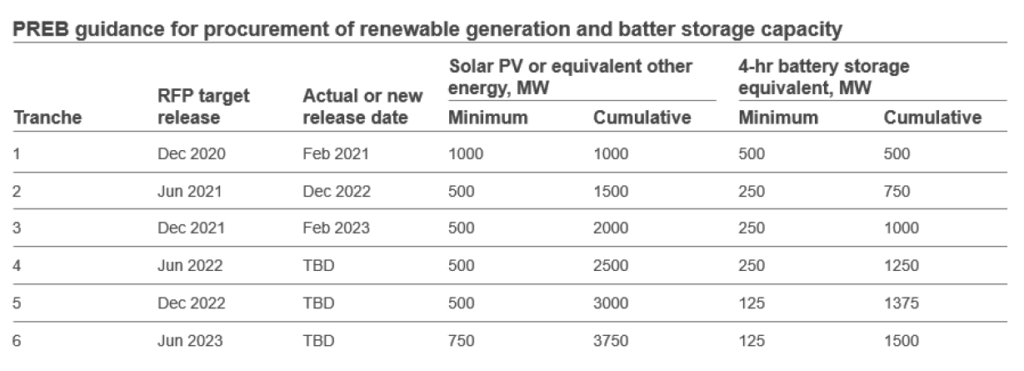
Farm Bill – According to the Congressional Research Service, “the farm bill is an omnibus, multiyear law that governs an array of agricultural and food programs. It provides an opportunity for policymakers to comprehensively and periodically address agricultural and food issues.” The Farm Bill usually comes up for review and reapproval every five years. The version currently in effect elapses on September 30. Given the current situation regarding the budget for FY24 (see above), it is highly unlikely Congress will enact a new Farm Bill prior to the deadline. The most probable scenario is for Congress to enact a short-term extension, probably until December 31, to gain time to address several open issues regarding nutritional assistance, conservation programs, and support for major commodity crops, among others. This year’s Farm Bill is particularly important for Puerto Rico because there is a good chance that it will include language authorizing the phase-out of the current Nutritional Assistance Program that helps thousands of low-income households on the archipelago and provides for Puerto Rico’s inclusion in the Supplemental Nutrition Assistance Program (“SNAP”). The transition to SNAP would increase the number of households that qualify for the program, increase the average benefits available for nutritional assistance, and end decades of unfair discriminatory treatment against the residents of Puerto Rico who otherwise qualify for this program. The government of Puerto Rico and many NGOs, both in Puerto Rico and the mainland, are currently advocating for including language allowing this transition in the new Farm Bill. As of this writing, it is difficult to assess the probabilities of success, but this is the best opportunity we have had in years to achieve this major policy change.

The Inflation Reduction Act and Green Energy –  Scholars at the Brookings Institution take a look at the economic implications of the green energy provisions of the Inflation Reduction Act (“IRA”), which provides approximately $392 billion in green energy incentives over ten years. According to Brookings, “most models suggest the law puts the United States on track to achieve reductions in greenhouse gas emissions from 2005 levels in the range of 32-42% by 2030, which is 6-11 percentage points lower than without the IRA. The IRA lowers the costs of adopting clean technologies and accelerates the deployment of clean electricity generation, electric vehicles, and several emerging technologies, including carbon capture and hydrogen. That would narrow the gap between current emissions and the goal set for the United States under the Paris Climate Agreement.” Puerto Rico can benefit from these incentives but it has to move fast as most of the funding will be allocated on a first-come, first-served basis.

Puerto Rico Electric Power Authority Update

Puerto Rico Electric Power Authority Update

Published on September 11, 2023 / Leer en español

Sergio portrait
Policy Director
SHARE

Introduction

Decades of corruption, mismanagement, politically influenced business decisions, and postponing critical maintenance and required capital expenditures resulted in the bankruptcy of the Puerto Rico Electric Power Authority (“PREPA”) in the summer of 2017. The hurricanes of September 2017 and the earthquakes of 2020 further weakened PREPA’s already fragile infrastructure.

Now in 2023, the reconstruction and transformation of Puerto Rico’s electric power system is entering a critical stage, as several important processes—PREPA’s operational and financial restructuring; the commencement of large-scale projects to rebuild the grid; and the elaboration of a new Integrated Resource Plan—converge at a key point in time.

However, existing policy disagreements regarding the extent of the use of natural gas during the transition to 100% renewable generation and the ongoing debate about the advantages and limitations of installing distributed generation capacity (mostly rooftop solar systems with batteries) instead of utility-scale projects have generated delays in the rollout of new renewable generation capacity and pose a serious risk to Puerto Rico’s ability to meet its renewable energy objectives.

Operational Restructuring

The restructuring of PREPA’s operations is at a fairly advanced stage after the execution of two agreements to outsource the operation and management of PREPA’s (1) transmission and distribution (“T&D”) grid and (2) legacy generation assets (“LGA”).

LUMA, a Canadian/American consortium, has been in charge of energy dispatch operations and maintaining the stability of the T&D system since July 2021. The transfer to LUMA of the T&D assets was bumpy and the company faced severe problems during its first year of operations. Recently, however, the T&D system has appeared to gain some stability although rolling blackouts and unplanned outage rates are still significantly above average when compared with similar utilities in the mainland.

Equally important is that LUMA is the main entity in charge of working with FEMA on the redesign and rebuilding of the T&D system. This process has taken longer than expected in part due to special procedures imposed by FEMA (Section 428 of the Stafford Act), in part due to LUMA’s learning curve with respect to Puerto Rico’s energy system, and partly also due to the multiplicity of plans/proposals to rebuild the grid. According to PREPA’s most recent Fiscal Plan, “since the start of Fiscal Year 2023, LUMA has submitted a total of 341 SOWs [scopes of work] to FEMA for T&D projects representing an estimated $7.1 billion in reconstruction activities.” (PREPA Fiscal Plan, p. 98) It is not clear from the Fiscal Plan how many of these SOWs have been approved or in what stage of the work process they are (planning, design, in progress, or finalized).

Early this year the government of Puerto Rico selected Genera PR, a subsidiary of New Fortress Energy (a natural gas company), to manage and operate PREPA’s aging fleet of LGAs. As part of the agreement, Genera is required to make some short-term capital expenditures (funded by FEMA) to stabilize the system, generate savings from renegotiating fuel contracts, and eventually commence decommissioning the LGAs.

Although the government has high hopes for generating savings from increasing system efficiencies and the renegotiation of fuel contracts, the real savings will come from decommissioning PREPA’s aging fleet of fossil fuel generation. It is unlikely, though, that those savings will be realized in the short-term because (1) fossil fuel generation can be decommissioned only when there is enough new renewable capacity to replace it and that process has taken longer than expected; and (2) Genera, as a subsidiary of a natural gas company, may have an incentive to prolong the life of the existing generation fleet (under the pretense that there is insufficient renewable generation available) and purchase the required natural gas from its parent company.

Financial Restructuring

PREPA has been in negotiations with its creditors since July 2017. However, six years of tough on-and-off negotiations have not yet yielded a court-certified plan of adjustment of PREPA’s liabilities. PREPA currently owes about $9 billion in outstanding bonds, has an unfunded pension liability of $3.8 billion, owes an additional $700 million to fuel line lenders, and several million more to other unsecured creditors.

According to the PREPA Fiscal Plan, “without restructuring its debt and other liabilities, PREPA would need to repay approximately $2.62 billion of scheduled legacy debt obligations over four years from FY2024 to FY2027 in addition to the roughly $4.83 billion of unpaid past and currently due amounts through the end of FY2023. Bringing PREPA’s unrestructured debt obligations to funded status in the near term would require rate increases of approximately 6 to 7 ¢/kWh in real dollars in the FY24- 27 period. In the longer term, without any restructuring, PREPA’s estimated annual debt service obligation is approximately $1 billion per year based on amortization of all long-term financial liabilities at a 5.25% interest rate over 20 years.” (PREPA Fiscal Plan, p. 140) Under that scenario, the average residential customer who consumes 425 kWh per month would see its bill increase by approximately 26%. Clearly, that is an unsustainable scenario given Puerto Rico’s stagnant economy and high poverty rates.

The legal process continues pursuant to the procedures established by Title III of the Puerto Rico Oversight, Management, and Economic Stability Act (“PROMESA”). In June 2023, the judge presiding over the proceedings determined that bondholders had only a partial lien on PREPA’s revenues and that there were significant risks associated with other remedies they may seek (for example, the appointment of a receiver). Therefore, she estimated the value of their claim at $2.38 billion.

On August 25, 2023, the Financial Oversight and Management Board for Puerto Rico (“FOMB”) announced that it had “filed the third amended Plan of Adjustment to reduce more than $10 billion of total asserted claims by various creditors against the Puerto Rico Electric Power Authority (PREPA) by almost 80%, to the equivalent of $2.5 billion, excluding pension liabilities.” (FOMB Press Release, August 25, 2023) According to the FOMB, the face value of bondholder debt would be reduced from $8.4 billion to approximately $2.4 billion. Bondholders who support the plan would recover (in the form of new bonds) 12.5% of their original asserted claim, while bondholders who do not agree to the proposed plan would recover 3.5% of their asserted claim. General unsecured creditors would recover, presumably in cash, approximately 13.5% of their initial claims. Negotiations continue with representatives of PREPA’s pensioners and other retirement plan beneficiaries.

The FOMB estimates the settlement with bondholders and other creditors (excluding the pensioners) would result in a 5% increase in monthly electricity bills, on average. That estimate will certainly increase, depending on the pension settlement. As of this writing a relatively large group of bondholders has announced their opposition to the proposed plan and we can expect them to eventually file an appeal with the U.S. Court of Appeals for the First Circuit. In the meantime, the Title III judge has announced March 2024 as the deadline for certifying PREPA’s plan of adjustment.

New Integrated Resource Plan

Act 57 of 2014 requires PREPA, now LUMA as its agent, to prepare an Integrated Resource Plan (“IRP”) for a 20-year planning period and to update it every three years. The law defines an IRP as “a resource plan that shall consider all reasonable resources, including both energy supply (e.g. utility-scale generation) and energy demand (e.g. energy efficiency, demand response, and distributed generation), to satisfy the current and projected future needs of Puerto Rico’s energy system and its customers at the lowest reasonable cost.” (PREPA Fiscal Plan, p. 26) In April 2022, the Puerto Rico Energy Bureau (the “PREB”) extended the deadline for the next IRP filing, resolving that LUMA shall file the next IRP by no later than March 1, 2024.

The IRP is a key document since, pursuant to Puerto Rico law, it sets forth the timetable and sequence for achieving the objective of 100% renewable generation by 2050. Unfortunately, the intermediate objectives set in the IRP currently in effect (approved in 2020) have not been met. As can be seen in the chart below, the procurement process for large-scale renewable generation is approximately two years behind schedule:


Source: PREPA Fiscal Plan 2023-24, p. 85.

According to the Fiscal Plan, “PREPA has renegotiated or completed the procurement of 844.8 MW of new renewable generation capacity.  However, as of the close of the second quarter of 2023, none of these projects have reached financial close or commenced construction, resulting in significant delays as compared to PREB-established procurement and development timelines.” (PREPA Fiscal Plan, p. 26) Furthermore, “on April 26, 2023 PREB issued an order requiring a sweeping investigation into the Tranche 1 renewable energy and battery storage procurement process due to persistent delays. The PREB order states that the delays in the Tranche 1 procurement process “could affect” renewable energy regulatory goals in the short-, medium- and long-term.” (PREPA Fiscal Plan, p. 54)

Given the delays that occurred during the Tranche 1 process, the PREB decided to appoint an “independent coordinator”, Acción Group, LLC, to carry out the Tranche 2 and Tranche 3 RFPs. It is not clear to us who manages and operates Acción Group as of this writing. In addition, RFPs for tranches 4 through 6 have been postponed indefinitely.

With respect to rooftop solar installations, LUMA claims to have connected over 50,000 customers, representing 300 MW of generation capacity, since it took over the operation of the T&D system in 2021. (PREPA Fiscal Plan, p. 19) The U.S. Department of Energy (“DOE”) estimates that, as of June 2023, there were 85,661 rooftop solar interconnections in Puerto Rico. While these statistics show some progress in the interconnection of rooftop solar systems, they also highlight the slow rate of the transition, as PREPA has more than 1,000,000 clients.

Reconstruction of the T&D System

According to the Fiscal Plan, “as of June 2, 2023, PREPA has been awarded over $15 billion of federal funding in total. Approximately $12 billion of FEMA funding is obligated for permanent work and has received approval for projects amounting to approximately $2.3 billion. The remaining obligated federal fundings include approximately $2.4 billion FEMA funding for emergency work, approximately $600 million FEMA funding for management costs, and approximately $2.3 million CDBG funding.” (PREPA Fiscal Plan, p. 87) Thus, in terms of funding for the rebuilding of the grid, only 19% has been “approved” to be spent.

In terms of the number of permanent work projects to rebuild the grid, a recent DOE presentation states that as of July 2023, there were 220 grid improvement projects in FEMA’s “pipeline”; 134 grid improvement projects had been “approved” by FEMA; and 60 grid improvements had “broken ground”. The DOE presentation did not set forth the total number of grid improvement projects that comprise the rebuilding of the entire grid.

Regardless of the metric we use, the conclusion appears to be that the grid reconstruction process has proceeded at a relatively slow pace. Several factors explain this situation. First, it is not clear, at least to outside observers, which grid modernization plan is the one that should be implemented: there is a plan designed by PREPA, there is the current IRP, there is LUMA’s system remediation plan, and there is the grid modernization plan being developed by the DOE as of this writing. It is not clear to us how each of these plans relates to the other nor which has precedence in the case of conflicts among and between them.

Second, both PREPA and FEMA have agreed to build out significant new generation capacity based on natural gas at the old Palo Seco plant site. This investment of approximately $900 million has been questioned by environmentalists as unnecessary and perhaps even unlawful given Puerto Rico’s legal requirement to transition to 100% renewable generation by 2050. Proponents, on the other hand, argue that this new fossil fuel generation is necessary to stabilize the system and to provide a “bridge” to full renewable generation on the island. It is important to address this policy issue as soon as possible to avoid further delays.

Finally, there is a strong disagreement among and between proponents of renewable generation regarding the issue of distributed generation versus centralized utility-scale solar farms. Proponents of rooftop solar systems argue there are sufficient roofs in Puerto Rico to install enough capacity so as to render unnecessary the buildout of large utility-scale solar farms in Puerto Rico.

Proponents of large-scale solar facilities argue that a system based solely on rooftops would be unstable given Puerto Rico’s energy demand, takes too long to bring up to scale, and does not take into account the needs of (1) people who live in multifamily units, (2) commercial clients, and (3) industrial and manufacturing operations. The DOE, in an interim report, concluded that Puerto Rico needs both kinds of systems.

This debate is more than a mere policy disagreement because the policy decision will influence the design of the new grid. If the government of Puerto Rico decides to rely mostly on distributed rooftop solar systems, the grid has to be designed in one way; while if it decides to rely mostly on centralized utility-scale solar generation, the grid has to be designed in another way. It appears the DOE has concluded that the new grid can be designed to accommodate both distributed rooftop solar generation, which is good for hard-to-reach, isolated “last-mile” communities, and large-scale utility generation, which can provide stable base loads to the system. Unfortunately, the DOE final report on grid design will not be ready until December of this year. So, it appears unlikely this policy disagreement will be solved before then.

CNE Review – March 2023

Published on March 16, 2023 / Leer en español

See all editions of the
CNE Review
SHARE

SPECIAL EDITION

Puerto Rico’s Energy Transformation
and the Genera Agreement

In this edition of the CNE Review, we take a look at the ongoing transformation of Puerto Rico’s electricity sector. First, we present a summary of the following ongoing processes: the restructuring of PREPA’s debt, the reconstruction of Puerto Rico’s energy system, the transition to a new grid operator, and Project PR100. That update is followed by a policy brief that examines what has come to be known as “the Genera contract” or the Puerto Rico Thermal Generation Facilities Operation and Maintenance Agreement. Our Policy Director analyzed over 600 pages between the contract, Partnership Committee Report, and other complementary documents in detail to highlight the transaction’s most critical aspects for our readers.CNE has consistently delivered the most comprehensive analysis of PREPA’s transformation processes providing non-partisan research, insights, and recommendations to policymakers, media outlets, and the public. This valuable work is only possible thanks to our sponsors. Thank you for supporting our work.

Puerto Rico’s Energy Transformation: Where are we now?

By Sergio M. Marxuach, Policy Director

Access to affordable, clean, and reliable electricity is necessary for the long-term sustainable growth of the Puerto Rican economy. This transformation process began in earnest with the enactment of Act 57 of May 17, 2014, which created the Puerto Rico Energy Commission (now the Puerto Rico Energy Bureau) to regulate the generation, transmission, distribution, and sale of electricity in Puerto Rico. Since then, other laws and regulations have been enacted to establish Puerto Rico’s long-term energy policy; require the unbundling of the vertically integrated operations of the Puerto Rico Electric Power Authority (“PREPA”); and expand the installation of generation capacity using renewable energy sources. In fact, Puerto Rico has committed to meeting its electricity needs with 100% renewable energy by 2050, along with realizing interim goals of 40% by 2025, 60% by 2040, the phaseout of coal-fired generation by 2028, and a 30% improvement in energy efficiency by 2040. In addition to all that legislative and regulatory activity, the following processes are currently ongoing:

Restructuring PREPA’s Debt – After years of mismanagement, PREPA (through the Fiscal Oversight and Management Board, “FOMB”) filed a petition to restructure its financial obligations through the bankruptcy-like procedure provided by Title III of the Puerto Rico Oversight, Management, and Economic Stability Act (“PROMESA”) in July 2017. After six years of tough negotiations, a majority of the creditors have not reached a consensual agreement with the FOMB. On February 9, 2023, the FOMB filed an amended proposed Plan of Adjustment to reduce PREPA’s obligation approximately by 50%. Given the lack of agreement among the parties, it is likely that some of the underlying legal issues will have to be litigated before any proposed plan of adjustment is confirmed by the Court. This litigation process, including any appeals, could take an additional 12 to 18 months.

Reconstruction of Puerto Rico’s Energy System – Hurricane Maria devastated Puerto Rico’s electric system in September 2017. The federal government, through FEMA and HUD, has allocated approximately $12 billion, mostly for the reconstruction of the electric grid. However, according to data from the Puerto Rico Central Office for Recovery, Reconstruction, and Resiliency, only 18 permanent work reconstruction projects in the energy sector, totaling $88,741,190, had been completed as of March 6, 2023 (see the chart below for more detail). At this pace, it would take over 100 years to complete the reconstruction of the Puerto Rico electric grid. To be fair, the delay in spending these funds has been partly due to the imposition of burdensome and sometimes unprecedented federal bureaucratic requirements on Puerto Rico. Nonetheless, more than five years after Hurricane Maria the amount of money spent on rebuilding the electric grid remains eye-watering small.


Source: Puerto Rico Central Office for Recovery, Reconstruction and Resiliency Transition to a New Grid Operator – On June 22, 2020, PREPA, the Puerto Rico Public-Private Partnerships Authority (the “P3 Authority”), LUMA Energy LLC, and LUMA Energy ServCo, LLC (“LUMA”), entered into a Transmission and Distribution Operation and Maintenance Agreement (the “T&D O&M Agreement”), pursuant to which LUMA will operate, maintain, and modernize PREPA’s transmission and distribution system, during a period of 15 years. The transition from PREPA to LUMA has been tempestuous, to say least, due partly to the inexperience of the government of Puerto Rico in managing these kinds of agreements and partly to LUMA’s arrogance and its misjudgment of the complexity and the difficulty of the tasks it was agreeing to undertake pursuant to the T&D O&M Agreement. However, the electric grid, which to be fair is in quite a poor condition, appears to have stabilized since the beginning of 2023. Project PR 100 – On February 2, 2022, the U.S. Department of Energy (“DOE”) launched the Puerto Rico Grid Resilience and Transitions to 100% Renewable Energy Study (“PR100”). This is a “2-year study by DOE’s Grid Deployment Office and six national laboratories to comprehensively analyze stakeholder-driven pathways to Puerto Rico’s clean energy future. PR100 entails five activities, with an emphasis on modeling and analyzing scenarios that meet Puerto Rico’s renewable energy targets and achieve short-term recovery goals and long-term energy resilience.” In January 2023, the DOE presented a one-year progress report. The final report and recommendations are expected to be made public by December 2023 or early 2024.

Insights + Analysis from CNE

Analysis of PREPA Legacy Assets Public-Private Partnership Agreement

By Sergio M. Marxuach, Policy Director

On January 24, 2023, the Puerto Rico Power Electric Authority (“PREPA” or the “Owner”), the Puerto Rico Public-Private Partnerships Authority (the “P3 Authority” or the “Administrator”), and Genera PR LLC (the “Operator” or “Genera”), executed the Puerto Rico Thermal Generation Facilities Operation and Maintenance Agreement (the “Agreement”) setting forth the terms and conditions pursuant to which the Operator will operate, maintain, and eventually decommission certain Legacy Generation Assets owned by PREPA. The execution of this Agreement is the most recent step in the long-term transformation of the Puerto Rico electricity market. In the Policy Brief, we present an analysis of the principal components of the Agreement, including the basic structure of the transaction; the compensation of the Operator (including any incentives and penalties provided for therein); the estimated savings to be generated as a result of hiring a private operator to operate and maintain the Legacy Generation Assets; the planned decommission of most of the existing facilities that currently use fossil fuels to generate electricity in Puerto Rico; and the resulting structure of Puerto Rico’s electricity market. Keep scrolling for some highlights.

The Structure of the Agreement

Energy costs in Puerto Rico are very high since we depend on old power plants that burn mostly fossil fuels, which represents 70% of operational costs. The Agreement lays out the blueprint for a transition to renewable energy generation (and/or natural gas and hydrogen) which could provide a significant reduction in the cost of energy in the long term, depending on how this difficult and complex process of decommissioning fossil fuel generation while simultaneously deploying large scale renewable generation is implemented. The 300+ page contract lays out the terms and conditions pursuant to which Genera will operate, maintain and eventually decommission certain power plants.Genera was hired to provide, directly or through subcontractors, four types of services: Mobilization Services, Operation and Maintenance Services, Decommissioning Services, and Demobilization Services. In exchange for providing these services, the Operator is entitled to receive certain compensation, subject to any applicable incentive payments or penalties.

The Expected Savings

The government of Puerto Rico has stated that it expects this Agreement to generate significant savings. Yet, in the short term, the savings estimated by Genera will be insufficient to provide any savings to consumers even if PREPA’s debt is cut approximately by 50% to $5 billion and pays 6% interest, which means consumers will need to pay $300 million annually to service the restructured debt. Genera estimates, as set forth in a report by FTI Consulting, that the “combined estimated savings from O&M and fuel range from $100 million to $200 million annually (including fuel conversion savings if approved by PREB).” Under the terms of the Agreement, those “savings would be shared 50%/50% between Genera and the consumers of Puerto Rico. That would result in $50 million to $100 million per year to Puerto Rico electric system customers.” The methodology used by Genera to calculate those expected savings is not provided in the FTI report, so it cannot be properly evaluated. Genera insists on pointing to potential savings to be extracted from the conversion of oil-burning plants to facilities that burn natural gas. Such conversions would generate approximately 50% of total expected savings from the agreement. Given that Genera is a wholly-owned subsidiary of New Fortress Energy, a company that produces and delivers natural gas a clear conflict of interest arises. The Agreement, however, includes a fully-developed policy to address organizational conflicts of interest. It remains to be seen how thoroughly will that policy be enforced and implemented. In addition, the Agreement does not identify who would pay for the capital expenditures necessary for such conversions nor does it explain how expected savings will be affected once the cost of capital is taken into account.

Pros and Cons

Several elements of the new agreement are clearly superior to the LUMA Agreement. Among these we can mention:

  • a well-developed system of incentives and penalties to motivate the Operator;
  • the inclusion of clear benchmarks to measure Genera’s performance;
  • stronger filters to analyze transactions with affiliates and related parties, including a fully fleshed-out policy to address organizational conflicts of interest;
  • the requirement to engage in good faith negotiations with current PREPA employees so as to minimize the learning curve of the new operator; and
  • setting a cap on the fees that the Operator can earn during the Mobilization Period.

All point to the conclusion that this is an agreement that offers better protections to the people of Puerto Rico from some of the foreseeable risks associated with this transaction. Other aspects of the agreement are not as good. For example:

  • most of the services will be provided by subcontractors (wouldn’t it be more efficient just to contract directly with them?);
  • the analysis of the expected savings is clearly deficient and we would like to see a more rigorous examination of those professed savings; and
  • it is not clear to us that the resultant market structure will lead to lower prices, generate allocative efficiencies, and/or produce significant increases in consumer welfare.

Of Note: Buy Local Provisions

A novel feature of the Agreement is that it requires Genera to use “commercially reasonable” efforts to ensure that local companies, or foreign companies with a significant presence in Puerto Rico, are included in the procurement process for materials and services under the agreement. In addition, it requires Genera to use “commercially reasonable” efforts to select companies established under the Commonwealth of Puerto Rico or companies that have “a significant presence in the Commonwealth of Puerto Rico” as material subcontractors. These provisions, if implemented, have the potential to generate local economic activity and allow local firms and workers to obtain valuable experience working on a complex multi-year project.

So, relative to the status quo, is the post-Genera electricity market in better shape in Puerto Rico?

Probably yes, but that is an awfully low bar. Everybody who has objectively analyzed PREPA’s performance over the last 30 or 40 years has concluded that it is a mess, the financial and operational equivalent of a long-smoldering dumpster fire. By that standard, trying anything new, no matter how outlandish it may seem, would probably constitute progress. However, if we set a higher bar, if we ask whether this transaction will really help Puerto Rico achieve its long-standing goals of generating affordable, cleaner, and reliable electricity, then the answer is not quite as clear, for the good is indeed mingled with the ill. The fact is that there is a lot uncertainty surrounding this transaction and it is hard to avoid the unsettling feeling we are being presented with a fait-accompli on a take it or leave it basis. Maintaining the status quo, though, is not an option. The real question is whether there is a better alternative to a negotiated agreement in this instance. The answer, when taking into account the totality of the circumstances, appears to be no. The available alternatives seem to be (1) worse, for example, resuscitating PREPA; (2) unrealistic, entailing, for instance, the creation of a new Tennessee Valley Authority-like entity to provide electricity in Puerto Rico; or (3) downright utopian, involving extremist schemes reminiscent of Mao’s Great Leap Forward.After assessing the risks and benefits of the Generation O&M Agreement we face a dilemma in the classical sense of making a decision with no good options. But in a situation with no objectively good options, taking a calculated risk may, perhaps, be the best option.

On Our Radar…

Interest Rates – Jay Powell, Chair of the Board of Governors of the Federal Reserve System, recently testified before the Committee on Banking, Housing, and Urban Affairs of the U.S. Senate. In his statement, Mr. Powell reiterated the Federal Reserve’s commitment to keeping inflation at 2% over the long run. However, “with inflation well above our longer-run goal of 2 percent and with the labor market remaining extremely tight, the FOMC has continued to tighten the stance of monetary policy, raising interest rates by 4-1/2 percentage points over the past year. We continue to anticipate that ongoing increases in the target range for the federal funds rate will be appropriate in order to attain a stance of monetary policy that is sufficiently restrictive to return inflation to 2 percent over time.” In plain English, this means the Federal Reserve will keep increasing interest rates until inflation decreases to its policy target of 2%. The real question is whether the Fed will be able to accomplish this without triggering a recession. Only time will tell.

The Debt Limit – On January 19, 2023, the United States reached its statutory debt limit of $31.4 trillion “and the Treasury announced a ‘debt issuance suspension period’ during which, under current law, it can take well-established ‘extraordinary measures’ to borrow additional funds without breaching the debt ceiling.” The Congressional Budget Office estimates that “if the debt limit remains unchanged, the government’s ability to borrow using extraordinary measures will be exhausted between July and September 2023—that is, in the fourth quarter of the current fiscal year. The projected exhaustion date is uncertain because the timing and amount of revenue collections and outlays over the intervening months could differ from CBO’s projections.” House Republicans have stated they will not vote to increase the debt limit unless the Biden administration agrees to broad-based spending cuts (which may or may not include defense spending depending on who you ask on the Republican side). The White House, for its part, has stated it will not negotiate anything other than a “clean” debt limit bill. That is, a bill increasing the debt limit without any spending cuts attached. So far, both parties are holding fast to their initial positions. A recent report from Moody’s Analytics concludes that the failure to increase or suspend the debt limit would have dire consequences on the U.S. and global economy.

Medicare Solvency – The Biden Administration has announced a proposal to extend the solvency of the Medicare program by at least 25 years by (1) increasing the Medicare tax rate on income over $400,000; (2) closing loopholes in existing Medicare taxes; and (3) crediting savings from prescription drug reforms to the Medicare Hospital Insurance Trust Fund. So far, the Republicans in Congress appear to be uninterested in pursuing this path.